
Climate Action Cohort Update 2023-2025
Impact By the Numbers

The Climate Action Cohort’s impact spans revenue growth, community reach, and stronger climate resilience. Collectively, the startups have generated $7.75 million in revenue and $2.29 million in profit, while attracting $1.09 million in follow-on investment. Venture Fund-supported projects added another $687,000, helping strengthen the financial sustainability of climate solutions in vulnerable regions.
Their operations have already reached more than 601,000 people, including 28 percent children, 46 percent women and girls, and 14 percent persons with disabilities. Venture Fund pilots directly reached another 32,000 people, with more than one in five being children and nearly a quarter women and girls. Half of the cohort is women-founded or -led, and three operate in fragile or conflict affected settings. This demonstrates the ability of diverse, locally rooted teams to deliver innovation under the most challenging conditions.
Beyond the numbers, the cohort has sparked new partnerships among UNICEF Country Offices, governments, the private sector, and academia. These collaborations are strengthening individual solutions while also creating pathways for integration into local and national systems and global strategies, paving the way for lasting impact.
Key Insights from the Cohort
Working across eight very different contexts has underscored that frontier technologies hold immense promise, but their lasting impact depends on how well technology, communities, markets, and institutions work together.
The experiences of these startups highlight not only what is possible, but also what is necessary to make climate innovation stick—open collaboration, trust, equity, and strong institutional anchors. From our journey, five lessons stand out that will help shape future climate innovation investments and guide how solutions can be applied in UNICEF programme contexts in the future.

@Map & Rank
1. Open Source Accelerates Localization and Scale
Open source makes climate solutions easier to adapt across different cultural, geographic, and regulatory contexts. When communities and institutions can inspect, modify, and improve the tools, adoption happens faster and trust is built more easily. Open access also helps governments and NGOs bypass lengthy procurement processes while fostering collaboration and shared ownership that strengthen solutions over time.
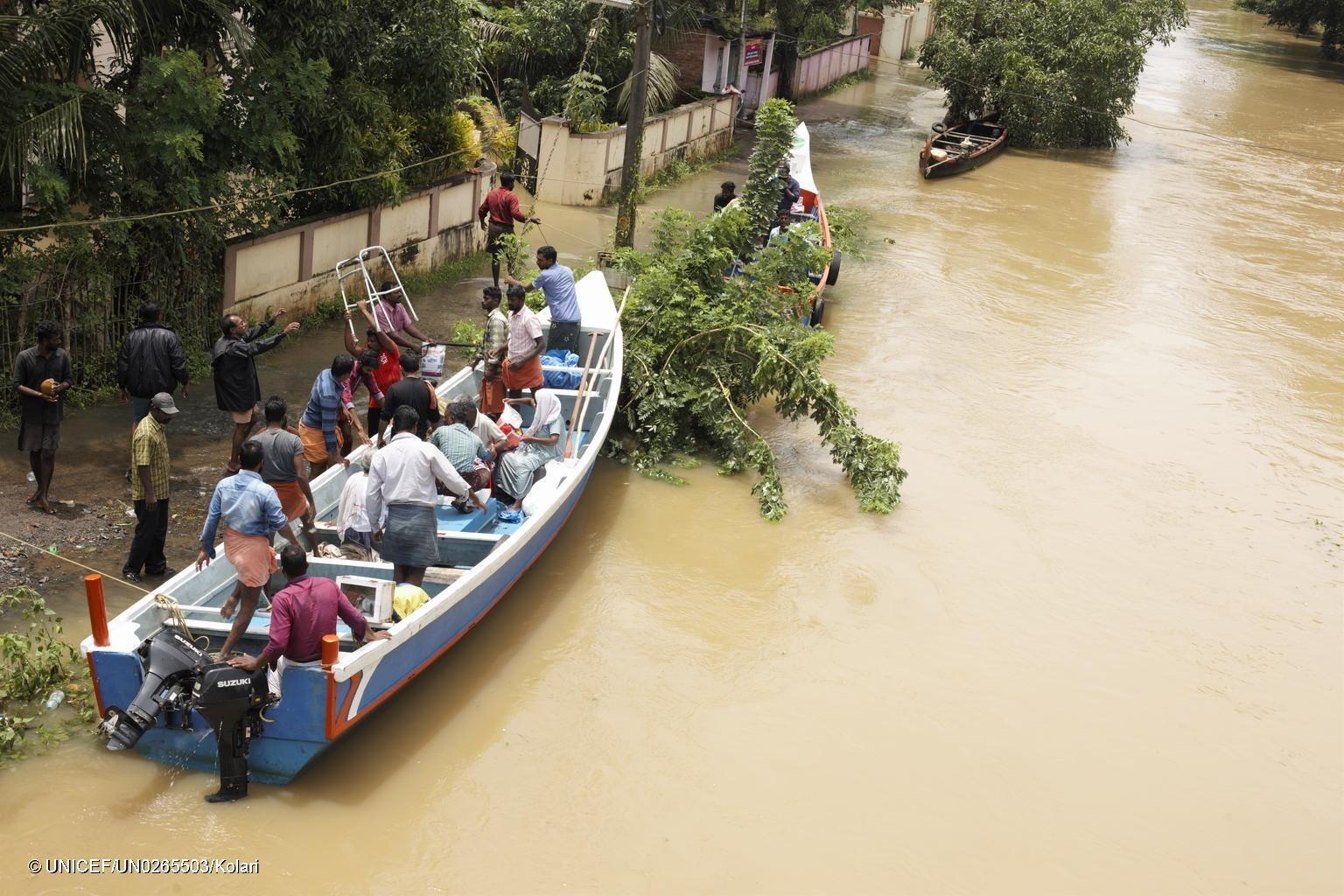
In India, Equinoct developed Community Sourced Impact-Based Flood Forecast and Warning System (CoS-It-FloWS), a model that combines technology with community sourced data to assess flooding risks. The system includes custom-built rain gauges, a mobile app for real-time data collection, a web platform that translates forecasts into actionable insights, and a volunteer network of over 100 local organizations and residents. During their UNICEF Venture Fund investment, Equinoct tapped into the global open-source community for solution improvements:
“The open source approach has been invaluable, attracting experts from around the world to collaborate on various modules of our solution. For example, employees from Google volunteered nearly 50 hours to support our development—a contribution made possible solely due to our open-source model. Additionally, being part of the Free and Open Source Software (FOSS) Community Kochi has provided invaluable learning opportunities and strengthened our open source journey.”—Equinoct
2. AI Must Adapt to Data Scarcity and Build Trust
In many climate-vulnerable regions, including those where the cohort works, reliable climate data is often outdated, fragmented, or missing altogether. Rivers lack gauges, rainfall records are inconsistent, and government-held data can take months to access. For AI systems to be effective under these conditions, they must be designed to work with imperfect inputs, communicate their limitations openly, and build trust among the very people whose lives depend on them.
In India, Equinoct tackled this challenge by creating a volunteer network of more than 100 community members who collected hyperlocal rainfall and water-level data. This grassroots dataset has augmented their models with the precision needed to forecast floods in small, flood-prone pockets along two river basins. But 2023–24 brought erratic, highly variable rainfall, which disrupted predictions and led to the realization that “stationarity is dead.” Instead, forecasting models must constantly evolve as climate patterns shift. Equinoct’s community-based work has reinforced that AI cannot replace field-level expertise; rather, it must complement and be grounded in local knowledge.
In Cameroon, Map & Rank launched the Residat platform in Mayo-Danay, a region devastated by repeated floods. By combining drone-based mapping with community-reported data, they achieved a 60% accuracy rate in forecasting hydrological risks across 12 locations. Yet building these models highlighted deeper challenges: accessing official discharge records took months, and many watersheds had no gauges at all. Community validation became essential, while at the same time revealing the urgent need for stronger institutional data-sharing agreements and infrastructure to sustain predictive systems over time. To counter the gaps, Residat will expand into a broader climate resilience hub with post-disaster support tools, including better AI model predictions in the future.
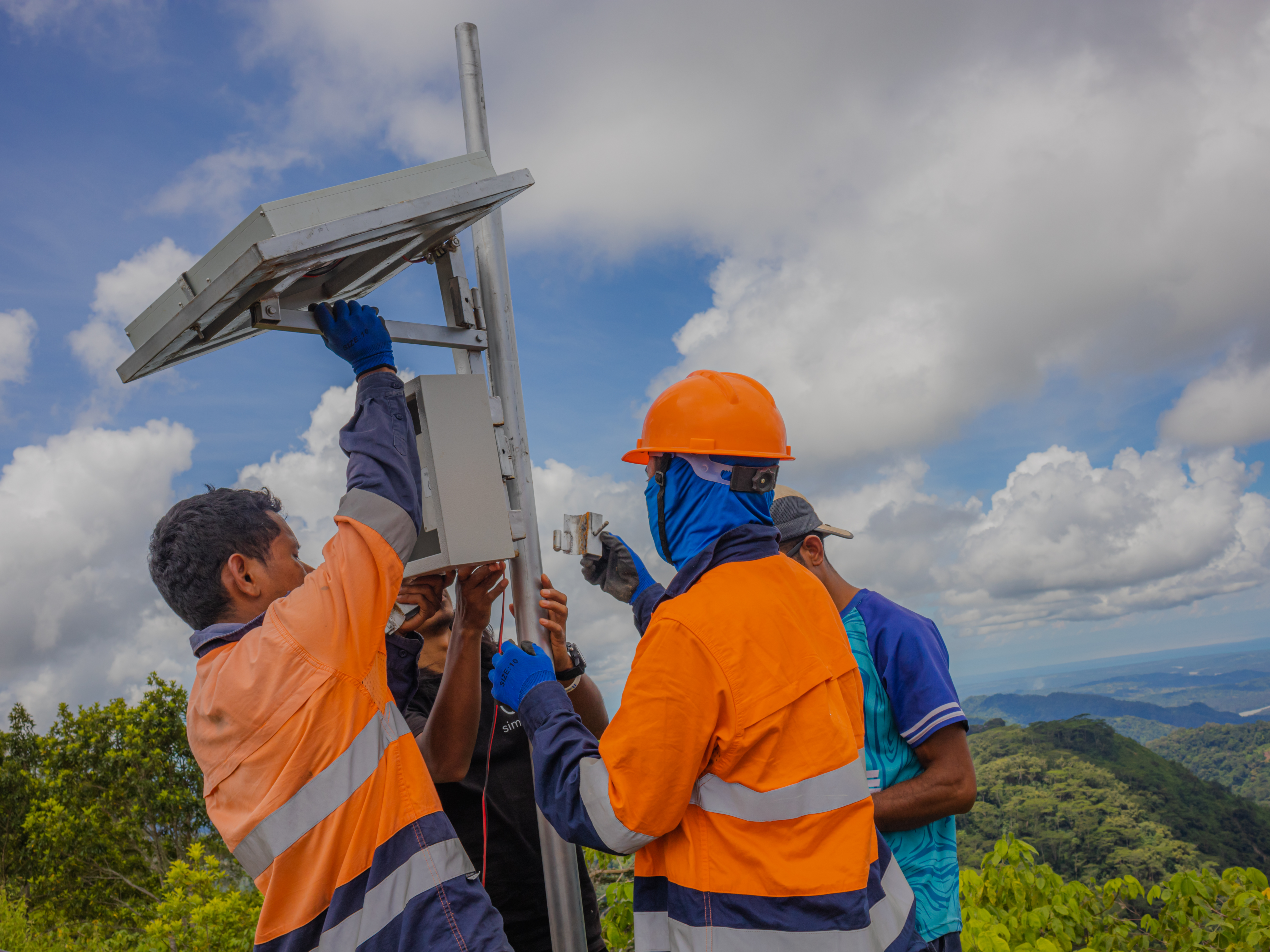
In Timor-Leste, Similie developed a modular early warning system that blends low-cost IoT hardware with an AI-powered forecasting platform. The system provides real-time alerts and integrates both national and community-collected datasets. In practice, this meant learning to troubleshoot unexpected disruptions such as when a parked truck blocked a river sensor and produced anomalous readings. Simile has learned that AI models are only as reliable as the systems of data collection and validation that surround them, and those systems must be continuously stress-tested with community input.
In Albania, Intelligent Network Solutions is taking a different approach by using AI and geospatial tools to detect illegal landfills and monitor legal ones. While still in development, their decision to publish datasets openly has created an early layer of transparency and accountability in a sector where reliable waste management data is lacking. Their platform is being designed for governments to anticipate risks before they become crises, underscoring the value of proactive monitoring even before full-scale deployment.
Across these diverse contexts, a common lesson is that AI solutions for climate must be designed to adapt to abnormalities and data gaps and refined in partnership with the communities and institutions that depend on them. Only then can they build the trust needed to turn imperfect data into life-saving action. In low-data environments especially, AI must be continuously refined, openly shared, and grounded in real-world context to remain reliable and useful.
3. Communities Are Co-Designers, Not Just Users
Solutions have greater impact when communities help design them from the start. Co-design ensures tools meet real needs, fit local contexts, and earn trust from the people who use them. It also turns community members into custodians of the solution rather than passive recipients. Engaging young people in this process builds skills, strengthens local capacity, and creates a foundation for future innovation.
In Mali, Map Action built an AI-powered environmental incident response platform that lets citizens report hazards like illegal dumping or blocked drainage through a mobile app. Governments and NGOs then use real-time dashboards to triage and respond, while a feedback loop notifies citizens when their reports are reviewed or resolved. Youth mappers played a central role in beta testing, and pilots with institutional decision-makers helped shape features such as plain-language summaries and tailored analytics. The impact is already visible: when 17-year-old Fatou reported a pile of waste in her Bamako neighborhood, authorities discovered it was hazardous biomedical material, intervened swiftly, and fined the clinic responsible. This shows how young people, given the right tools, can turn environmental intelligence into immediate action that protects their communities.
In Trinidad and Tobago, Zed Labs is engaging youth through Kolektivo, a blockchain-based platform that links local climate action with digital incentives. As part of this effort, they launched an introductory permaculture course teaching sustainable practices—such as composting, water conservation, and regenerative gardening—that participants can integrate into their daily lives. Climate-positive behaviors are rewarded with community points and skill badges, fostering accountability and recognition. By combining practical environmental education with innovative digital tools, Kolektivo empowers young people not just to participate but to co-design and lead climate solutions—helping them take ownership of building resilient, sustainable communities.
4. Climate Markets Need Built-In Equity
Emerging climate markets offer new ways to fund local action, but they only work if the benefits reach and remain with the communities most affected by climate change. Equity means more than fair distribution of rewards; it also means ensuring that communities have a say in how markets operate and retain control over the tools and platforms that underpin them. For these markets to be sustainable, they must combine inclusive design with sound, long-term business strategies.
In Latin America, Grinplus has begun proving how equity can be built into renewable energy markets through an AI-powered marketplace that connects small producers with buyers of renewable energy certificates (RECs). Their first sale took place in Colombia’s La Guajira region, where schools and indigenous communities with solar panels, which were installed to power critical water and sanitation projects, were able to sell RECs representing their clean energy production. This milestone channels new income directly into vulnerable regions while creating transparent, verifiable offsets for corporate buyers, showing how climate finance can both strengthen local resilience and advance global sustainability goals.
In Uganda, eSusFarm is pioneering a blockchain-based parametric insurance platform to protect smallholder farmers from crop losses due to climate disasters. By automating payouts when predefined climate thresholds are reached, the platform offers faster, fairer, and more transparent protection than traditional insurance—while reducing the risks that often exclude poor farmers from coverage. The challenge lies in designing policies that are affordable and accessible, while ensuring that farmers retain agency in how products are structured and claims are validated. By embedding equity into the very design of climate insurance, eSusFarm is showing how financial innovation can deliver both resilience and dignity for those on the frontlines of climate change.
5. Institutional Integration Enables Anticipatory Action
Climate solutions achieve lasting impact when they are embedded within the policies, workflows, and systems of decision-making institutions. Integration makes it possible to act before a hazard becomes a crisis, rather than only responding afterwards. This requires early collaboration with institutions, alignment with existing processes, and systems resilient enough to withstand staff turnover. Just as importantly, evidence of impact must be generated and communicated in ways that decision-makers can readily use, ensuring adoption and long-term commitment.
For example, in Mali, Map Action has partnered with the National Directorate of Sanitation and Pollution and Nuisance Control (DNACPN) to run a nationwide pilot of its environmental incident reporting platform, linking citizen alerts directly to government response systems. Strong institutional coordination not only transformed community reports into actionable workflows but also helped the solution gain traction with UNICEF Mali, which identified a use case for applying it in humanitarian settings. Building on this momentum, Map Action recently secured funding to expand the platform’s capabilities, including natural language processing features that will improve accessibility for diverse communities including in humanitarian settings.
Looking Ahead
@Simile Timor
The Climate Action Cohort shows that frontier technology, when rooted in communities and supported by the right partners, can help institutions and children anticipate and withstand climate shocks. These eight ventures have demonstrated that even in fragile or data-scarce environments, it is possible to build open, inclusive, and sustainable solutions that save lives and protect futures.
Through the Venture Fund investment period, each team received not only financial support but also hands-on technical assistance across multiple mentorship streams including AI and data science, blockchain, data privacy and security, diversity and inclusion, business development, impact measurement, open source, and software development. This combination of resources and expertise gave founders the clarity and capacity to adapt their ideas to real world challenges. As one Equinoct team member reflected, “Systematic and committed mentoring in various domains gave us clarity and direction.” A founder from Grinplus added, “The structure of the Venture Fund program, which included technical and business mentoring, really helped us to grow.”
As UNICEF looks ahead, the lessons from this first Climate Action Cohort will guide future investments and partnerships, ensuring that frontier technologies are not just innovations but lifelines. Ultimately, these investments matter most because they help protect children, who are among the most vulnerable to climate risks, while empowering young people and their communities to shape a more resilient and sustainable future.
To learn more about the cohort or engage with future climate solutions, email [email protected].
Related Stories


