
Map Action: Transforming Community Environmental Reporting and Response with AI and Open Source Technology
Mid-investment update: MAP ACTION
UNICEF Venture Fund is featuring members of its Climate Action Cohort. The company is now six-months into a year-long investment period and shares an overview of their solution, progress, and next steps.
Tell us more about MAP ACTION.
We're building a platform that empowers people to report environmental and sanitation issues in their communities using their smartphones. Our mobile app makes it easy for citizens to take photos, videos, or voice notes of problems they encounter, like polluted water or unsafe waste disposal, and share them with local authorities.
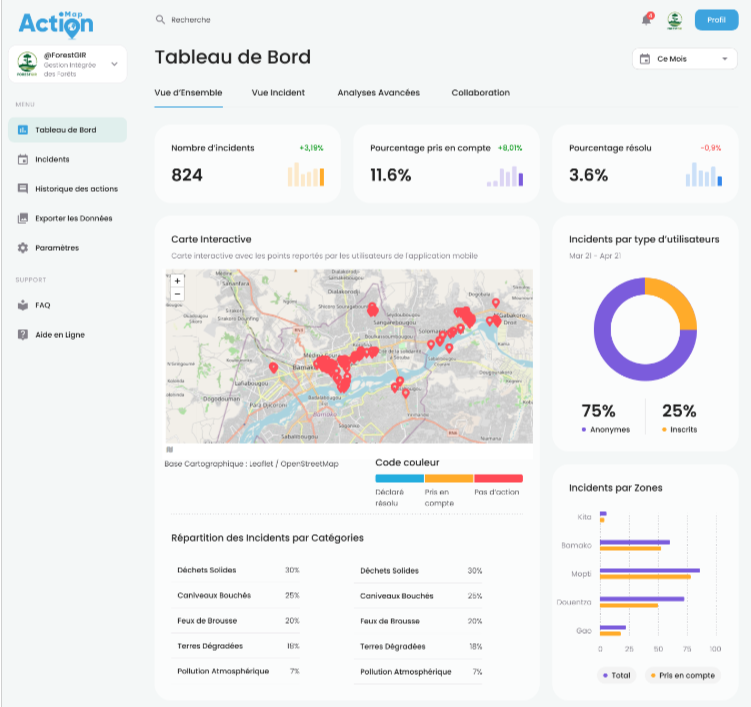
This data is then organized on a digital map, giving decision-makers a clear view of where the issues are happening and how severe they are. The platform also analyzes the data to help identify patterns and suggest possible solutions. Our goal is to create a bridge between citizens and authorities, ensuring that environmental problems are recognized and addressed quickly, while also raising awareness about these issues to inspire collective action.
How would you describe your solution to a non-technical person?
With Map Action, we're building a simple tool that anyone can use to help improve the environment in their community. Imagine you see a pile of trash dumped in your neighborhood, or a river that's polluted. With our mobile app, you can take a picture of the problem, record a short description, and share it directly with local authorities who can fix it.
We also put all this information on a digital map that shows where these problems are happening, so decision-makers can see the big picture and prioritize the most urgent issues. Our app doesn't just give people a voice to report environmental issues; it also helps local governments listen and respond faster.
In short, we're making it easier for people to highlight problems in their communities and for authorities to solve them, leading to cleaner, healthier neighborhoods for everyone.

How does your solution address climate adaptation, mitigation and/or resilience?
Our solution directly addresses climate adaptation, mitigation, and resilience in several ways:
Climate Adaptation:
We provide a platform where people can report environmental issues like floods, droughts, and polluted water sources. By mapping these problems in real-time, local authorities can better understand climate impacts on their communities and plan effective responses, such as building stronger flood defenses or ensuring clean water access during droughts.
Climate Mitigation:
By raising awareness of pollution and waste management issues through our platform, we're encouraging individuals and communities to adopt more sustainable practices. Local governments can also use the data to implement policies that reduce emissions, such as improving waste disposal systems and reducing illegal dumping.
Climate Resilience:
Our digital dashboard helps authorities identify patterns and hotspots where climate-related problems are most frequent. This allows them to take proactive measures to strengthen infrastructure and create early warning systems that protect communities from future climate disasters.
What type of frontier technology does your solution deploy (I.e. blockchain, drones, AI/DS)? What's promising about this technology?
Our solution leverages the power of Artificial Intelligence (AI) and Data Science (DS) to analyze environmental issues reported by citizens. Here's how we use these frontier technologies:
Artificial Intelligence (AI):
We use AI to automatically categorize and prioritize problems reported via our mobile app. For instance, if someone reports illegal dumping or water pollution, our AI system can analyze the image, recognize the issue, and suggest a severity level based on previous reports, historic data available or information on open-source map library. This helps local authorities respond more quickly and effectively.
Data Science (DS):
Our platform uses data science to identify patterns and trends in the reported issues. By analyzing this data, we can help local authorities understand where problems are most concentrated and how they change over time, enabling better resource allocation and proactive measures.
What's promising about MAP ACTION?
Efficiency: AI automates the categorization of environmental problems, reducing the time it takes for authorities to assess and respond.
Accuracy: AI and DS help us analyze large amounts of data accurately, providing a clearer picture of environmental issues and their severity.
Proactive Action: Data science reveals trends and patterns, allowing governments to anticipate and prevent future problems, improving climate resilience.
These technologies make our solution faster, smarter, and more effective in tackling environmental challenges.

What is unique about your solution and how is it different from what currently exists?
MAP ACTION stands out from existing ones in several key ways:
- Citizen-Centered Reporting:
Unlike other platforms that rely solely on satellite imagery or government data, our mobile app empowers everyday citizens to report environmental problems directly. This ensures that local voices are heard, making the data more accurate and relevant to each community.
- Real-Time Data Visualization:
The problems reported through our app are mapped in real time on a digital dashboard. Local authorities can see a clear, up-to-date picture of issues across their regions, enabling them to prioritize and address urgent concerns quickly.
- AI-Driven Analysis:
We use Artificial Intelligence (AI) to categorize, analyze, and prioritize reported issues based on their severity. This makes it easier for authorities to focus on the most critical problems first and allocate resources efficiently.
- Tailored Recommendations:
Our solution doesn't just identify problems; it also suggests actionable solutions. By analyzing data trends, our platform provides authorities with targeted recommendations to improve climate resilience and resource management.
- Collaboration Platform:
We foster collaboration between citizens, NGOs, and local authorities. Citizens can interact directly with authorities through the app, receive feedback on their reports, and engage in community action.
- Adaptable for Various Contexts:
Our platform is designed to be adaptable for different regions and issues, whether it's tracking illegal dumping in urban areas or monitoring water quality in rural communities.
Why does being Open Source make your solution better?
Being open source makes our solution better for several important reasons, here are the 3 most important points:
1. Transparency and Trust: By making our code and data openly available, we aim to build trust among users, partners, and stakeholders. They can see exactly how our platform works and how data is being processed, ensuring that our operations are transparent.
2. Collaboration and Community: Open source allows a community of developers, organizations, and individuals to contribute to and improve our solution. This collaborative approach brings diverse expertise, making the platform stronger and more innovative.
3. Integration and Compatibility: Open-source standards facilitate integration with other platforms and technologies, allowing our solution to work seamlessly with existing systems and data sources.
How did you come up with your solution and what inspired you to form your company?
The idea for Map Action was born out of the desire to make a meaningful impact on the environment while empowering citizens. Our founder, Boubacar Youssouf Keita, noticed a critical gap: communities in Mali and other African nations were facing severe environmental and sanitation issues, but there was no reliable system for people to report these problems and get the necessary help.
Boubacar saw this first-hand in Bamako, where pollution, illegal dumping, and poor waste management affected the health and well-being of many neighborhoods. He realized that if citizens could report these problems directly and local authorities could see them in real time on a digital map, it would lead to faster responses and more effective solutions.
What inspired us to create Map Action was the belief that everyone deserves to live in a clean, healthy environment and that technology can play a vital role in achieving that. We wanted to build a tool that brings together the power of community engagement and digital mapping to create positive change, one report at a time. Our mission is simple: to give citizens a voice and help authorities listen and act, making our communities better and more resilient for everyone.

Tell us more about your team? What makes your team diverse?
Our team is a diverse group of professionals with a shared passion for environmental stewardship and social impact. Comprising environmental engineers, software developers, machine learning engineers, GIS specialists, communication officers, etc., our multidisciplinary expertise ensures we tackle environmental challenges from multiple angles. A key highlight of our team's diversity is that our lead developer, a talented woman, oversees the technical development of our platform. Her leadership ensures that Map Action remains at the forefront of technological innovation. We actively promote gender equality and empower women to take on leadership roles across all departments.
Our team's varied expertise and shared mission to empower citizens through technology make Map Action a truly inclusive and impactful platform.
Why is diversity important for your startup? How does it add value?
Diversity is essential to Map Action because it shapes our team with a rich mix of perspectives, backgrounds, and expertise, directly influencing our ability to innovate and succeed. Our diverse backgrounds also allow us to collaborate effectively with NGOs, local governments, and international organizations, building strategic partnerships that enhance our impact. Moreover, having varied skills and experiences makes us more adaptable to challenges and capable of pivoting quickly, ensuring Map Action remains resilient in the ever-evolving landscape of environmental management.
Diversity strengthens Map Action by fueling creativity, promoting inclusivity, and helping us deliver a platform that effectively serves and empowers the communities we work with.
What do you plan on doing with UNICEF's Venture Fund investment and how will you use the investment to leverage additional opportunities for growth?
With the investment from UNICEF's Venture Fund, we plan to:
- Enhance Our Platform Features: Incorporate advanced AI algorithms to improve the automatic categorization and prioritization of reported issues; Simplify and enhance the user experience to make reporting issues easier and more engaging; Provide decision-makers with a more comprehensive, real-time view of environmental issues.
- Expand Geographic Reach: Launch pilot programs in the west-African sub region to extend the impact of Map Action to new countries. Develop localized versions of our platform to address the unique environmental challenges in different countries.
- Strengthen Partnerships: Collaborate with local governments, NGOs, and international organizations to integrate Map Action into their environmental management strategies.
- Leveraging Additional Opportunities for Growth:
Access to New Funding Opportunities: With the enhanced features and expanded reach enabled by UNICEF's investment, we will be better positioned to attract further funding from international organizations, foundations, and government agencies.
Monetization Strategy Refinement: Improve our monetization strategy by offering premium analytics services to private sector clients and providing advanced dashboard customization options for government agencies.
Long-Term Sustainability: Establish long-term partnerships with local governments to ensure continued investment and support for Map Action, making it a key tool for environmental monitoring across Africa.
What challenges are you currently facing in building your solution and/or startup?
1. Governmental Authorizations and Digital Sovereignty:
The first challenge we're currently facing relates to obtaining governmental authorizations in a context where digital sovereignty is a government priority. Navigating these regulatory requirements has proven to be complex, as governments are increasingly protective of their data and wary of foreign technological solutions.
2. Convincing Government Agencies to Integrate Map Action:
The second challenge is persuading government agencies to integrate Map Action into their environmental and territorial management processes. Despite the clear benefits of our platform, changing established workflows and gaining the trust of government officials requires significant effort and strategic communication.
3. Securing Sustainable Funding:
The third challenge is ensuring sustainable funding for our platform. While we aim to make Map Action accessible to government agencies and NGOs, convincing them to allocate budget for its long-term use remains difficult. We need to refine our business model and communicate the platform's value more effectively to secure ongoing financial support.
How can others support you in working towards overcoming these challenges?
1. Governmental Authorizations and Digital Sovereignty:
Advocacy: We need influential partners to advocate for our platform, emphasizing its value in improving environmental management while respecting data sovereignty.
Networking: Introductions to key government officials can help facilitate discussions and accelerate the authorization process.
Policy Guidance: Experts can provide insights into navigating the regulatory landscape, helping us comply with digital sovereignty requirements.
2. Convincing Government Agencies to Integrate Map Action:
Success Stories: Sharing case studies and success stories from similar initiatives can help demonstrate the platform's impact.
Partnerships: Collaborating with NGOs, international organizations, and private sector partners already working with government agencies can boost our credibility and provide an entry point.
Pilot Programs: Supporting pilot programs to showcase Map Action’s effectiveness in real-world scenarios.
3. Securing Sustainable Funding:
Business Model Refinement: Guidance from financial experts and business strategists to develop a sustainable revenue model.
Funding Opportunities: Information on grants, investment opportunities, and potential partners interested in funding environmental tech solutions.
Visibility and Outreach: Amplify our message by sharing Map Action’s story with wider networks, helping us reach potential investors, donors, and partners.
Interested to learn more about Map Action? Visit their website or follow on Facebook, LinkedIn, and Twitter. Get in contact with the team directly via email at [email protected]
Stories by this author
Cleaning Up the Future: How INS is Using AI to Detect and Monitor Waste
Read StoryRelated Stories


