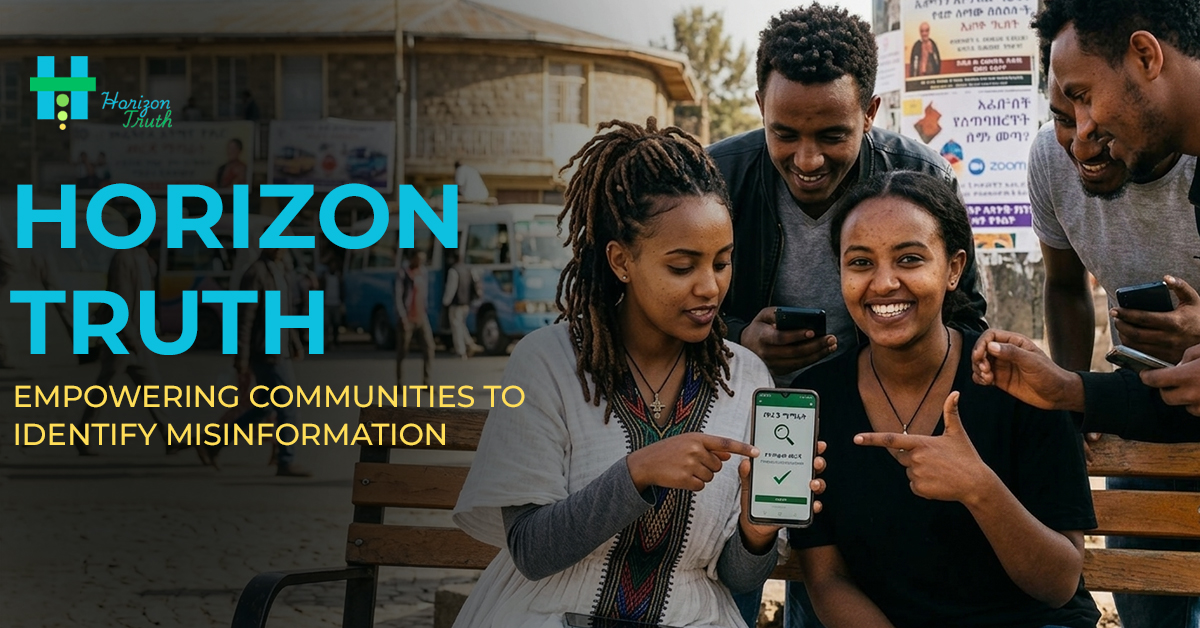
We are not trying to tell young people what to think. We are helping them build the habit of questioning emotionally manipulative content before it spreads. UNICEF’s support allows us to build open tools that help young people recognize misinformation and navigate digital spaces safely.
DABBAL
Progress and Achievements
In Q1, our team focused on building the platform's foundation and testing its early learning experience with real users.
- Developed and refined interactive scenarios simulating common misinformation situations on social media.
- Built and launched a prototype web-based platform.
- Conducted pilot playtesting sessions with approximately 50 youth in Jimma.
- Began developing the core structure of the crowdsourced reporting system.
- Improved the UI based on usability testing and began open-source documentation and privacy compliance processes.
Feedback from our 50 pilot testers was direct and valuable. Users flagged confusing navigation flows, requested stronger visual contrast in the game interface, and — most usefully — told us that when they made wrong choices, the explanations weren't clear enough. They wanted to understand why their answer was wrong, not just that it was. That feedback has driven significant redesign of our post-answer explanation screens.
During one pilot session, a student initially trusted a fabricated social media post because it included emotional language and a fake “breaking news” label. After completing the scenario and reviewing the explanation, the same student later reported questioning a similar post shared in a family WhatsApp group — instead of forwarding it immediately. Moments like this suggest the platform is not only improving gameplay performance, but influencing real-world digital behavior. Some of what users did surprised us in the best way. Several participants spontaneously showed the platform to classmates who hadn't been invited to the pilot. Others came back the following day without any reminder — drawn by the challenge of improving their scores. One student told us she had started questioning WhatsApp forwards she received at home, using the reasoning frameworks from the game. That moment — when the platform's logic transfers into real life — is what we are building toward.
The strongest signal of commitment so far has come from Jimma University, which has expressed interest in integrating Horizon Truth into its student orientation programming. That institutional endorsement reflects confidence in both the platform and its approach.