Portfolio News

Beyond Borders: Enabling Healthcare Continuity for Children on the Move
Guane Enterprises Data Science+AI Colombia
Jun 17 , 2026
Our Health Without Borders project team
On this page

Data Science+AI

Guane Enterprises

Colombia
Amount invested Funding Status active early period Founded in 2018 by Leonardo Pachon
Generating Revenue

Keeping up with Children on the Move

When a migrant child arrives at a health post for the first time, the doctor who sees them knows nothing about them. The doctor does not know what vaccines they have received, whether they are allergic to any medication, or whether they are being treated for a chronic condition. Their medical history was left behind in another city, in another country, or was never recorded in a system that could travel with them.

This is the problem we built “Health Without Borders” to solve.

When a child crosses a border, their medical history should cross with them. No migrant child should restart their care from scratch.
guane

Who we are and what we are building

Guane Enterprises is a Colombian science- and technology-based startup, headquartered in Medellin, specialized in developing solutions in Artificial Intelligence, machine learning, and process automation for industry.

Health Without Borders is an open-source platform that gives migrant and displaced children a portable, secure medical record they can carry with them — across borders, between regions, from one provider to the next.

The system works like this. When a child sees a healthcare provider, the provider records the visit using our mobile application. The information is structured according to the international clinical standard. The child carries a small NFC device — it can be a card the size of a credit card, a keychain, or another form factor — that holds a unique identifier. The next time the child sees a doctor anywhere, that doctor can scan the device with a phone and immediately access the child's clinical history, with the guardian's explicit consent.

The medical record travels with the child rather than being stuck in one clinic's database.

Health Without Borders
guane emerging technologies

Health Without Borders app interface: a healthcare professional scans the patient's NFC device to access their full medical history — allergies, prior consultations, and clinical records — even in low-connectivity settings. Patient data shown is fictional

Why this matters

Colombia hosts the largest population of Venezuelan refugees and migrants in the region – more than 2.8 million people, a substantial share of them children. The country is also home to several million internally displaced people, many of them children fleeing violence in their regions of origin. Each of these children has a health story, and most cannot tell it to a new doctor when they need to.

When health records do not travel, three harms repeat themselves daily. Vaccines are administered again unnecessarily, exposing children to discomfort and wasting scarce resources, or, worse, they are missed entirely. Chronic conditions go untreated when new providers do not know what to look for. Allergies and medication interactions cause preventable harm.

Designing for Real-World Healthcare

We chose three technologies because each solves a specific part of the problem.

NFC is the same technology that lets a phone or a card tap to pay. It works without internet, does not require expensive hardware on the clinic's side, and gives the child control of their own record. A scan takes less than a second.

HL7 FHIR R4 is the international standard for exchanging clinical data. In 2025, Colombia's Ministry of Health adopted FHIR R4 as the national standard for electronic health records. By building on FHIR, our records can be read by any health institution that follows the standard tomorrow, without the need to install our software.

Artificial intelligence helps translate informal clinical notes into structured records that can be exchanged across providers. Healthcare workers in the field do not have time to fill in structured forms. They write what they see. Our system helps turn that text into something computers can understand and pass on.

Crucially, our end goal is health continuity, and we use frontier technology to get us there.

Rethinking How Health Records Work

Three things distinguish us.

First, the patient carries the record. Most digital health systems are built around the clinic. This means the record is stored in the clinic's database, and the patient must request access. Our solution works the other way around: The child carries the key to their own record, and any authorised provider can read it.

Second, we speak the same language as the rest of the system. By adopting Colombia's national clinical standard, our records are instantly accessible to any compliant provider. As a consequence, we work alongside the national health system, not against it.

Third, we are open source from day one. Our code is publicly available under the MIT license. Any healthcare provider, government, or humanitarian organization can deploy it without paying us anything.

Built to Be Open and Trusted

For a system that handles the medical records of vulnerable children, open source is a structural requirement.

It means anyone can audit our privacy and security claims rather than just taking our word for it. Additionally, a humanitarian organisation in another country facing a similar challenge can adapt our codebase without depending on Guane. Our code can even outlive our company. Finally, our approach aligns with UNICEF's principles for Digital Public Goods: technologies built to serve everyone, not just paying customers.

How We Got Here

The idea emerged from a recurring observation in the Colombia-Venezuela border zones: healthcare workers attend to migrant children without knowing what vaccines they have received, what treatments they have undergone, or what allergies have been documented before. The child's medical history exists — fragmented, in local systems, in another city — but it does not travel with them.

When UNICEF opened the Innovation Fund call for technologies in the service of children, we saw an opportunity to apply that experience to a problem in which information infrastructure directly impacts a child's life.
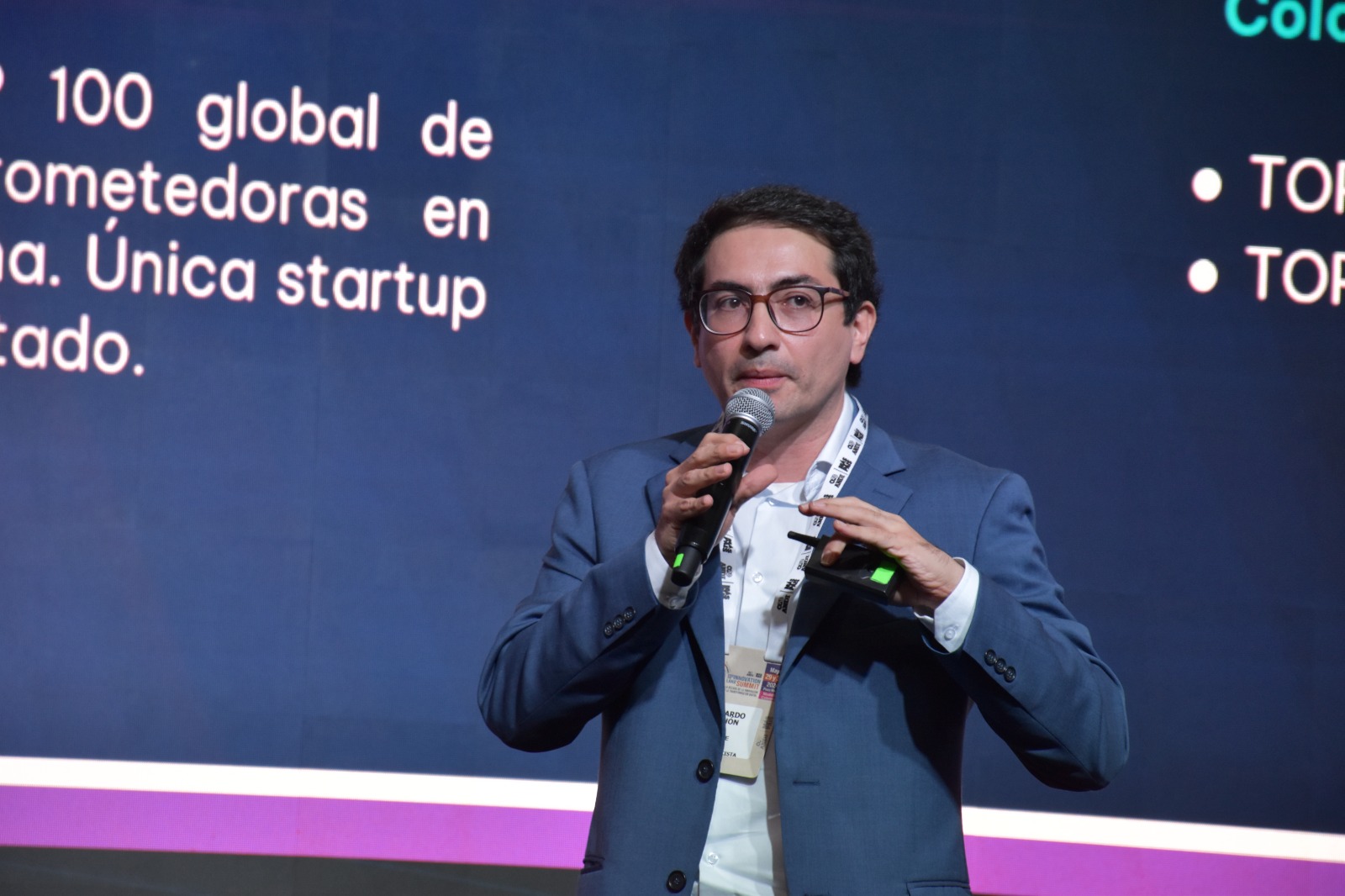
 

Leonardo Pachón, CEO and Co-Founder of guane, at a conference.

Credit: guane emerging technologies, 2026.

Our Team

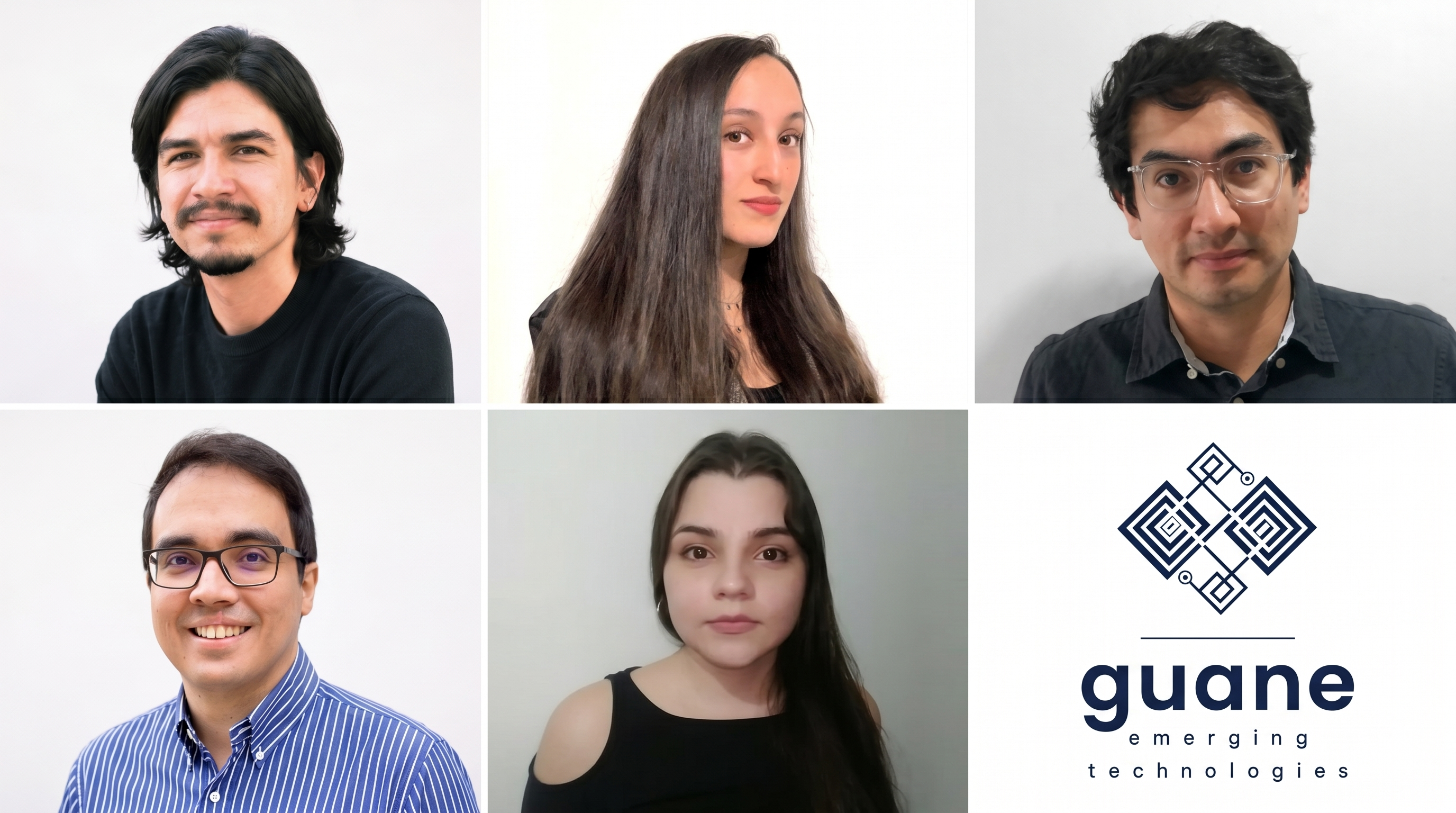
We are a multidisciplinary team working from Medellin, Bucaramanga, and Bogota: a CEO, a backend developer, a frontend developer, and a project manager who is also a data scientist. We bring together engineering depth, design sensitivity, and field-oriented project management.

Our Health Without Borders project team
guane emerging technologies, 2026

Our Health Without Borders project team.

Diversity for us is not a checkbox. It is how we avoid blind spots. When you build for migrant and displaced children, you cannot afford to design from a single perspective. Different backgrounds in the room mean different questions are asked at the design table. And questions are asked earlier, when they are still cheap to address.

Six Months of Building, Alignment, and Preparation

Between November 2025 and May 2026, we built the foundation of the platform.

We built it end-to-end. A backend that generates clinical records in the format required by Colombian law, with role-based access control and offline-first sync. A mobile application built in Flutter with native NFC support, enabling healthcare workers to register, scan, and update patient records in the field, including in areas with intermittent connectivity.

We aligned with national regulations. Colombia's Ministry of Health issued Resolution 1888 of 2025, adopting HL7 FHIR R4 as the national standard for electronic health records. Our system was already on that path. We are now fully aligned with the implementation guide developed by HL7 Colombia.

We completed a Privacy Impact Assessment with external legal review. Our consent framework includes specific protections for migrant minors, including the principle that migration-status data is shared only by judicial order, not on an administrative request.

We published our codebase as open source under the MIT license. Our public documentation site is live, our continuous integration pipeline enforces code coverage, and our project board is open for contributions.

We held our first in-person working session with UNICEF Colombia in Bogota in May 

What’s Next?

The Venture Fund investment enables us to do what would otherwise be impossible at this stage: validate the system in the real world.

In the second half of 2026, we will conduct a territorial risk assessment co-designed with UNICEF Colombia, launch a pilot with a partner health institution, and collect field evidence on how the system performs with real children and healthcare workers.

The follow-on path we are building toward includes a partnership with Colombia's Ministry of Health, expansion into other Latin American countries with significant migrant and displaced child populations, and adoption by humanitarian organizations operating in displacement contexts worldwide.

Follow Us

Our codebase lives on GitHub under the Guane organization, under the MIT license: backend and frontend. If you are a developer who cares about child health, displacement, and digital public goods, contributions are open. Our issues board lists a set of first issues for new contributors.

If you represent a healthcare provider, a humanitarian organization, or a government health office that works with migrant or displaced children, we want to hear from you. Reach us at [email protected].

Visit the project page on UNICEF Karma: karmahq.xyz/project/health-without-borders. Learn more about Guane at guane.com.co. For ongoing updates, follow Guane Enterprises on LinkedIn.

A child's medical history should never be stuck in one clinic. We are working to make sure it is not.
guane emerging technologies
Share this story
Leonardo Pachon
CEO of Guane Enterprises
Guane Enterprises Data Science+AI Colombia