
Accelerating Results: Insights from the 2021-2022 Growth Funding Startup Graduates

AI and Data Science: From Recommender Systems to Predictive Inference Applications
Among the cohort were six AI and Data Science solutions which fell into a few categories, including recommender systems, computer vision applications, automated speech recognition and language assistive systems, and predictive inference applications.

Investments in Recommender Systems underscored the significance of tailoring user experiences with AI, as was showcased by Pixframe gamified solutions to improve children’s cognitive and math skills, when the company was able to unlock a new partnership with the government of Guatemala increasing the solutions’ reach to 1.6 million children. Angaza Elimu piloted its adaptive e-learning platform in 243 Kenya schools, helping improve overall student academic performance by 35 percent and reduce 15 percent of time used on classroom administration by teachers. Finally, the transition to scale support helped Weni, the Brazil based company further develop an open platform for training and sharing NLP datasets in multiple languages, that is now supporting UNICEF in 30+ countries and is available in 180 languages with solutions such as Bebbo, UReport, HealthBuddy+, and Pode Folar.
Automated Speech Recognition and language assistive systems: Comunicacion Aumentativa (Argentina) enhanced the product features of OTTAA, an augmentative and alternative communication solution for people with speech impairments using AI and pictograms.
Predictive inference applications, as demonstrated by Thinking Machines, highlight the potential for extracting insights from predictive models to support decision-making especially in low-resource contexts. Through the development of the AI4D Research Bank in partnership with UNICEF East Asia Pacific Regional Office (EAPRO), open datasets and machine learning (ML) models for relative wealth estimation are now available for nine countries in Southeast Asia. The Geowrangler python tool, also a component of AI4D, helps cut down development time for geo data transformation workflows. These tools continue to be tested by UNICEF and other development organizations, but point to a potential future where even in regions with limited resources and infrastructure, decision-makers can tap into insights from predictive models to inform crucial decisions. For instance, the machine learning models for relative wealth estimation within the AI4D Research Bank can facilitate more targeted resource allocation in last-mile communities. Likewise, the creation of models to estimate haze in areas lacking air quality monitoring equipment holds promise for addressing health and environmental challenges.
Data Science and AI applications will need to evolve and adapt to a changing world with increasingly complex challenges affecting children relating to UNICEF’s core strategic themes of health and nutrition; education; child protection; water, sanitation and hygiene; and inclusive social protection and poverty reduction. AI will continue to shape our world and we’ve always recognized the risks; as such, we've taken a proactive approach by developing a comprehensive risk management framework in alignment with UNICEF's AI Strategy. This framework provides a formal method for assessing risks at every stage of AI use, fostering a supportive environment while effectively mitigating risks. By doing so, we can maximize the benefits of AI and data science to positively impact children's lives.
Drones: Balancing Regulatory Compliance and Scaling Cost-Effective Hardware
 @Dronfies
Some may find drone investments old hat considering the Venture Fund’s focus on frontier tech. However, despite drones having been around for some time, their widespread integration into public service delivery, particularly in regions with limited access to technology, remains relatively limited. This underscores the frontier nature of drone technology, as there is still much to unpack to make it accessible and mainstream in emerging markets.
The growth investments were made in three drone technology startups. Bioverse Labs (Brazil) worked on the geographic and use-case expansion of Forest Map, aimed at helping indigenous communities identify and locate economically relevant tree species in the Amazon that can be sustainably managed and harvested. With Simple Map (Chile), machine-learning models can help to detect crop disease or failures in solar plants. During the investment period, the company expanded beyond agriculture and photovoltaic energy to different kinds of services such as transmissions and distribution of electricity.
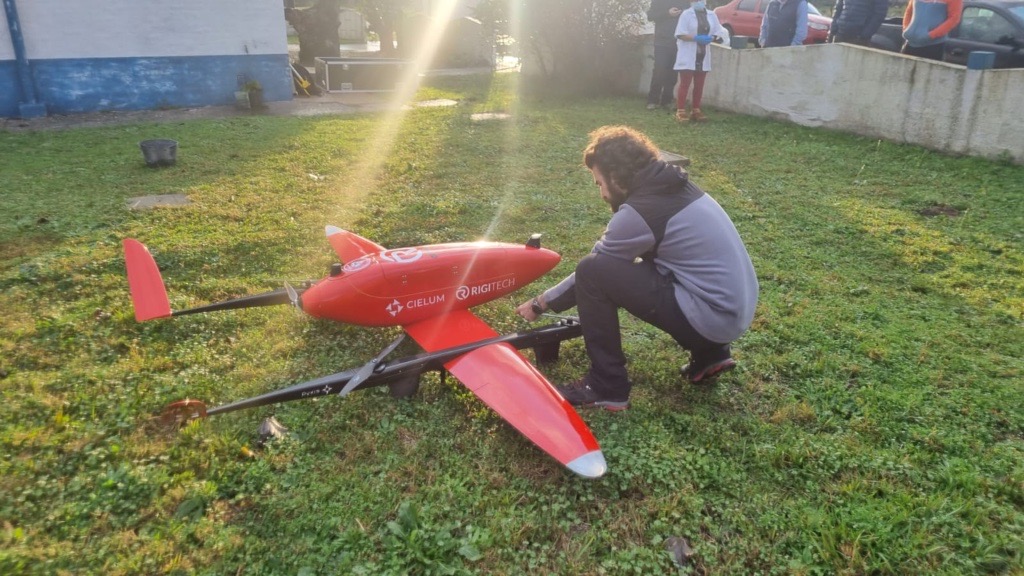
Through our investments in drones at both seed and growth stages, we've discovered that many Open Source drone initiatives concentrate primarily on software products, offering unique insights and analytics for customers. While these solutions can be utilized with any drone operator, a significant challenge arises from the lack of government oversight into drone operations. This underscores the importance of solutions like Dronfies Labs' Portable Unmanned Traffic Management System for ensuring regulatory compliance and building trust, the third investee. Additionally, Dronfies expanded its services through a pilot with the Central Hospital of Tacuarembo, Uruguay, to deliver medical supplies to remote clinics, cutting delivery time by 50 percent on average.
Interactive Voice Response

@UNICEF/Htet
Somleng is an Open Source and white labeled Cloud Communications Platform (CPaaS) where carriers can provide their own branded CPaaS to their customers, customers can benefit from reduced prices, and local economies can generate new sources of revenue and create jobs. The product suite includes RapidPro integration, SMS features and programmable voice, and a Twilio compatible RPI for easy migration for existing applications. Somleng has deployed their technology for multiple use cases, including Early Warning Systems and health-focused campaigns. In Cambodia, Somleng has enrolled 85,826 users in 5 native languages, generated 799 alerts and over 592,401 interactions with the Cambodian Government. With UNICEF Somalia and Somali telecom they provided network connectivity, reaching ~14k beneficiaries for emergency cash assistance. With UNICEF Guatemala and the Guatemalan government, the National Crusade for Nutrition campaign delivered 170 messages in 7 languages to 6,693 mothers, generating 32,350 interactions.
During the growth investment period, Somleng added 425,000 new beneficiaries while generating 1.7 million new interactions and expanded to five new geographic markets: Guatemala, Zambia, Nepal, Mexico and Canada. The focus at the moment is to build a full-stack Early Warning System (EWS) on top of the Somleng CPaaS for government officials to broadcast EWS in times of disasters. The system will be piloted in southern Laos and released as an open-source DPG.
AI and Data Science
Pixframe Studios (Mexico) develops game-based learning tools to promote the development of children, young people, and adults through innovation and technology. 
@Pixframe
Pixframe has developed MatematIA, which was piloted in collaboration with UNICEF Mexico, and Towi, a cognitive assessment formed by a series of mini training games to develop cognitive skills, powered by an AI algorithm that helps predict children’s learning challenges. During initial piloting in Mexico, Towi had three published scientific papers on its learning outcomes and impact, serving 400k users. The growth funding enabled Pixframe to further develop three mini-games and create a platform to regularize basic education students in the area of mathematics to reduce school dropout rates, through technological tools and gamification that reinforce the expected learning of each cycle. Pixframe became a Digital Public Good and secured a partnership with the Guatemalan Ministry of Education to scale Towi and MatematIA to reach 1.5 million children. Today, over 2 million people (1.6M of them children) have been impacted by Pixframe products in Latin America. There are ongoing efforts to expand Pixframe’s work in Mexico and across Latin America.
Angaza Elimu (Kenya) developed an AI-powered digital learning platform that delivers personalised, mastery-based learning experiences and provides adaptive assessment, thus amplifying teacher-student engagement. 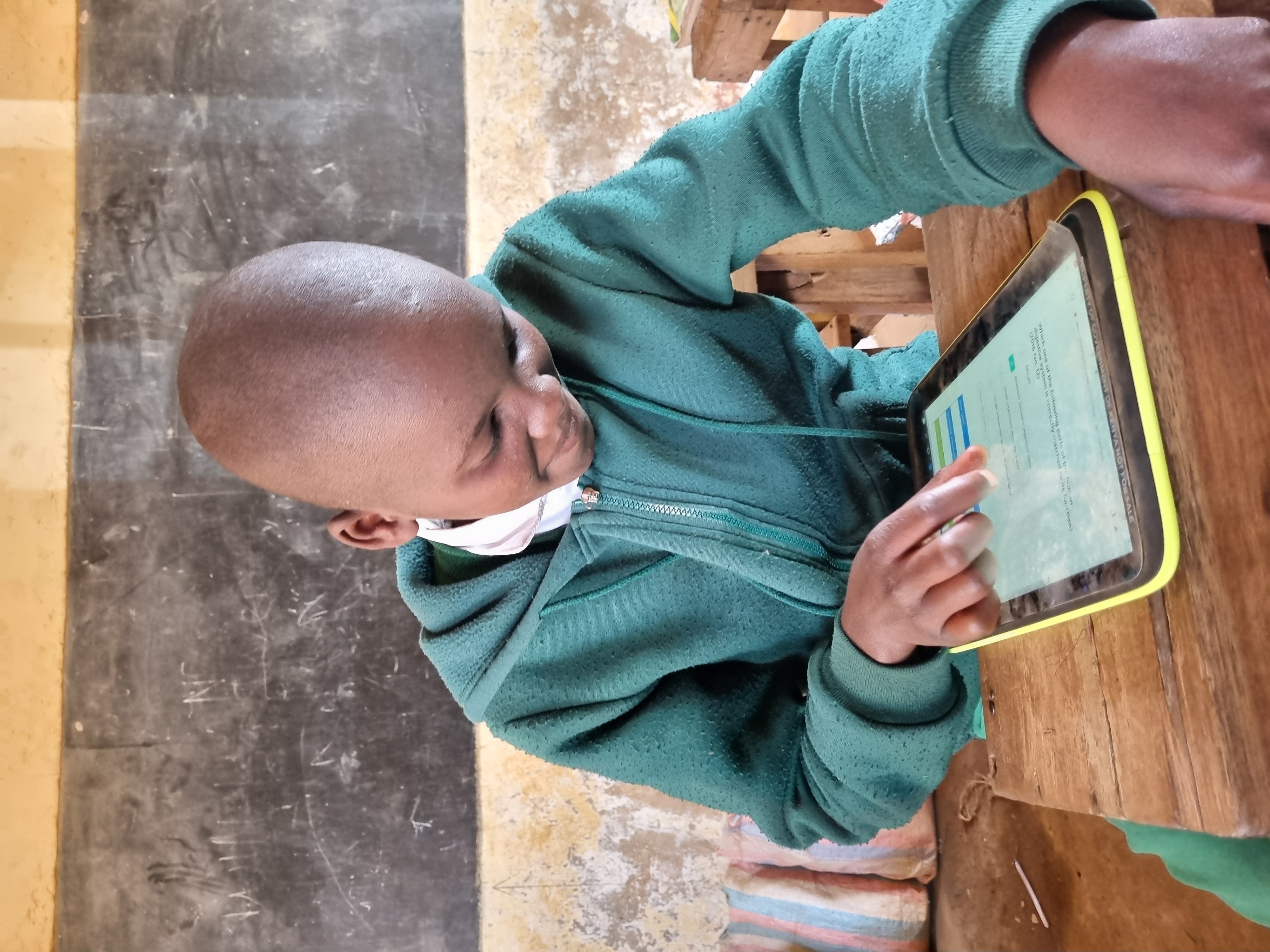 @Angaza Elimu
This tool works offline, allowing users in areas with low connectivity to benefit from the platforms. The growth funding enabled Angaza to develop advanced engines for student adaptation and teacher intervention. This means students can now receive a more personalized learning experience at their own speed, fostering self-development. Teachers can rely on the intervention engine more, giving them autonomy in guiding student instruction. Angaza tested their solution in 243 Kenya schools, reaching over 65,000 students and 3709 teachers. Student users with an average of 35 mins of daily engagement saw a 32% avg increase in academic performance. Teachers trained on eLearning pedagogy skills saw a 15% avg. time saved by using edtech tools.
Comunicación Aumentativa (Chile) developed the OTTAA Project, an AI-powered alternative and augmentative communication (AAC) assistant for children with speech impairments to communicate their basic needs and express their feelings. 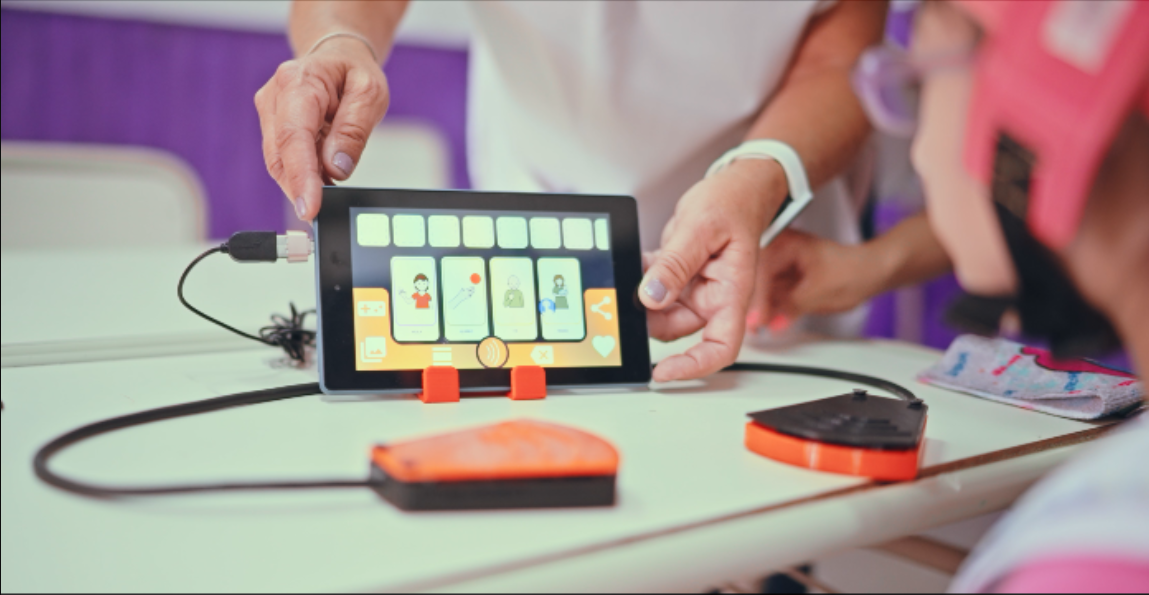 @Comunicacion Aumentativa
It uses environmental data and a powerful AI algorithm that, in combination with a pictogram-based communication code, allows users to create sentences and communicate effectively. The growth investment enabled OTTAA to complete product enhancements improving UI/UX, incorporating GPT, the development of prediction algorithm to improve the accuracy and reliability of OTTAA, and the enablement of users to create customized pictograms. Other notable milestones include becoming recognized as a DPG, reaching 15,000 monthly active users, and running multiple workshops across Argentina, Chile and Uruguay, reaching more than 500 healthcare professionals outside the big metropolis. OTTAA has also collaborated with another Venture Fund company, Cboard, to scale across 5+ UNICEF Country Offices.
Weni (Brazil) has built a platform that uses Natural Language Processing (NLP) to support multiple languages and an open database, enabling collaboration across organisations and allowing users to create chatbots. Weni uses AI to generate conversations that flow more naturally, creating a more human-like experience. With funding and tailored mentorship from the Venture Fund, Weni continued improving their NLP system which now has over 180 languages integrated. Today, Weni has served over 40 countries with 2 million people impacted.
 Weni received funding in 2020 to develop Bebbo (parenting app) that has now scaled to 14 countries across ECARO and has 800K downloads.
In 2021, it developed Health Buddy+, a web and mobile platform providing access to evidence-based information on health emergencies. The programme has since scaled with features adapted for guidance to refugees fleeing the war in Ukraine; and adapted for routine immunization misinformation management. With growth funding, Weni piloted technology in education setting with the development of Crypto, an AI chatbot to help 100+ Brazilian students improve their school performance. The pilot showed a positive result – students who used the chatbot performed approximately 3 points higher on average than students who did not use the chatbot.
Blockchain
StaTwig (India) is an SAAS platform using blockchain to delivery Identity, Provenance, and Traceability to products, in multi-stakeholder supply chains to solve problems related to counterfeiting, black-marketing, cold chain failures and out of stock.
@UNICEF/U.S. CDC/Daylin Paul
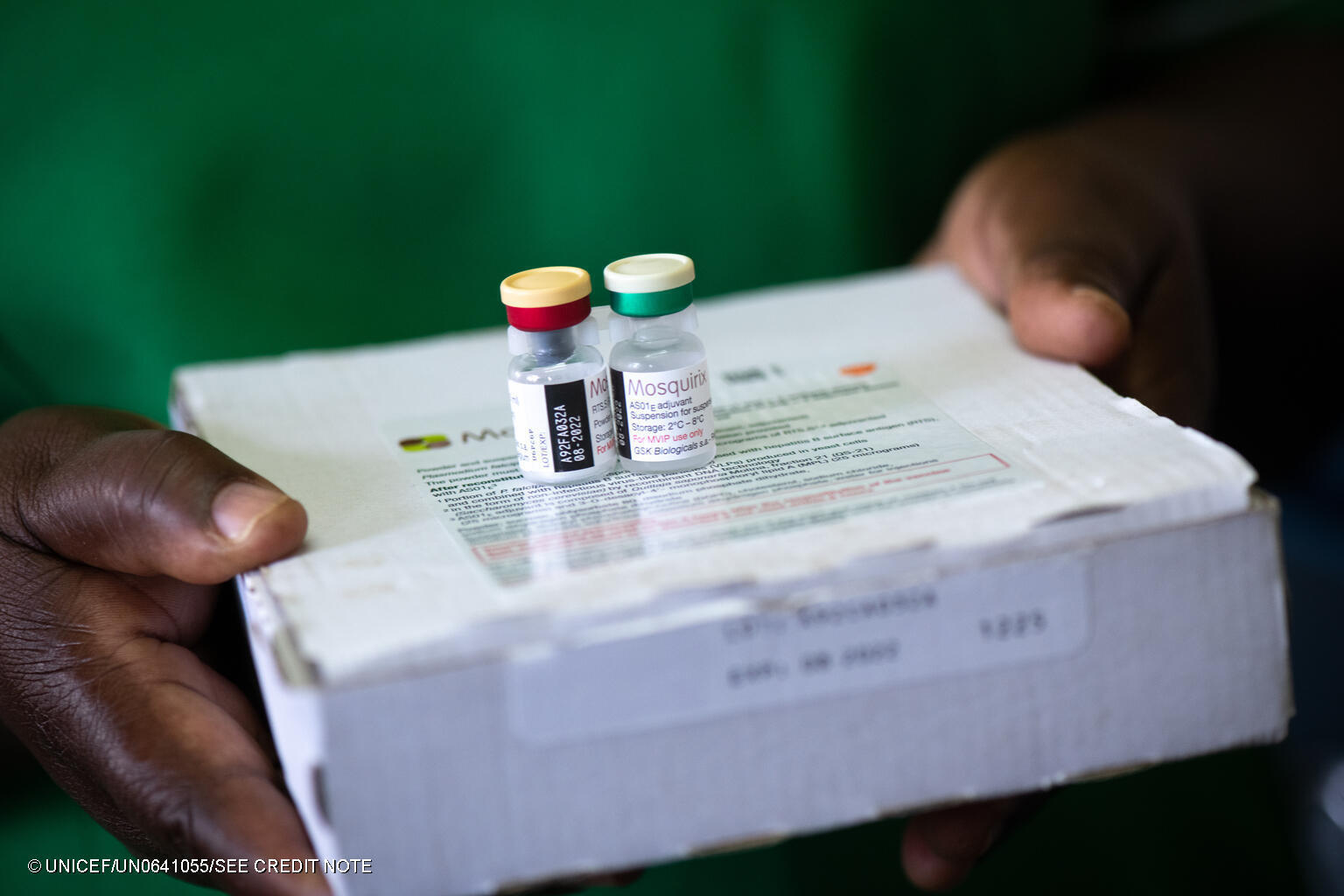
The flagship solution, VaccineLedger, captures data for every single vial of vaccine in the supply chains from manufacturer to beneficiary. The growth funding enabled StaTwig with the Costa Rica Health Care Chamber and IDB to deploy VaccineLedger to streamline and enhance the tracking of Covid vaccination records from procurement warehouses to distributors, hospitals, and pharmacies. Integrating with LACChain, VaccineLedger tracked two products from two major distributors – Cuestmoras and FarmaNova – reaching 1,200 pharmacy shops. This provides VaccineLedger with approximately 65% market visibility in Costa Rica. In total, VaccineLedger has supported 27 projects and tracked over 13.5M doses of vaccines, 22.5M kgs of rice, and 3 million recycled bottles through their platform.
Leveraging their LTA status with UNICEF, the company is now working with UNICEF Bangladesh for vaccine tracking.
Drones
Bioverse Labs (Brazil) uses drone imagery and machine learning to identify and map non-timber species of trees that are economically viable for supporting traditional modes of income generation for indigenous populations, thereby contributing to the sustainability of the Amazonian ecosystem.  @Bioverse Labs
During the seed stage investment, Bioverse piloted the Forest Map to detect nut trees in 1000 km2 of the Amazon Rainforest at the Parque Nacional do Xingo. Vectored over 9,240 trees, completing 97% accuracy on ML models for detection of Brazil Nut Tree . The results led to the publication of a research paper, Mapping Brazil Nut Trees, in Biological Informatic. The growth investment period was particularly difficult for the Bioverse team leading to team downsizing, but the team was able to complete the open-source updates to the platform, became a Digital Public Good, and developed new app features to serve Green Yoma with UNICEF Malawi and UNICEF Peru. Bioverse was also able to secure a large corporate customer, Natura, and expand its use case to both productive conservation and forest reforestation customers.
Dronfies Labs (Uruguay) has developed an Unmanned Traffic Management (UTM) system that supports real-time data sharing for airspace management and multiple drone operations coordination, including during emergencies such as natural disasters. It also provides support to drone delivery operations, such as medical delivery, as the system is compatible with a variety of consumer drones. The Uruguayan Civil Aviation Authority has incorporated Dronfies’ solution in its regulatory framework and is currently using its open-source solution through 2025. The growth funding enabled Dronfies to develop a new module that supported drone delivery options in the existing UTM, which the team was then able to test in an initial 3-month pilot with the Central Hospital of Tacuarembó, Uruguay, to evaluate the requirements of the drone delivery module in the UTM system. Dronfies conducted drone delivery corridors for disconnected communities, delivering breast milk, blood samples, and medical supplies across 40-60km per flight. Overall, 300+ people were impacted. The pilot helped reduce delivery time by 50% in some cases, and by 4 days in other cases. Since the pilot concluded in November 2023, the team has secured funding to expand the pilot in the second half of 2024.
Simple Map (Chile) develops solutions using machine learning, thermal, and multispectral imagery to detect, classify, and organise errors and damaged modules in solar power plants, with the goal of increasing energy efficiency and improving performance of solar farms. 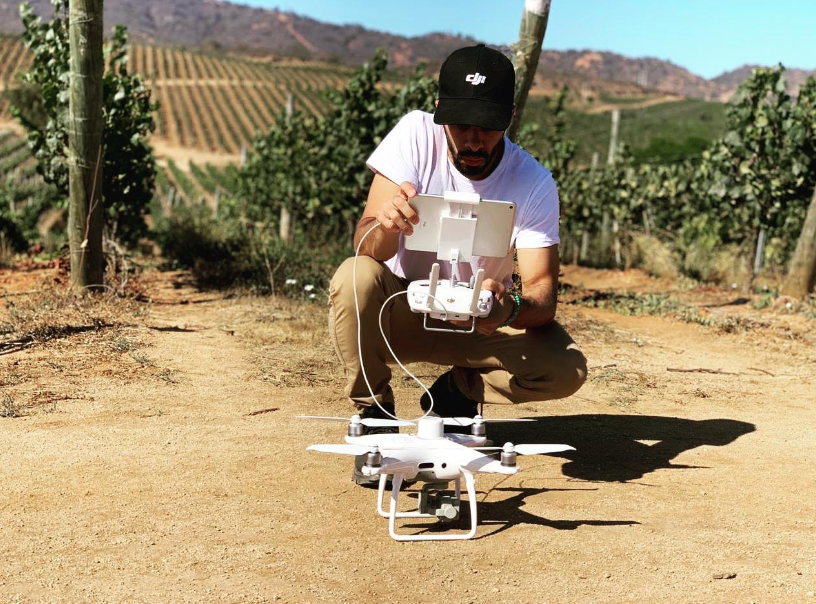 @Simple Maps
They have also developed AI Agro, recognized as a Digital Public Good, which enhances the quality and productivity of crops for agriculture producers by providing actionable insights through UAV imagery. During the growth funding investment period, technical metrics reached 5.24 million panels inspected to date, with 42,699 damaged panels detected. Determined 13.66 million energy loss (watts), and 49.87 million energy saved in kWh. Supported 6,234 houses with clean energy and mitigated $1.3 million in losses for clients. The company has since inspected 10 million solar panels and inspected 200+ hectares. Expanded services abroad to Australia, Mexico, Spain, and Brazil. Expanded beyond agriculture and photovoltaic energy to different kinds of services such as transmissions and distribution of electricity.
Thinking Machines: First Acceleration Funded Startup
The Venture Fund’s investment in Thinking Machines (Philippines) has led to the development of the Artificial Intelligence for Development Research Bank (AI4D) in collaboration with the East Asia Pacific Region Office (EAPRO). 
Launched in 2021, AI4D aims to increase access to technical resources and promote research and discussions on adopting machine learning in the development sector. AI4D encompasses three main products: an air quality estimation model, a geodata transformation Python package called GeoWrangler, and relative wealth mapping research models. Each product addresses specific challenges in the development sector, contributing to innovative solutions and enhanced decision-making capabilities.
The air quality estimation model focuses on predicting particulate matter (PM 2.5) levels in Thailand using open remote sensing data. Given the severe health impacts of PM2.5, particularly in the Asia Pacific region, this model offers a promising alternative to sparse ground data. With an R² score of 0.8672 and a mean absolute error (MAE) of 4.0167 µg/m3, the model demonstrates substantial accuracy. The next steps involve improving the model's generalizability and conducting temporal validation experiments.
Thinking Machines was recognized for its work as part of the Office of Innovation’s Innovation30 Young Climate Innovators at COP28.
The second AI4D product is GeoWrangler, a Python package that simplifies and accelerates geodata transformation workflows. This tool is designed to integrate various geospatial datasets, allowing analysts to focus on downstream analytics and machine learning. Within UNICEF, GeoWrangler has been used to estimate school internet connectivity, understand climate impacts on child health, and measure social protection payments' reach.
Outside of UNICEF, the tool has facilitated nationwide poverty mapping in the Philippines and supported Conservation International’s Climate Smart Shrimp (CSS) program by identifying suitable areas for aquaculture investments. GeoWrangler’s efficiency has significantly reduced project timelines, showcasing its potential for broader applications.
The final component of AI4D are relative wealth datasets. With EAPRO, Thinking Machines evaluated a series of feature engineering and ML techniques to create nationwide poverty maps for the Philippines, Cambodia, Myanmar, Timor Leste, Indonesia, Malaysia, Thailand, Laos and Vietnam.
Relative wealth estimates are now available at a 2.4 km2 grid for countries in the region trained on open data and the Demographic Health Surveys (DHS).
Stories by this author
Cleaning Up the Future: How INS is Using AI to Detect and Monitor Waste
Read StoryRelated Stories


