
Waste Management: How Intelligent Network Solutions is Using AI to Detect Illegal Landfills

Mid-Investment Update: Intelligent Network Solutions
UNICEF Venture Fund is featuring members of its Climate Action Cohort. The company is now six-months into a year-long investment period and shares an overview of their solution, progress, and next steps.
Our Solution
INTELLIGENT NETWORK SOLUTION (INS) is a privately owned technology corporation established in 2007 that solves its client’s business problems and challenges, by bringing together global expertise, innovation and creativity to produce world class technology solutions. Our main line of operation is in building GIS (geographic information systems) and BIM (building information modelling) software.
Our values are high quality products and services, integrity and healthy team development.
Intelligent Network Solutions (INS) creates opportunities and solves problems for customers tackling the complexities of building commercial grade solutions.
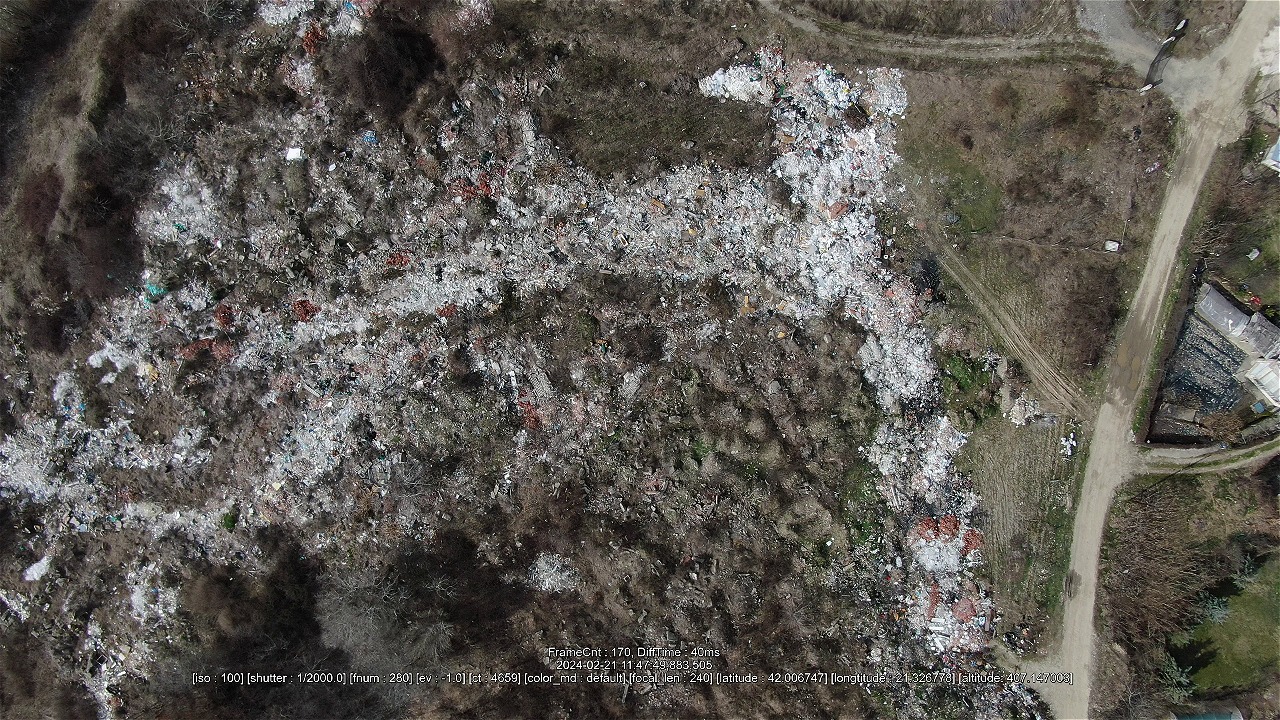
We seek to improve the management of legal landfills through digitalization of processes and innovative data acquisition such as drone scanning and point-cloud data/3D modelling. We are working on a tool that will ease the process of detection of dumps.
Through AI based photogrammetric analysis, our platform will detect illegal landfills by uploading satellite/drone imagery and AI model training. Once the analysis of the input satellite/drone image is finished, a set of vector polygons is generated that marks all the detected illegal landfills. If this process is repeated in scheduled terms, e.g. once per month with fresh images, the platform will directly answer questions such as how the illegal landfills are handled, are there any new illegal landfills, what is the area of each landfill detected, how did this progress historically, etc. By this process of automated detection, the end users would be duly and timely informed about the status of illegal landfills in the area of interest.
How would you describe your solution to a non-technical person?
The lack of proper waste management infrastructure and practices, as well as a lack of enforcement of waste management laws and regulations, have contributed to the proliferation of illegal landfills.
Our solution tackles 2 main problems:
- Uncontrolled generating of illegal waste landfills
- Weak management of legal landfills
The solution follows a few basic steps for detecting illegal landfills:
- AI-based photogrammetric analysis: This means using a model that is trained to understand images (like those from satellites or drones) to analyze them and gather information.
- Detecting illegal landfills: The computer system will look at these images to find places where garbage has been dumped illegally, like in forests or fields where it shouldn't be.
- Quality on resolution: The better the quality of the satellite/drone image (how clear and detailed it is), the better the computer can find these illegal dump sites.
- Generating markers: Once the computer finishes looking at the satellite/drone image, it creates little shapes on a map that show where it thinks the illegal dumps are.
- Repeating the process: If we do this regularly, like every month with new satellite images, the computer can give us updates. For example, it can tell us if there are new illegal dumps, how big they are, and how things have changed over time.
The second part of the solution we are developing is a tool for controlling and tracking of the legal landfills. The platform will contain user interfaces through which end users can input info about waste weight and type for each waste entry into the landfill. This input can be enhanced by uploading drone scans as point-cloud data sets based on which the current volume of the waste landfill occupancy can be found and calculated. Through scheduled drone scanning's and regular waste entry information input the current state of the landfill can be tracked and the results of the inputs can be viewed through generated reports about the landfill inputs as well as a 3D preview of the latest point-cloud scan.
What type of frontier technology does your solution deploy (I.e. blockchain, drones, AI/DS)? What's promising about this technology?
The proposed system utilizes state of the art computer vision model to analyze satellite/drone images and identify waste. Our solution is meant to be used as a single web application that will simplify the process of training and using AI for waste detection. The end user of this solution will be able to organize and label the model training dataset (training images), train a model, use the trained model to detect waste, visualize the detection results on the map and generate reports based on the results.
The user will be able to improve upon the existing detection models or train new ones. Also, the user will be able to use any of the previous model versions to analyze new or existing satellite/drone imagery.
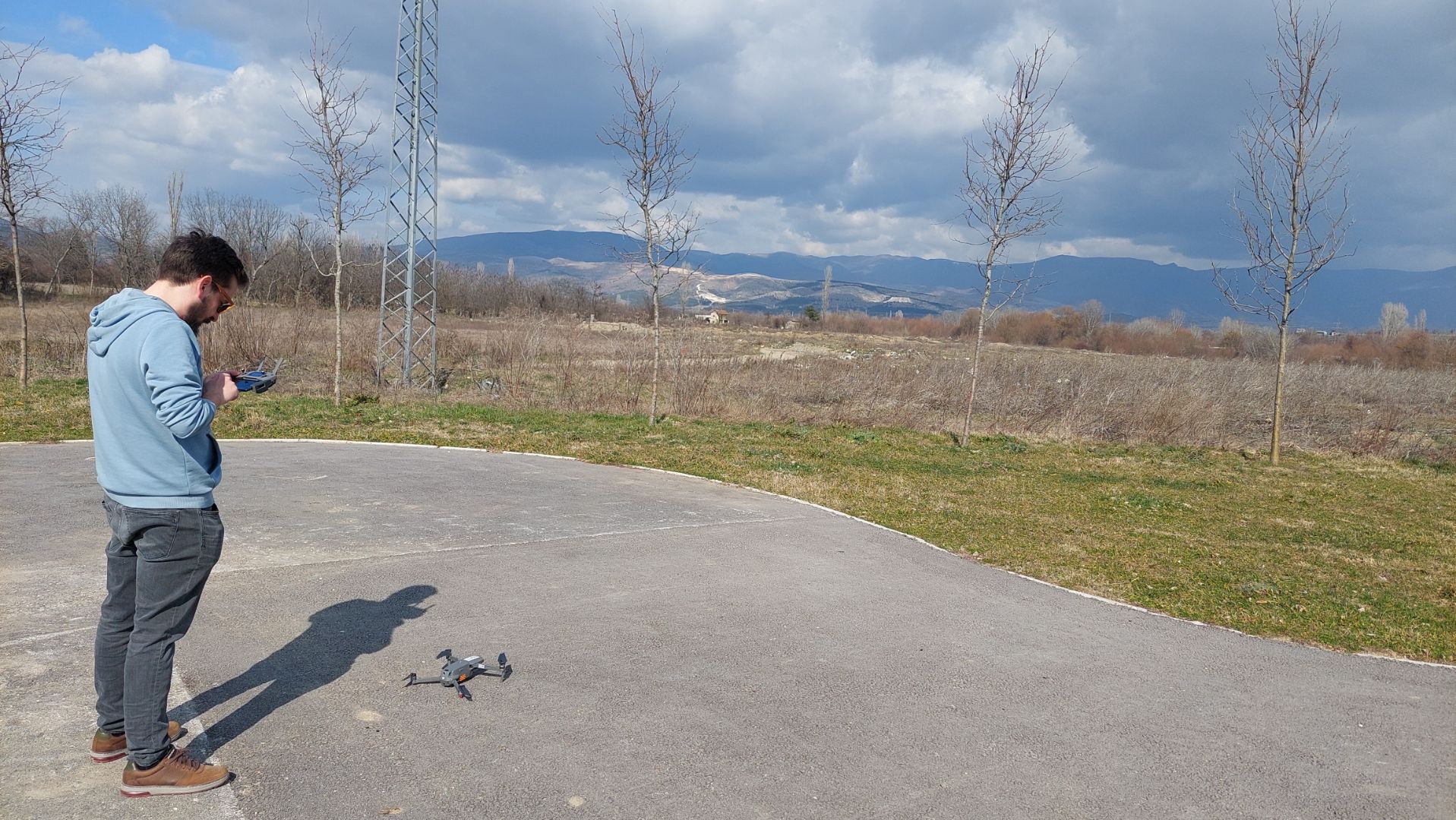
Even though the detection model provides good results with either high resolution satellite or drone imagery we prefer the use of drone imagery since drones are usually:
- Easily accessible
- More economic for obtaining imagery in the long run compared to satellite imagery
- Do not require too much planning in order to acquire data
- Can be preprogrammed with standard flight missions over areas that need to be monitored regularly
By automating the process of waste detection using AI algorithms, the solution offers a more efficient and scalable approach compared to traditional manual methods. This efficiency allows for the analysis of large geographic areas in a relatively short amount of time, enabling timely detection and response to illegal landfills.
What is unique about your solution and how is it different from what currently exists?
The main benefits of the platform are:
- Automated detection of illegal landfills in large geographic areas, enabling authorities to take appropriate action to prevent further damage to the environment
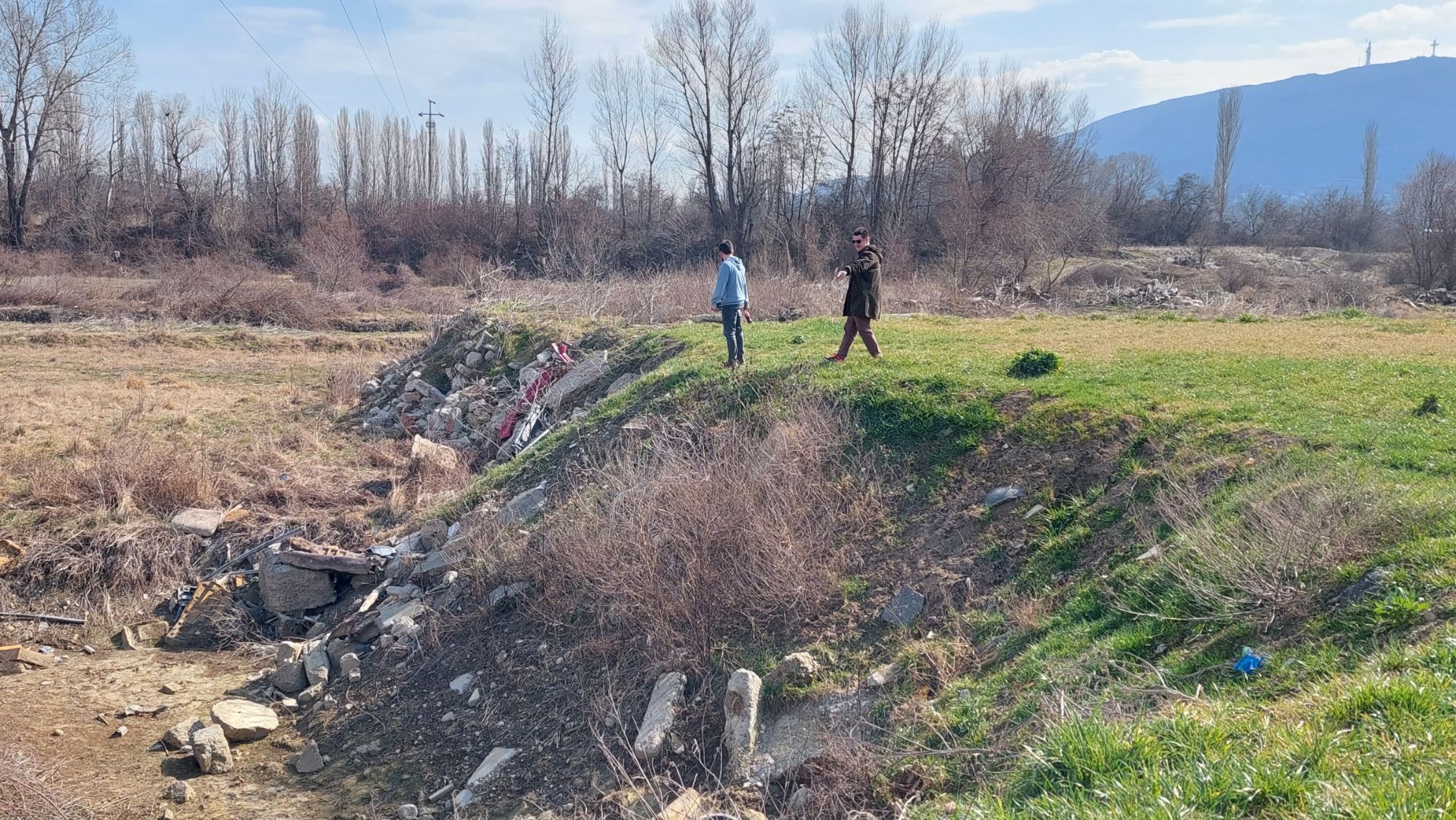
- No need of direct field inspections, no need for sending people into the field to detect if there are illegal landfills or not
- With this, the platform saves time for our end-users and hand-in-hand resources
- The managers of legal landfills can track the progress and changes of the waste volumes in their organizations. By tracking the progress of waste reduction efforts over time, the system can help users identify areas where improvements can be made
- The point-cloud data sets coming from drone scans represent a realistic digital representation of the current state of the landfill
- These scans can be browsed in a 3D viewer so that the state can be seen even without the need to go into the landfill.
Overall, our solution offers a unique combination of automation, remote monitoring, real-time analysis, and detailed visualization capabilities, providing a comprehensive and efficient tool for detecting, managing, and monitoring landfill sites.
Why does being Open Source make your solution better?
Our Open-source project allows collaboration among developers, researchers, and stakeholders from diverse backgrounds and expertise. By leveraging the collective knowledge and skills of a global community, the solution can benefit from a wider range of perspectives and innovative ideas, leading to more robust and effective solutions to address illegal dumping and waste management challenges. Open-source projects empower users to take ownership of the technology and become active participants in its development and deployment. By providing access to the source code and documentation, the solution can help build the technical capacity of local communities and organizations, enabling them to customize, deploy, and maintain the solution independently. This empowerment fosters sustainability and resilience by ensuring that communities have the tools and knowledge they need to address environmental challenges effectively.
How did you come up with your solution and what inspired you to form your company?
Inspiration came from various sources, including personal experiences, passion for solving a particular problem, desire to make a positive impact, and recognition of market opportunities. Developing a solution for detecting and monitoring illegal dump sites may present a lucrative business opportunity for our company. By offering a unique and effective solution to government agencies, environmental organizations, or waste management companies, our company can capture market share and generate revenue. Developing this kind of solution allows our company to differentiate itself in the market by offering a cutting-edge technology solution to a pressing environmental challenge. By innovating in this space, we can establish ourselves as a leader in environmental monitoring and sustainability.
Tell us more about your team? What makes your team diverse?
A first thing that adds value to diversity is the different perspectives: When team members come from diverse backgrounds, they bring unique experiences and viewpoints to the table. This diversity of perspectives leads to more innovative and creative solutions to problems. It encourages open communication, respect for different opinions, and the ability to work effectively with individuals from various cultures and perspectives. Our team works remote, including team members from two different countries, different genders and led by woman. Each team member contributes their specialized knowledge, improving the overall skill set of the team and enabling them to tackle a broader range of challenges. Our team diversity creates more comprehensive and effective solution.
Having a diverse workforce allows our company to navigate different markets and cultures more effectively, giving us a competitive edge. With a diverse workforce, we can better understand and connect with a diverse customer base. This can lead to improved marketing strategies, product development, and customer satisfaction. Since we are targeting different markets, engaging a workforce with different backgrounds helps us to understand better our potential customers.
What do you plan on doing with UNICEF's Venture Fund investment and how will you use that to leverage additional opportunities for growth?
Thanks to the support of UNICEF, our idea for creating an innovative solution that harnesses the power of Artificial Intelligence (AI) to address environmental challenges has become a reality. With UNICEF's guidance and funding, we are developing a cutting-edge AI-driven platform that detects and monitors illegal landfills and monitors legal landfills. By leveraging AI technology, we provide timely and accurate information to relevant authorities, enabling them to take swift action to mitigate environmental hazards and protect vulnerable populations.
Since we have established the base of the solution, our next steps will be Invest in research and development or invest in technology to enhance the existing product. Adding additional functionalities will increase the usage of the solution and can be a solid reason for expanding into new markets or reaching more beneficiaries. Continuously innovate and refine our solution to enhance its effectiveness, accuracy, and scalability. By staying ahead of the curve, we can remain competitive and seize new opportunities as they arise.
What challenges are you currently facing in building your solution and/or startup?
Algorithm Accuracy and Bias: The effectiveness of the AI algorithms used for detecting illegal landfills heavily relies on their accuracy and ability to distinguish between legitimate land use and unauthorized waste disposal. Developing algorithms that can accurately identify illegal landfills while minimizing false positives and negatives is a complex task. Moreover, there's a risk of algorithmic bias, where the AI model may perform differently across different geographic regions or demographic groups, potentially leading to disparities in detection rates or misidentification of certain areas as illegal dump sites.
Effect on AI Model: If the pictures aren't very good or there aren't enough of them, it can make it harder for the computer program (the AI model) to do its job properly. It might not be able to find illegal dumping sites as accurately, which could cause problems when trying to clean up the environment.
Awareness and Understanding: One challenge is ensuring that the target audience is aware of the solution and understands its benefits. Some stakeholders may be unfamiliar with AI technology or skeptical about its effectiveness in addressing environmental issues. Educating the audience about how the solution works, and its potential impact is crucial for gaining their trust and support.
How can others support you in working towards overcoming these challenges?
By fostering collaboration, sharing resources and expertise, and raising awareness, individuals and organizations can play a vital role in supporting efforts to overcome challenges associated with AI-driven environmental monitoring and contribute to the development of more effective and inclusive solutions. Training programs and capacity-building initiatives can empower better understanding and accepting of the new technologies.
Connect with Intelligent Network Solutions
Interested to connect with Intelligent Network Solutions? Visit the website, follow on Facebook, or reach out via email at [email protected].
Stories by this author
Cleaning Up the Future: How INS is Using AI to Detect and Monitor Waste
Read StoryRelated Stories


