
From Niche to Necessary: Reflections from UN Open Source Week 2025

Overview
UN Open Source Week 2025 brought together over 800 participants from more than 74 countries. This included people from governments, nonprofits, academia, industry, and open source communities. The event focused on how open source supports digital public infrastructure (DPI), sovereignty, inclusion, and global cooperation.
Since its start in 2023, this annual gathering started as a technical working group session but has now become a global space for idea exchange, policy discussion, and showcasing real-world impact. The 2025 edition expanded that work with sessions on humanitarian software, supply chain security, trust in digital ID systems, and more. As noted by Amandeep Singh Gill, Under-Secretary-General and United Nations Secretary-General’s Envoy on Technology, this unexpected evolution reflects the power of “losing control” in the best possible way—unlocking serendipity and strengthening digital cooperation in an open economy.
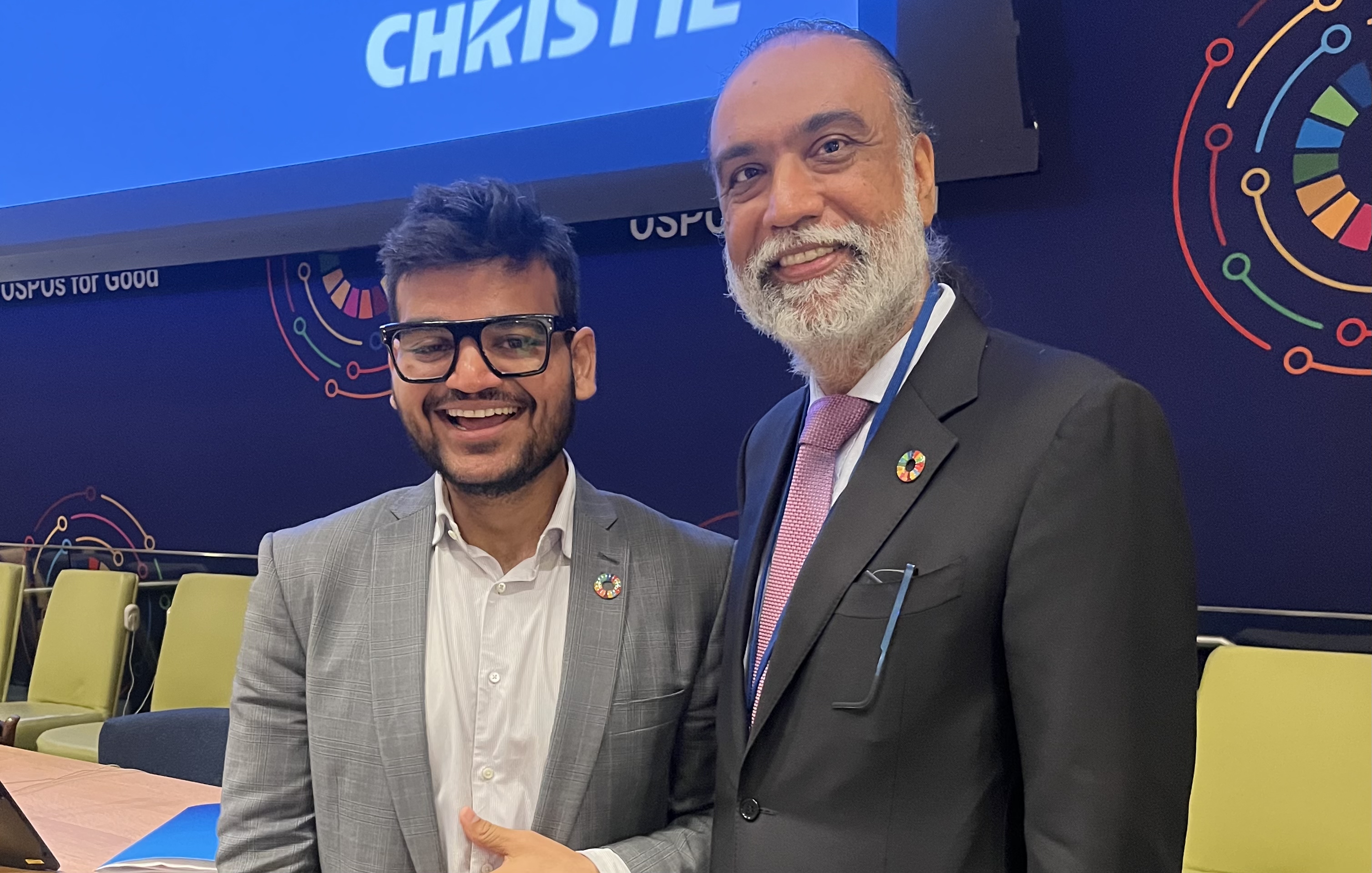
Vipul and Amandeep Singh talk policy to practice when it comes to embracing open source.
Historically, many open source conversations have been about cost savings, but this wasn’t the case here. The conversations have shifted to collaboration, innovation, and using open source to build trust.
Several government representatives talked about how having an Open Source Programme Office (OSPO) helped them build connections to other people within their organizations while also allowing them to build connections and partnerships to collaborate and learn from beyond. Many countries view open source as being critical to their success as a country and in serving the needs and improving the livelihoods of their people. The challenge remains consistent however: governments are increasingly interested in using open source but face challenges adapting procurement processes that often require different policies to contribute, add new features, and maintain open-source projects. While new feature development often receives funding, the long-term maintenance of widely used tools remains under-resourced, posing sustainability risks.
Representing UNICEF’s Office of Innovation, Ventures Team Open Source Innovation Specialist Vipul Siddharth participated and shares the following takeaways:
From Collaboration to Cultural Shift: Embedding Open Source in How We Work
Beyond panels and presentations, the week created space for deeper collaboration. Vipul was an active contributor throughout Open Source Week, not only participating in sessions, but also serving as a judge, along with Venture Data Science Innovation Manager Daniel Alvarez, at the UN Tech Over Hackathon.
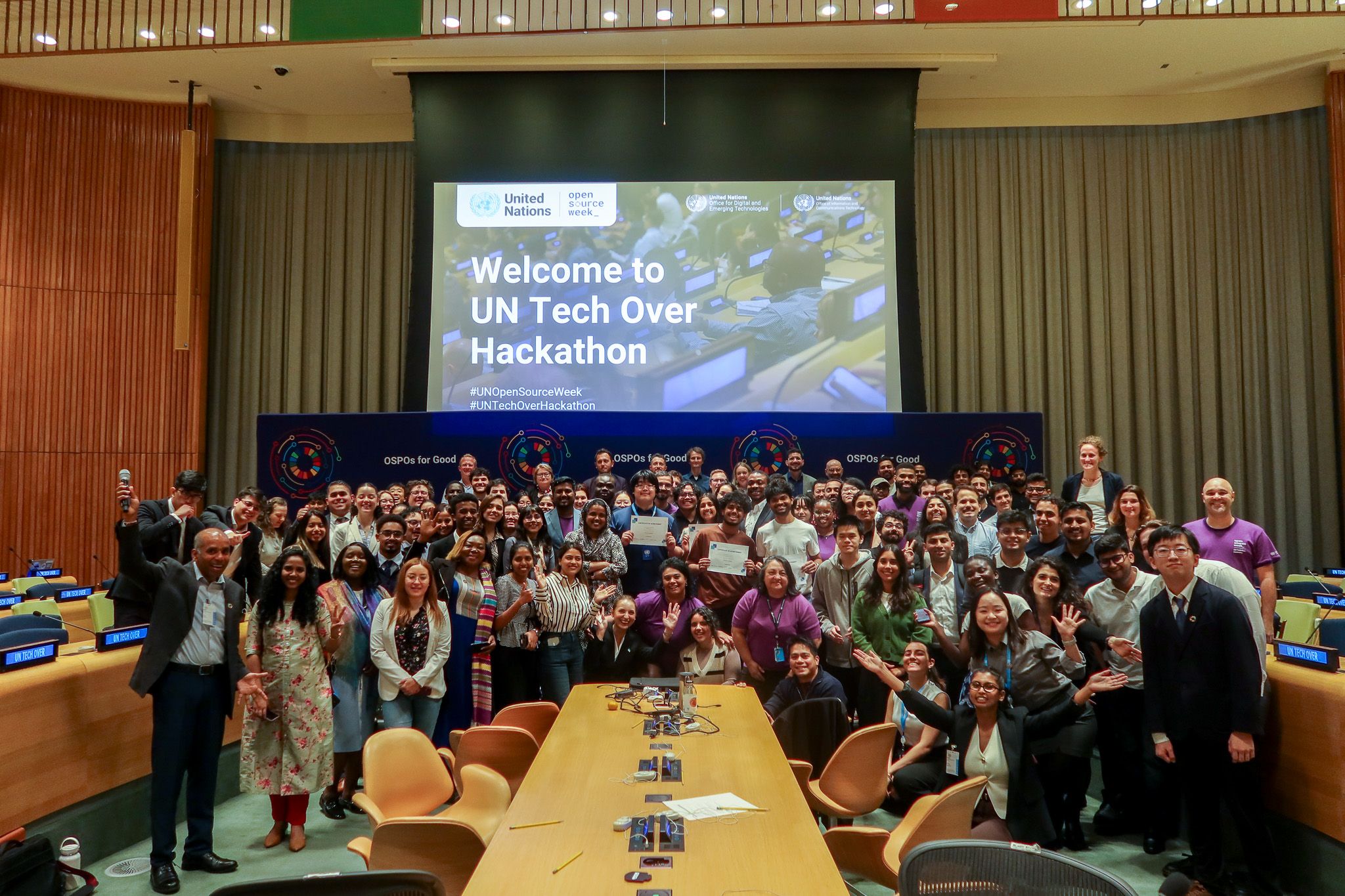
The hackathon brought over 80 innovators, technologists and open source enthusiasts to tackle 3 multi-faceted challenges related to geospatial data analytics problems pertinent to critical global issues aligned with the Global Digital Compact. The hackathon teams were assessed based on usability, relevance, and ethical design. “The tools had to be field-ready and useful for frontline responders,” Vipul says.
He engaged with several high-level UN representatives to discuss strengthening the UN's Open Source Community of Practice, the need to move from policy to practice, making open source culture de facto within programmatic effort, as well as opportunities of open hardware opportunities and challenges in creating new procurement pipelines .
On the day of OSPOs for Good, Vipul led a breakout room on Humanitarian Free and Open Source Software (HFOSS). The conversation explored what qualifies as HFOSS, the challenges these tools face, the funding and governance gaps that persist, and the often-invisible labor of HFOSS maintainers.
UN Open Source Week 2025 was a reminder that technology alone won’t transform systems—people will. The most valuable conversations didn’t just focus on infrastructure or code, but on values: care, trust, fairness, and access.
“Open source at the UN is moving from niche to necessary,” Vipul says, “It’s starting to shape how we respond to crises, how we build trust, and how we serve people.”
Related Stories


