
Insights on the stablecoin-based end-to-end cash transfer platform test
Introduction
Our recent article has highlighted the growing relevance of stablecoin-based cash transfers in humanitarian and development contexts and the building of an end-to-end platform for delivering digital asset cash transfer, Aidlink. Building on this momentum, this article presents early outcomes from the Aidlink initiative, a technical proof of concept supported by the UNICEF Office of Innovation through its Venture Fund portfolio.
The solution
Through Aidlink, UNICEF supported three Venture Fund investee companies to collaboratively develop an open-source, end-to-end, EVM-compatible (for maximum flexibility and reach) digital asset transfer platform. Combining the solutions of these companies enabled an end-to-end exploration for delivering aid using stablecoin rails and offramping (converting digital assets or stablecoins to local fiat currencies), aimed at lowering costs, increasing transparency and improving speed of the delivery of aid.
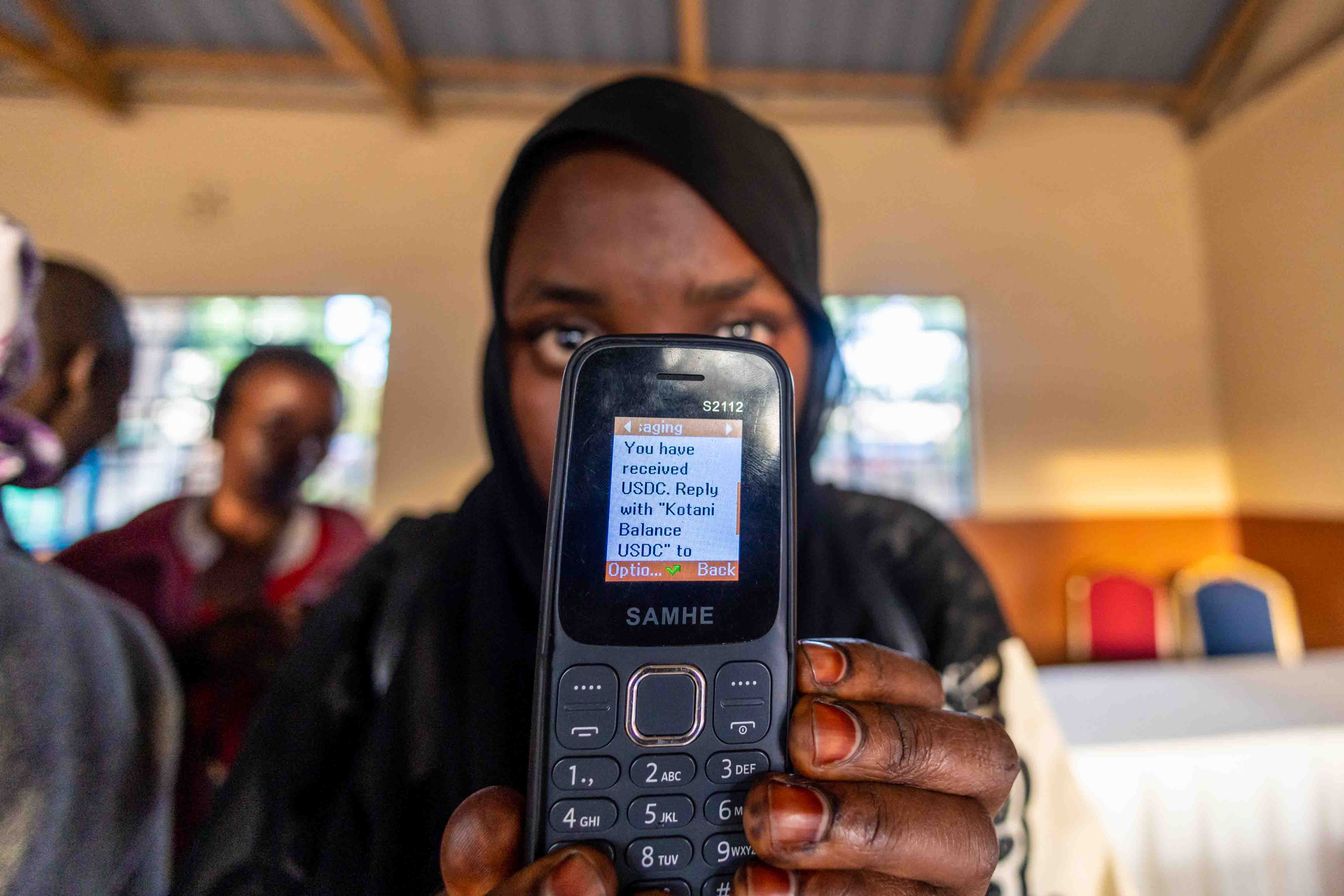
Beneficiary showing text of receipt of funds from the test group transfer session, Nairobi, Kenya, December 2025 @KotaniPay
The platform leverages the infrastructure built by the following three companies:
- Xcapit: Beneficiary SMS wallet + Treasury Management
- Rumsan: Beneficiary Data Management, Disbursement triggers and Dashboard
- Kotani Pay: Compliance and Off-Ramping to MPesa
Following platform development, internal test transfers were conducted to validate successful integration across the three components.
Proof of Concept
With the facilitation of UNICEF Office of Innovation, building on Kotani Pay’s existing partnership, the 3 startups partnered with the Kenyan. NGO Advantage Africa, Advantage Africa identified a test group of 49 users living in the Greater Nairobi Metropolitan region. Participants represented varying levels of intellectual disability, adding an important accessibility dimension to the testing of this prototype. The group included:
1. Individuals able to operate a phone independently
2. Individuals able to operate a phone with family or carer assistance
3. Individuals requiring a family member or carer to operate a phone on their behalf
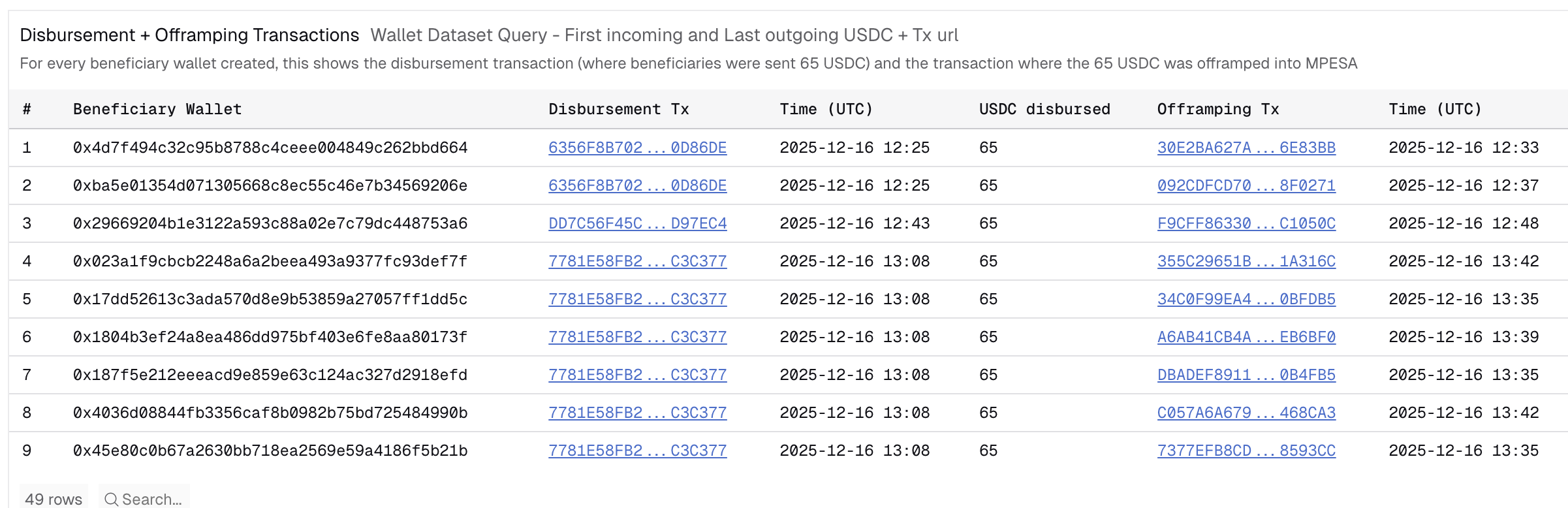
The proof of concept involved transferring 65 USDC to each of the 49 recipients, followed by them offramping the amount in KES (Kenya Shillings) to their M-Pesa account, a widely used mobile money provider in Kenya. This was conducted over two days of organized sessions.
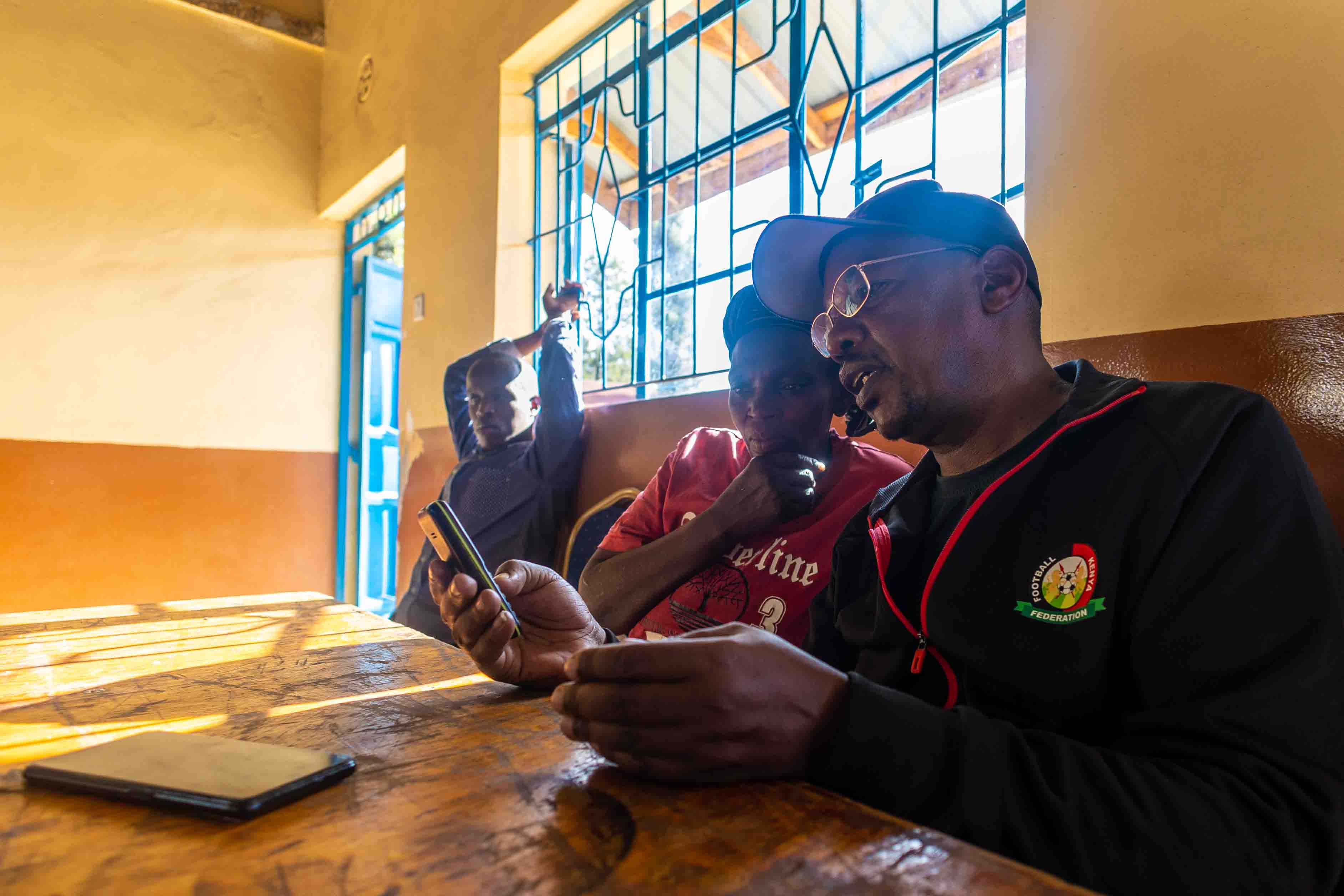
Onboarding and transfers were conducted in organized group sessions, which included training on SMS wallet commands and an overview of the transaction process. Personally identifiable information such as names and phone numbers of beneficiaries was not stored on blockchains. Sessions continued until all participants completed a successful offramping transaction and received a positive Kenyan shilling (KES) balance in their M-Pesa accounts.
The Rumsan dashboard enabled real-time tracking of all transactions, including offramping status for each recipient, meaning status of exchanging USDC received in their blockchain wallets to Kenyan shilling in their MPesa accounts. The wallets created for the test were closed after the successful offramping, to prevent any mismanagement and protect the test group from unsolicited traffic.
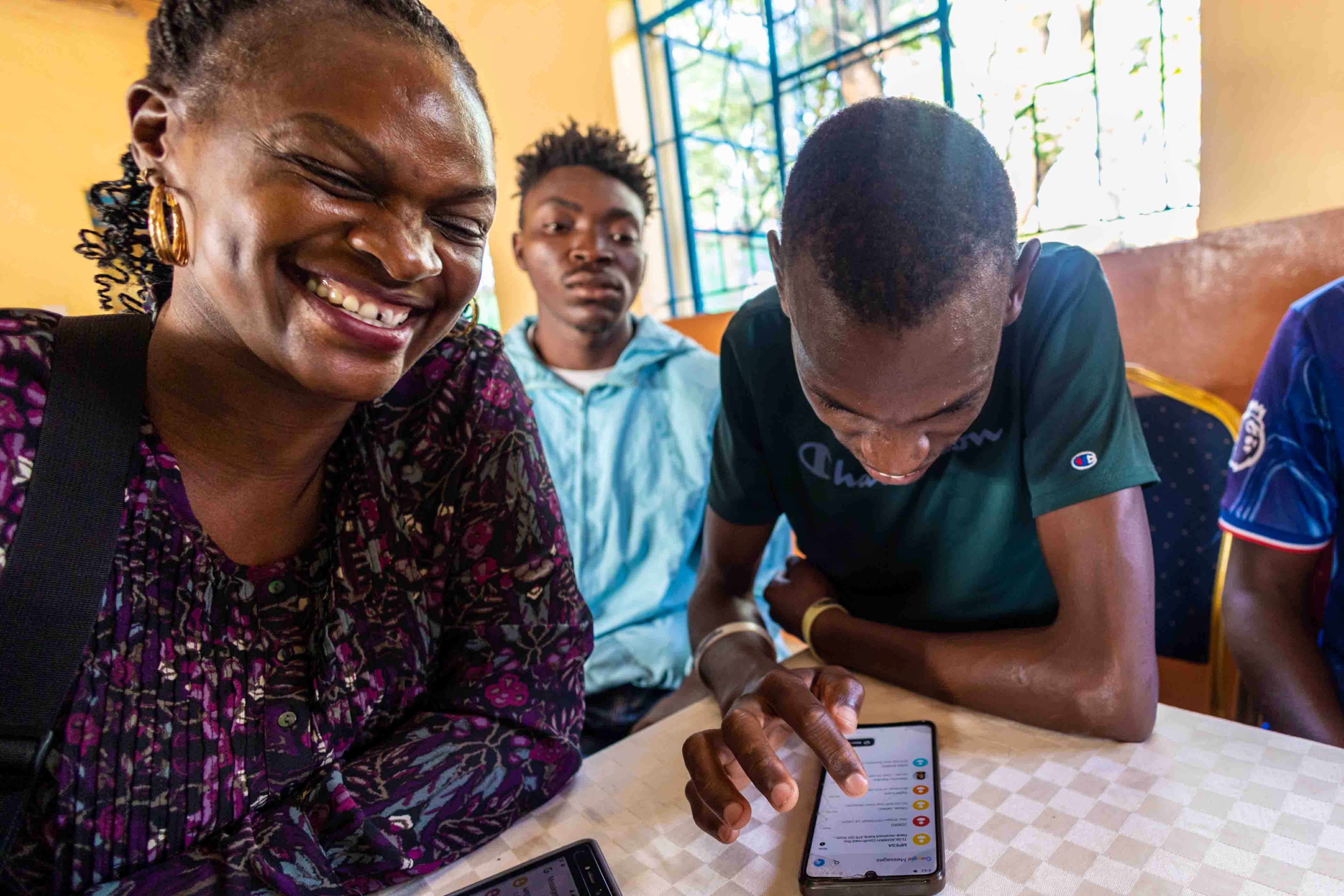
Smile after successful offramp from USDC to KES during the group test transfer session, Nairobi, Kenya, December 2025 @KotaniPay
Results and insights
Outcomes and Performance
The proof of concept achieved the following results:
100 per cent of disbursements were received and off-ramped successfully,
Wallet creation was automatically triggered by Rumsan after user data was uploaded and completed within minutes, demonstrating significant process speed.
Off-Ramping Performance
Out of 49 transactions:
- 39 transactions completed seamlessly, with an average offramping time of 19 minutes
- The shortest transaction completed in 1 minute from receipt to offramp
9 transactions experienced longer processing times, ranging from 40 minutes to just over 2 hours, due to the following factors:
- The SMS command interface proved un-intuitive for some and required extra support.
- Some of the phone numbers were not activated for M-Pesa, reflecting gaps in basic eligibility validation.
- Some recipients did not bring a phone, but just a SIM card causing delays in solving the logistics and performing basic checks for them.
- Temporary RPC outages, resulting in the inability for the application to communicate with the blockchain network, leading to inconsistent status updates. This was resolved by building in buffer checks and timers in the code.
- There was a temporary delay caused by low KES balance in the bank account used for M-Pesa transfers for the offramping services. This was resolved by topping up the KES balance.
- Three instances of mistyped phone numbers caused by human error.
1 transaction took 2 days for off-ramping as the test user had left the premises after receipt of the USDC. This user did not have electricity at home and was therefore unreachable for further off-ramping guidance.
On the public dashboard, anybody can verify the transactions in this pilot as everything is traceable on the blockchain – both the initial disbursement and the initiation of offramping.
Related Stories


