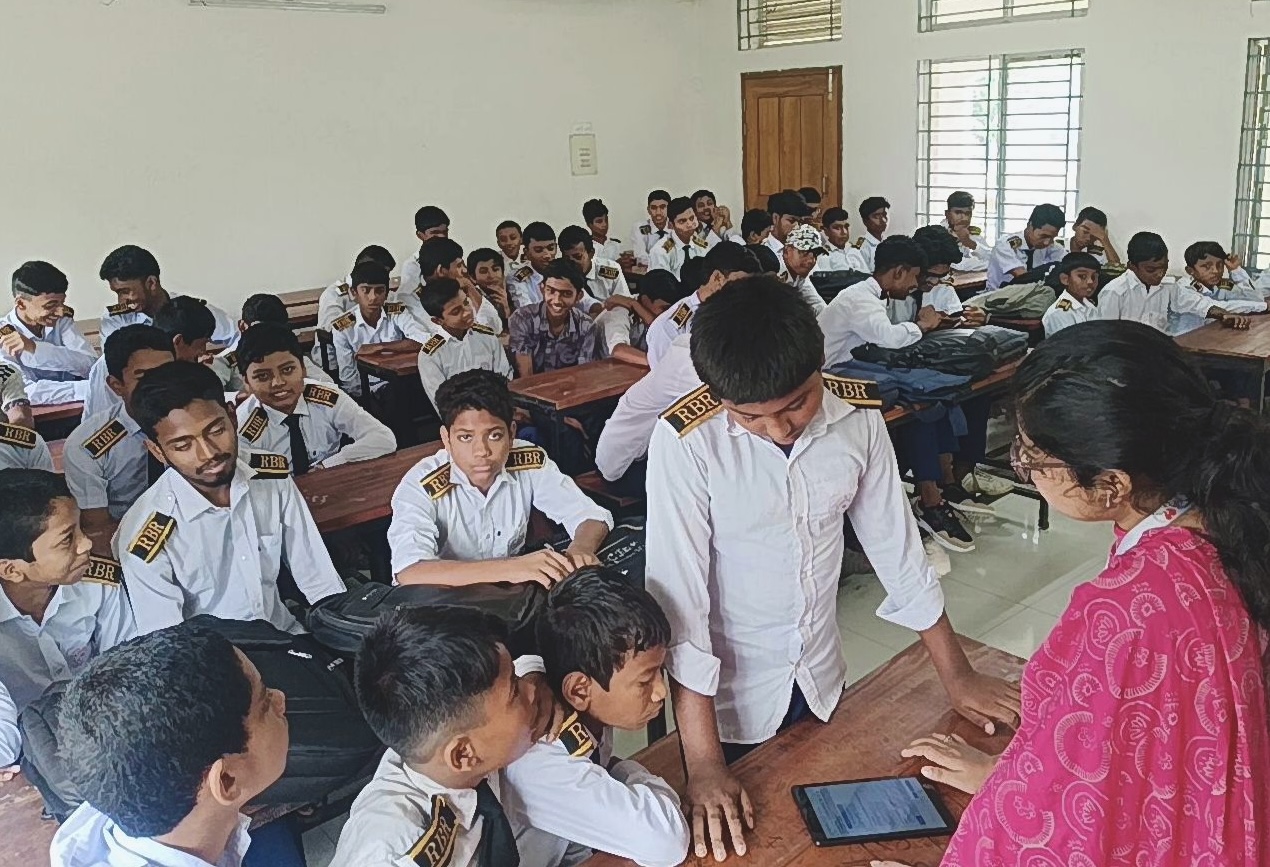
“Manush-E has become a caring partner for children, supporting their well-being, guiding caregivers, and showing how technology, combined with the right people, can truly nurture hope, health, and opportunity.”
Moner Bondhu
Where will your solution have the greatest impact in the next phase, and why?
The Path Forward: Going Global
Geographically, having successfully established and proven the profound impact of Manush-E across Bangladesh, our sights are now set firmly on a global trajectory. Building on our current success, we are prioritizing expansion across developing regions, leveraging widespread smartphones and internet access to introduce our culturally adaptive, technology-driven, well-being solutions. Manush-E's open-source and modular design acts as a powerful accelerator, enabling its rapid adaptation and deployment across other developing nations, particularly throughout South Asia and Africa, where the need for scalable child wellbeing support is immense.
Socially and technologically, the platform is a beacon of proactive care. Its automated data-driven monitoring, gamified assessments, and real-time personalized recommendations allow for the early identification of wellbeing risks. By elegantly uniting children, parents, teachers, and dedicated professionals within a single, cohesive ecosystem, Manush-E actively champions proactive interventions.
Business Sustainability: A Hybrid Model for Massive Scale
From a Business Standpoint, scaling Manush-E is key to forging a sustainable model for delivering high-quality, cost-effective child well-being solutions on a massive scale. Strategic partnerships with schools, NGOs, and government agencies will fuel broad adoption, while the fundamental open-source approach ensures minimal deployment costs, fosters explosive innovation, and opens clear pathways for revenue through licensing, specialized support services, and comprehensive professional training programs.
Can you share a memorable user or field test and the key lessons you learned?
Learning from the Field: The Power of Trust and Playfulness
Once this system was proven, we had started thinking about software, and UNICEF venture fund was the perfect opportunity. The first build was uber simple: a web app that simply digitized the same form so field staff could stop carrying clipboards. It worked in airplane mode, stored data locally, and uploaded whenever the phone found internet.
Once the digitized forms matched the paper baseline, we added frictionless noise. From a more visually appealing interface asking, “Which color do you feel like right now?” and the student tapped a floating balloon. The tap travelled to the same backend, but the child experienced a thirty-second game break instead of an interrogation. Response rates became double; more importantly, children began volunteering extra sentences. We appended an open text field that accepted voice-to-text, and suddenly we had unprompted stories, context we had never thought to ask for. The lesson was that playfulness is not decoration; it is a data-quality intervention.
With three months of continuous daily readings, we trained the first small model: gradient-boosted decision trees that took 42 features and output a probability of “moderate to high psychological distress” in the next fortnight.
Recommendations came last. We began with the safest, cheapest layer: nudges generated from our expert’s guidelines. Each suggestion carried a “why” button that opened a two-sentence plain-language explanation. The app offered a direct link to Moner Bondhu’s counselling queue.
By the third quarter, the architecture had stabilized: offline-first database store, weekly sync over encryption, differential privacy applied before any record leaves the device, and a GPL open-source license. What looked like a straight year was really a cautious spiral as Manush-E evolved into a fully integrated, open-source platform that combined gamified assessments, AI-driven insights, and actionable interventions, creating a holistic ecosystem for monitoring and improving child well-being.
A bridge for communication and understanding
During one of our field tests at a school in Gaibandha, we watched a group of children interact with Manush-E for the first time. We expected some hesitation, but what unfolded surprised us. A boy, initially hesitant to engage, became completely absorbed in a gamified assessment, navigating the app with focus and curiosity. Halfway through, he paused, looked up at his teacher, and quietly shared something he had been anxious about for weeks, something he had never mentioned before to any of his peers, or even his family. That moment made us realize that Manush-E was not just a digital tool but a bridge for communication and understanding.
What stuck with us was how quickly a child could move from disengagement to openness when given the right environment. It highlighted the power of designing technology that feels approachable, playful, and safe. We learned that engagement and trust are inseparable, and that even the most advanced insights are only meaningful if the user feels comfortable using the system.
How has being Open Source benefited your solution and your company? Can you cite specific examples?
The Open Source Advantage: Transparency, Efficiency, and Trust
By preparing the code for public contribution and scrutiny, we first had to write the documentation we usually never found time for. Six months later we noticed that new engineers reached full productivity in half the onboarding hours; the “bus factor” that once rested on two senior developers now spread across the team because the discipline of open-source hygiene forced us to modularize and annotate before commit.
Budget meetings changed shape as well. Once we could no longer hide behind proprietary licensing plans, we confronted the real cost of vendor lock-in. Stripping out a commercial chart library in favor of an open source-licensed alternative forced us to explore the lair of technology often not captured by mainstream options.
Open source has strengthened transparency and trust. Parents, educators, and institutional partners can see exactly how the platform works, how data is processed, and how privacy is maintained. When curious stakeholders asked, “How do we know the model is fair?” We could send them the full training script and the anonymized dataset schema. This openness has been a key factor in driving adoption and scaling our solution while positioning Moner Bondhu as a leader in ethical, technology-driven child well-being initiatives.
How has your business model and strategy evolved over the past year, and what are your biggest achievements and growth plans for the next year?
Evolving our Business Model and Strategy into a Hybrid Model
Over the past 12 months, our business model and strategy have evolved to focus on scalability, accessibility, and impact, while maintaining sustainability. Initially, our approach centered on piloting Manush-E in select schools and proving the effectiveness of our AI-driven interventions. Over time, we shifted toward a hybrid model that combines open-source adoption with strategic partnerships. By making the platform freely available, we lowered barriers for schools, NGOs, and governments to adopt Manush-E, while building opportunities for revenue through intervention, counselling, support services, training, and integration partnerships.
Our biggest achievements in this area include establishing partnerships with multiple schools, refining our value proposition for institutional adoption, and laying the groundwork for regional expansion.
Over the next year, our strategy will focus on expanding adoption across more schools in Bangladesh and other regions, deepening engagement through multilingual and culturally adapted content, and building long-term collaborations with NGOs, educational institutions, and government programs. This approach will allow us to increase our reach, collect richer data to improve AI recommendations, and create a sustainable growth model that maximizes both social and operational impact.
Where are the biggest obstacles/challenges you think your company will need to address or work around?
Scaling with Responsibility and Trust, and Open Source Governance
One of the biggest challenges we anticipate is scaling responsibly while maintaining trust, privacy, and quality of care. As Manush-E expands to more schools and regions, managing large volumes of sensitive data, especially when working with children, requires constant vigilance in data protection, ethical AI use, and compliance with diverse local regulations. Ensuring that every deployment meets the highest standards of privacy and cultural sensitivity will continue to be a core priority.
Second, trust in the algorithm and explainable AI. Teachers and parents often accept the colorful interface on the screen, yet they hesitate when the same system recommends that a child be referred for professional help. “How can a phone know my son better than I do?” is a question we hear quite often. While smartphones and internet access are improving, digital literacy as well as stigma related to mental health among educators and parents can differ widely. To address this, we plan to invest further in onboarding, training, and building localized content to ensure effective adoption.
Finally, sustaining the open-source ecosystem presents both opportunities and challenges. Encouraging global collaboration while maintaining consistent quality, governance, and alignment with our mission requires careful community management. Despite these hurdles, we see each challenge as a path to strengthening the foundation of Manush-E.
What are you most excited about for your company next year, and what are your main goals?
Next Year's Goals: Run Manush-E in at least 1,000 Bangladeshi schools and more
Among our next set of goals, we aim to have Manush-E running in at least 1,000 Bangladeshi schools, covering every division and reaching an estimated 500,000 children. The platform is ready for scaling, and we are beginning the groundwork for regional deployment in other countries with similar mental health and educational challenges. Beyond Bangladesh, we are already in motion, as we are exploring the opportunities of translating, contextualizing and deploying Manush-E in Middle East and other South Asian markets.
Second, predictive power: we will train next-generation models on a full academic year of continuous data, letting the system forecast risk and recommend intervention more accurately and decisively. We also plan to integrate multilingual and culturally adaptive modules, ensuring that Manush-E remains inclusive and effective across diverse populations.
We also aim to solidify our impact measurement framework, tracking real-world improvements in children’s well-being and demonstrating measurable outcomes that can influence policy and large-scale adoption. What excites us most is the opportunity to transform data and innovation into real, lasting change for children’s lives, ensuring that well-being becomes a fundamental part of every child’s education and growth.
Through UNICEF’s network, we gained valuable guidance on open source software development, responsible AI development, ethical data governance, and impact measurement, which helped us design a solution that is not only technologically sound but also aligned with child rights and data protection standards.
Moner Bondhu
Most importantly, the Fund’s endorsement gave Manush-E credibility and trust among schools, government bodies, and international partners. It opened doors to meaningful collaborations that continue to shape our mission of improving children’s well-being through data-driven, ethical, and inclusive innovation.