
Advancing Gender Lens Investing: Insights from the London FemTech Event with Sagana and UNICEF
Overview
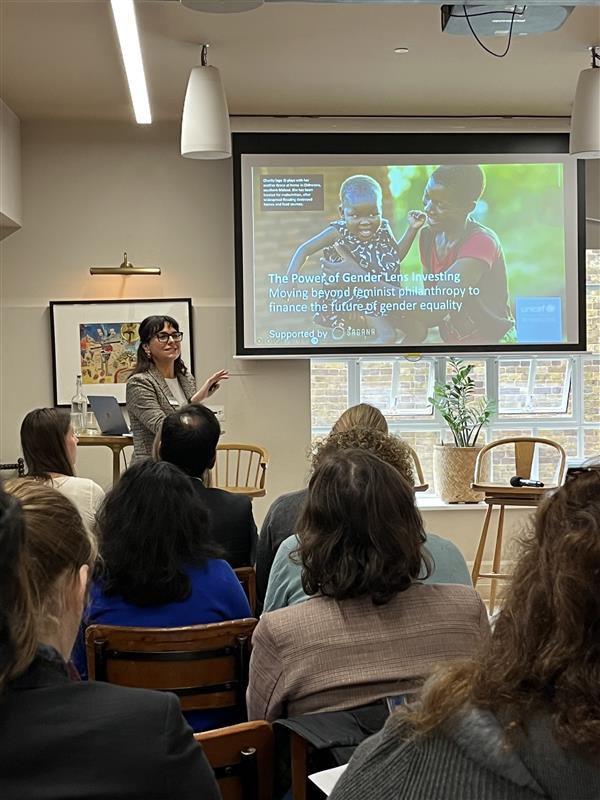
Last month in London, leaders from impact investing, entrepreneurship, and innovation came together for a dynamic event co-hosted by UNICEF UK, the UNICEF Office of Innovation and Switzerland-based investment advisory and impact-investing firm Sagana, The gathering focused on a central theme: gender lens investing — moving diverse capital stacks by women, to women, and for women and girls’ wellness and opportunity.

Embedding Gender Lens Investing in Practice

A central focus of the session was how the UNICEF Venture Fund embeds a gender lens throughout its investment process. The Fund applies gender and inclusion considerations from the earliest stages — through accessible and inclusive application processes, clear communication, and deliberate efforts to reach and amplify underrepresented founders, including women and young entrepreneurs in emerging markets. Participants also reflected on what entrepreneurship looks like in emerging markets — including how demographic-focused financing windows can expand access to capital, and the contextual risks tied to identity-based funding.
Speakers emphasized that inclusion is not only about who gets funded, but also how communication and engagement are designed during the sourcing process. By maintaining open, supportive communication — including simplified application language, multilingual materials, outreach through grassroots accelerators, and consideration of accessibility accommodations for demo presentations — the Fund helps applicants navigate complex funding systems and ensures that promising founders are not left behind.
The discussion also turned to how philanthropic funders can align more closely with investment frameworks. While grant funding and investment capital operate differently, finding a shared language between the two can help philanthropic actors adopt more catalytic approaches — preparing ventures for future investment and fostering sustainable impact. Participants noted that philanthropic capital has a dual catalytic role: it can directly strengthen early-stage businesses while also activating broader markets, helping to crowd in private-sector investors and de-risk innovation in emerging fields such as FemTech.
Finally, the group emphasized the importance of collaboration and shared pipelines among investors, accelerators, and development organizations. By working together and sharing deal flow, the ecosystem can ensure that high-potential women-led and youth-led ventures find the right kind of funding and support to scale their impact.
A Call to Collective Action

The discussions underscored a shared understanding: to unlock the full potential of women-led innovation, capital must evolve. By intentionally structuring, deploying, and incentivizing finance to serve inclusion, we can build ecosystems where women and girls not only benefit from innovation — they lead it.
Related Stories


