Portfolio News

CareNX’s Journey: Increasing Access to Prenatal Care in Rural India

CareNX Innovations Data Science+AI India
Dec 29 , 2026
Introducing Fetosense
On this page

Data Science+AI

CareNX Innovations

India
Amount invested $100,500 USD Funding Status active early period Founded in 2019 by Aditya Kulkarni
Generating Revenue

Reflecting on a year with UNICEF Venture Fund

In November 2024, the UNICEF Venture Fund announced its Health Systems Strengthening Cohort, selecting four ventures out of 500 submissions from 71 countries.  By supporting these companies, the UNICEF Venture Fund will gather further evidence of promising use cases to scale solutions that can best deliver results for children. The ambition is to ensure every child, regardless of ability, socioeconomic status or circumstance, receives the healthcare they are entitled to. 

Among these was CareNX, a startup that has developed the Fetosense App, a fetal heart monitor system that integrates an AI algorithm and off-shelf devices to tackle the issue of scarcity of gynecologists in rural areas.

The Venture Fund’s investment in CareNX focused on collecting data in rural areas to enhance their regression model, which assisted GPs in interpreting results from the Fetosense app.  CareNX also connects the GPs to a gynecologist for verification of the fetal heart rate readings and facilitates referrals. CareNX also provided doctor training and capacity building in these rural areas as part of the pilot.

In this interview with the CareNX team, they reflect on their journey over the last year developing their solution.

The UNICEF Venture Fund enabled us to transform Fetosense from a clinical decision-support tool into an AI-powered, open-source solution redefining access to fetal care globally.
CareNX

What was your biggest achievement over the last year?

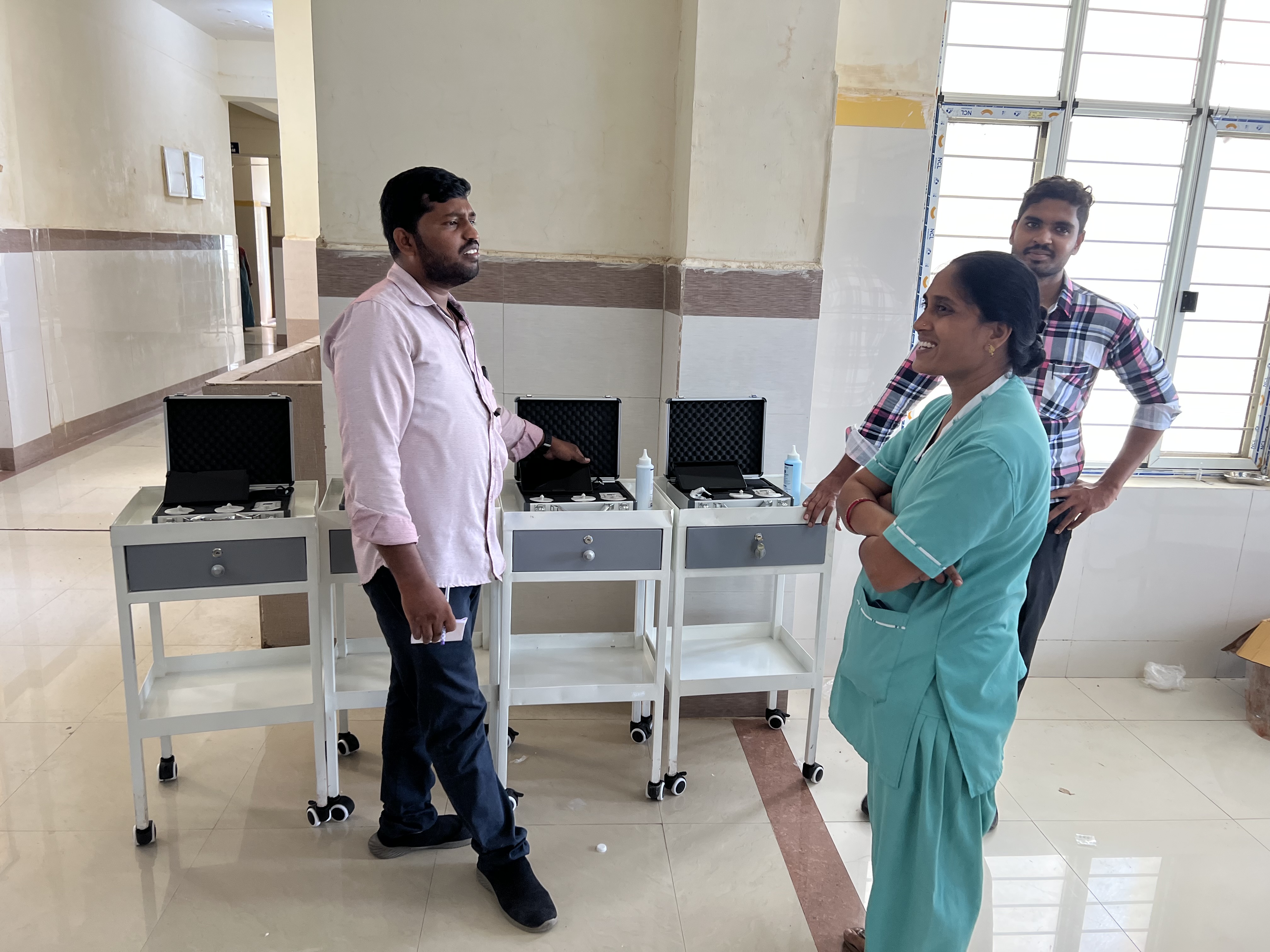
Over the past 12 months, our team successfully developed and field-tested the AI-based fetal classification model for Fetosense — enabling general physicians in remote areas to perform accurate fetal monitoring without a gynecologist. We installed 30 Fetosense devices with local physicians, collected data from thousands of pregnancies, and validated AI algorithms that can soon be deployed at scale across developing regions.

Fetosense in the field
CareNX

Where will your solution have the greatest impact in the next phase, and why?

Bringing Fetosense to Emerging Markets

Fetosense will have the greatest impact across South Asia, Africa and MENA where access to specialists remains limited. By combining low-cost fetal monitoring with AI-driven interpretation, we can ensure early detection of distress and reduce preventable maternal and neonatal complications — improving outcomes for millions of mothers and newborns.

Can you describe your prototyping process and how your solution evolved over time?

Lessons from the Field and GPs’ Feedback

We began with a decision-tree-based diagnostic tool designed for gynecologists and evolved it into an AI-driven, open-source platform that supports general physicians. 

Through iterative hardware-software integration and continuous field feedback, Fetosense became more portable, user-friendly, and clinically adaptive.


Fetosense in the field

Can you share a memorable user or field test and the key lessons you learned?

Strengthening the Chain of Care through Timely Referral

During field testing in rural Maharashtra, a general physician identified an abnormal fetal heart pattern using Fetosense and referred the mother to a district hospital in time to prevent fetal distress. 

This case highlighted the real-world value of empowering frontline providers with accessible AI tools for decision-making.

Fetosense
CareNX

How has being Open Source benefited your solution and your company? Can you cite specific examples?

Radical Transparency: Building Trust Through Open Source

Open-sourcing our platform code encouraged collaboration with data scientists, medical researchers, and health-tech innovators globally. It also enhanced transparency, credibility, and faster validation — key factors in driving trust within the maternal health ecosystem.


Bringing collaborators together
CareNX

How has your business model and strategy evolved over the past year, and what are your biggest achievements and growth plans for the next year?

Beyond B2B: A Multi-Channel Strategy for Sustainable Scale

Over the past year, we shifted from a purely B2B model to a hybrid model — combining government partnerships, private hospitals, and general physician networks. We also introduced pharma-led distribution partnerships to scale faster and subsidize device access for clinics, aligning social impact with sustainable revenue.


Collaborations underway
CareNX

Where are the biggest obstacles/challenges you think your company will need to address or work around?

The Last Mile Challenge: Scaling Quality and Affordability

Our biggest challenges include developing accurate for AI validation using constrained dataset, scaling hardware production while maintaining quality, and building localized clinical datasets across geographies. Sustaining affordability in low-resource settings also remains a key focus area.


Who are the key collaborators you’re seeking, and how can they add value to your business?

A Vision for Global Health: Collaborating for Maternal Care

We aim to collaborate with ministries of health, UN agencies, and organizations such as World Health Organization (WHO), Program for Appropriate Technology in Health (PATH), and Jhpiego, a non-profit global health organization affiliated with Johns Hopkins University. These partners will help us expand access to maternal care. 

Partnerships with pharma and diagnostic companies will further accelerate scale-up and sustainability across emerging markets.


Promoting Fetosense
CareNX

What are you most excited about for your company next year, and what are your main goals?

Fundraising and Partnerships to Strengthen R&D and Scale Globally

Next year, we plan to:

  • Secure USD 1.5 million (50% equity, 50% non-dilutive) to strengthen R&D and distribution.
  • Establish partnerships for regulatory validation and global replication.

How has the UNICEF Venture Fund supported your solution beyond financing?

The UNICEF Venture Fund Advantage

Beyond funding, UNICEF Venture Fund offered invaluable mentorship, global visibility, and access to a network of AI and healthcare experts. The structured technical guidance and learning exchanges with other portfolio startups helped us strengthen both our AI development and impact strategy.

CareNX is one of the winners at AI For Good Impact Awards
2025 AI for Good Impact Awards

Connect with CareNX

Follow CareNX’s LinkedIn to receive live updates. If you would like to partner them, contact us at [email protected]

Share this story