AQAI's journey with using Open Source AI for Global Air Quality Prediction
AQAI (Formative Resilience)
Data Science+AI
India
Jul 04 , 2024
On this page
Data Science+AI
AQAI (Formative Resilience)
India
Company Details
Amount invested
$100,500 USD
Funding Status
active early period
Founded in 2017 by
Prithviraj Pramanik & Christina Last
Female Founded
Generating Revenue
AQAI graduated from the AI & Data Science Cohort for Learning and Health (2022-23). The team is on a mission to develop the world’s first open source AI infrastructure for predicting air pollution. The investment period was marked by significant achievements, including forging collaborations with prestigious organizations, building innovative solutions with a global team, and earning recognition from industry leaders. However, it was also a lesson in patience and resilience. In this graduation blog, AQAI founders reflect on their journey.
Tell us about your biggest achievement during the investment period.
In the past 12 months, we have been developing the world’s first open-source AI infrastructure to predict air pollution at any location on the planet.
Our greatest successes over the investment period have been:
Collaborations with Multiple Organizations: Working alongside esteemed international organizations like NASA and Breathe Mongolia - Clean Air Coalition, as well as national entities like the National Institute of Technology Durgapur, New Town Kolkata Smart City Initiative, and The George Institute for Global Health India, has been a significant achievement. These collaborations have allowed us to leverage diverse expertise, resources, and networks, amplifying our impact and reach.
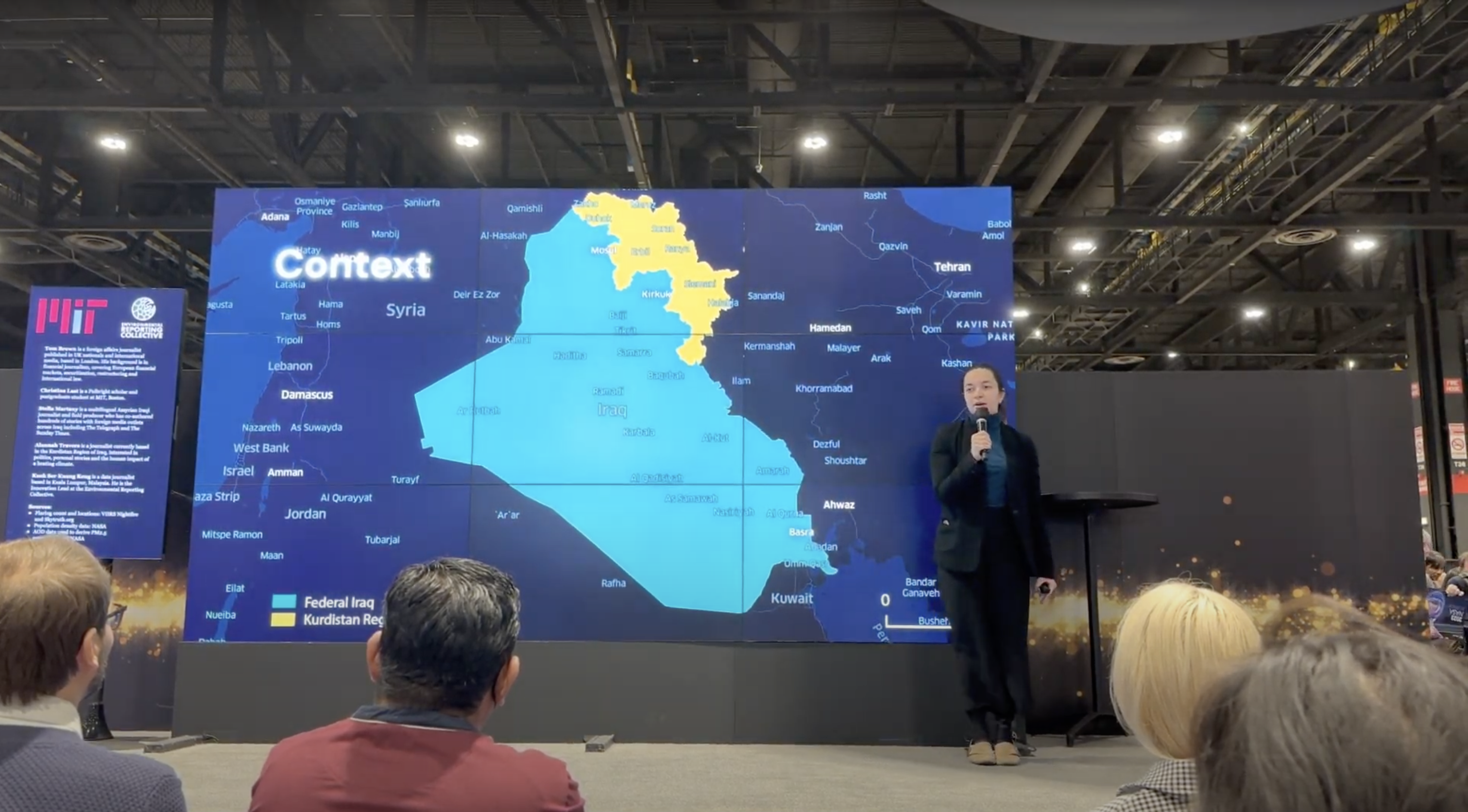
AQAI co-founder Christina Last presents before NASA.
Developing Solutions with a Global Team: Building our solutions with a global team has been a major success. By assembling a diverse team of experts from different backgrounds and regions, we have harnessed a wealth of knowledge and perspectives. This has enabled us to develop innovative, contextually relevant solutions that effectively address complex air quality challenges.
Recognition from NASA, OpenAQ, and Others: Being recognized by esteemed organizations such as NASA and OpenAQ has been a testament to the quality and impact of our work. This recognition validates our efforts and opens doors to new opportunities for collaboration, funding, and expansion. It reinforces our commitment to excellence and inspires us to continue pushing the boundaries of innovation in air quality prediction and management
OpenAQ is privileged to provide data to AQAI. We learned of Christina Last and Prithviraj Pramanik's efforts to map children's exposure to air pollution not long after they received investment funding from UNICEF. OpenAQ's database of harmonized ground-level air quality data from monitoring sites around the world has fed into their machine-learning model, saving the team from having to identify and harmonize those data themselves. We had the pleasure of meeting the team at the 2022 American Geophysical Union (AGU) conference, where they presented their project. We were so impressed by their innovative approach and their commitment to doing their part to address the air pollution's impact on children, which, in the most recent State of Global Air report, is ranked as the second leading cause of death among children under five globally. We know AQAI's work will make a difference and applaud them for their efforts.
- Chris Hagerbaumer, Executive Director, OpenAQ
Gearing up to the next phase, where do you see your solution having the most impact?
Our technology will be most impactful when connecting government, NGO, and research stakeholders to create AI-driven air pollution action plans. Over the next phase (6 months to 1 year), we are deploying our open-source technology in partnership with these organizations to understand their data security and integration needs.
Geographic Impact: We anticipate significant geographic impact in regions such as Mongolia and Belize, where we are already integrating our AQAI infrastructure into their current tech stacks for analytical insights. By addressing air pollution challenges in these regions, we can set a precedent for other areas facing similar issues, demonstrating the potential for large-scale geographic impact.
Social Technology and Social Impact: From a social technology and social impact standpoint, AQAI's open-source infrastructure provides comprehensive air pollution predictions to national, regional, and local stakeholders. This capability is essential for informing public health initiatives and educational programs. By offering accurate and timely air quality data, we empower communities to make informed decisions such that they can take proactive measures to protect themselves. This directly supports the Sustainable Development Goals (SDGs) related to health, education, and environmental sustainability.
Business Impact: In terms of business impact, our collaborative approach with government agencies, NGOs, and research institutions creates a robust network that supports the deployment and scaling of our technology. This model ensures broad adoption of our solutions, fostering innovation and continuous improvement through shared knowledge and resources. Our global network of builders exemplifies the value of open-source infrastructure in driving sustainable business practices and promoting economic development. By leveraging this network, we expand our reach and impact, demonstrating the economic benefits of investing in air quality monitoring and management solutions.
In the near future, we see our solution having the most impact geographically in regions like Mongolia and Belize, with our technological advances, and economically by fostering collaborative, sustainable business practices. Our focus on open-source technology and stakeholder collaboration positions us to make a meaningful difference in the fight against air pollution, supporting broader environmental and social goals.
Prototyping: Can you share the process that you used to prototype your solution? What did the
different versions of your solution look like and how did it change over time?
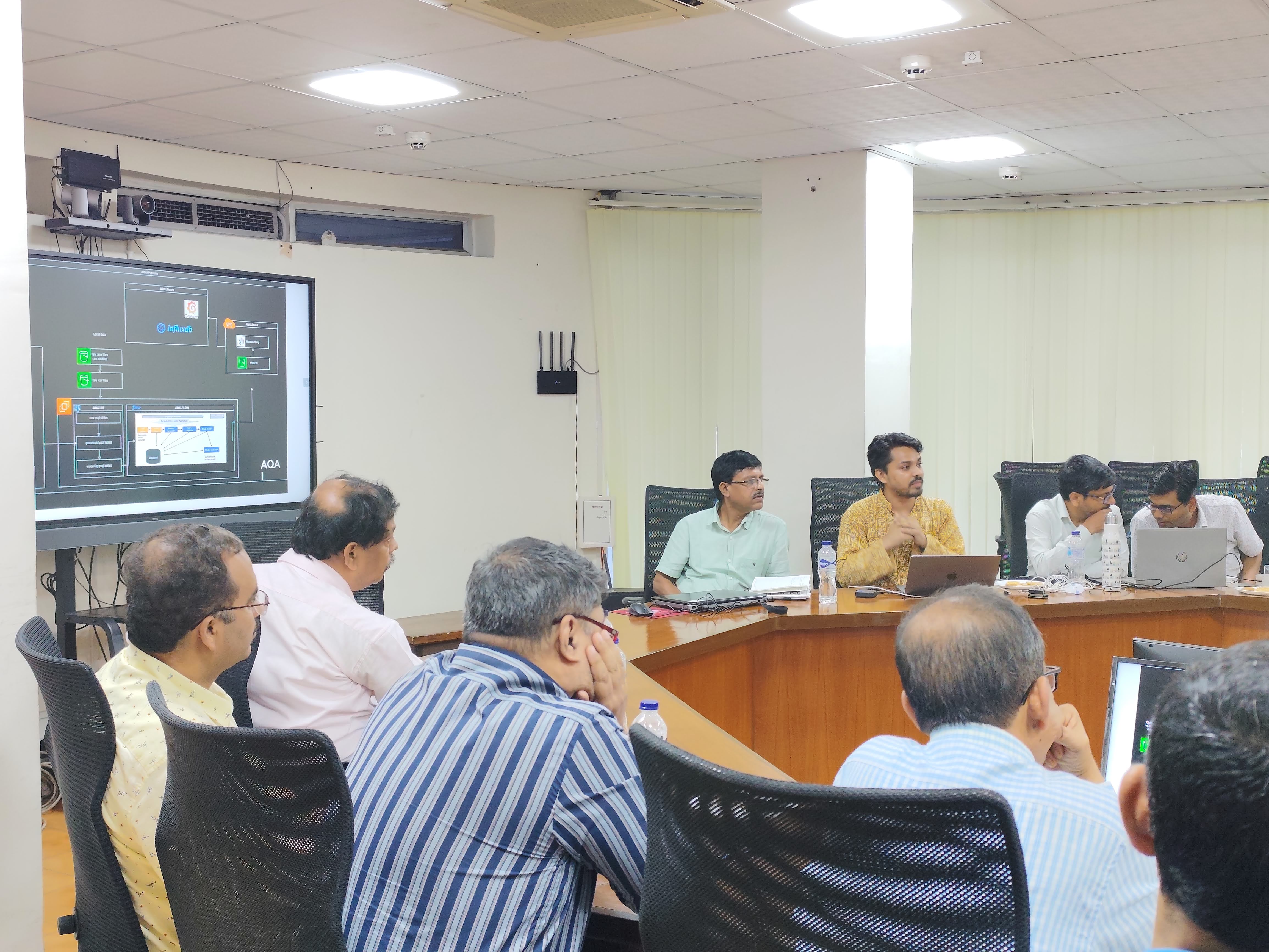
AQAI Co-founder Prithviraj Pramanik presents to stakeholders at a public sector unit in India.
To prototype our solution, we engaged with open-source community members to develop our technical milestones. Initially, we focused on creating a platform-agnostic approach, ensuring our software-defined architecture could be deployed with any tech stack.
Through local partnerships, we recognized the need to incorporate local data, which led to enhancing our machine-learning pipeline to ingest and fine-tune models using local data inputs.
Our final version includes a robust geo-visualization suite that controls multi-stakeholder access, authorizes data connections, and ensures secure and efficient data sharing. Over time, our solution evolved from a basic architecture to a comprehensive, adaptable system capable of integrating diverse data sources and providing precise, localized air pollution predictions.
User/Field testing: Share a story about one of your tests. What was the most memorable? Why? What
key lessons did you learn from this test?
One of our most memorable tests involved deploying the AQAI air pollution data pipeline in Ulaanbaatar, Mongolia, with data support from Breathe Mongolia Clean Air Coalition and Public Lab Mongolia. The goal was to build a system that ingests local and global air pollution data and satellite imagery. The most memorable moment was the success of establishing new data partnerships, a process that took over a year.
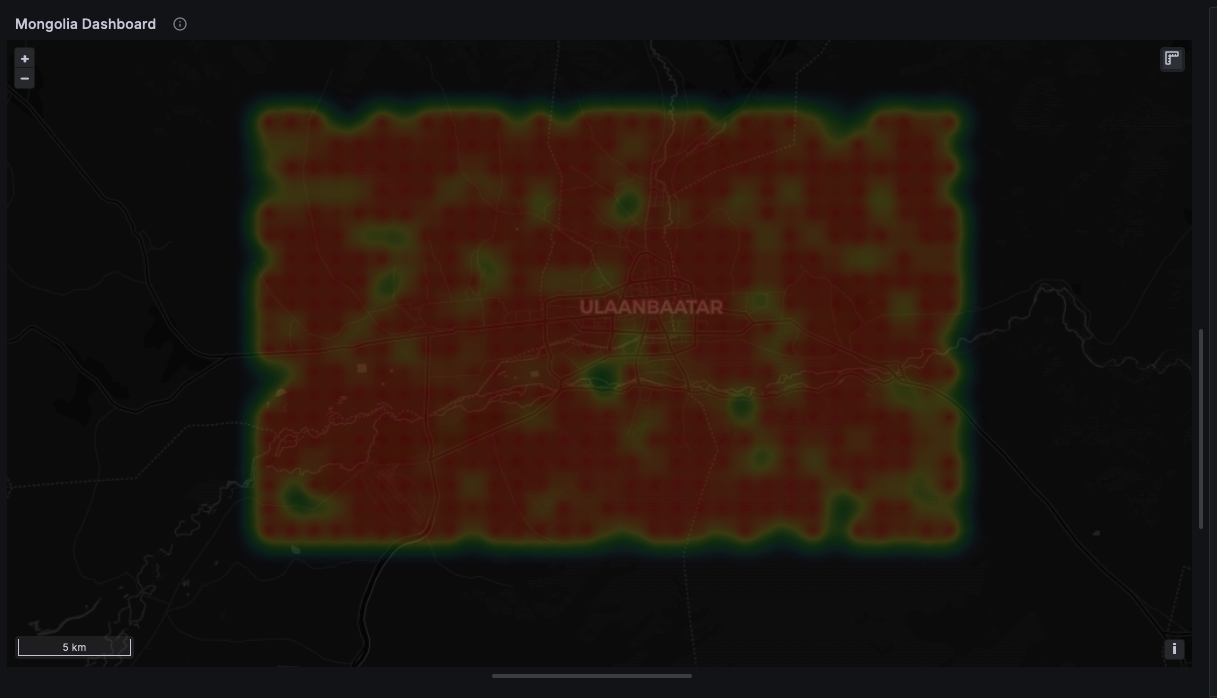
Dashboard created showing air quality in Mongolia.
This achievement underscored the importance of collaboration and persistence. A core value of our team is defining clear expectations and responsibilities and maintaining regular communication to ensure alignment and progress. We learned that strong partnerships are essential for success and that defined roles are crucial for effective collaboration. This experience reinforced our commitment to these principles and highlighted the value of patience and perseverance in achieving our goals.
Breathe Mongolia - Clean Air Coalition is pleased to have worked with AQAI on data-driven AI modeling prediction for Mongolian air quality. One of the main challenges in advocating for clean air in Mongolia, one of the most air-polluted countries in the world, has been air quality data accessibility and monitoring. We face extreme weather conditions that obstruct air quality sensor functionality, ‘low-cost’ sensors that are price-equivalent to Mongolia’s monthly minimum salary, a paywall on reference-grade raw data, and insufficient sensor coverage. The public in Mongolia deserves to know the air quality levels in a transparent and accessible manner so they can take protective measures.
We are excited about AQAI’s open-source solution because it addresses exactly the obstacles we are facing by estimating pollution levels 1 km x 1 km resolution, using advanced machine learning algorithms. This technology leverages remote sensing data and geospatial analytics to provide highly accurate and real-time air quality predictions and save us valuable resources. We look forward to continuing to collaborate with AQAI to refine the technology further and increase the value added to users worldwide.
Azjargal Tsogtsaikhan, Co-Founder and CEO, Breathe Mongolia - Clean Air Coalition
Open-source: How has being open-source benefited your solution and your company? Can you cite
specific examples?
AQAI has been developed with an open-source infrastructure to cater to and engage national, regional, and local stakeholders on air pollution. We all breathe, so the nature of the problem demands that an open-sourced monitoring infrastructure be developed to be easily accessible to all. It reduces the fixed costs of developing the data pipeline and the model repository. So far, we are the only solution provider to develop an open-source machine learning pipeline and air pollution model registry, along with the supporting software.
The ethos of open-source is deeply rooted in our development as we are nurtured by the open-source community. We have been supported by OpenAQ, a non-profit working on making sensor-based air quality data more accessible. We have had contributions from the open-source community and guidance from open-source repository managers.
We have been able to increase collaboration, transparency, and trust in the software, and be cost-efficient.
Moreover, being open-source has helped us achieve a wider reach, enabling community-based inputs that have improved the user experience. Thus, the open-source nature of AQAI's solutions has not only advanced our mission of combating air pollution but also created a global network of collaborators working towards a cleaner environment.
Business Models: How has your business model and strategy changed over the last 12 months? What were your biggest achievements in this area and how will your business be growing over the next year?
AQAI's business model and strategy have been evolving with our product offering. We have concentrated on enhancing our engagement with academia, governmental and NGO-based stakeholders to foster dialogue on actionable air pollution plans that leverage our technology. This shift has positioned us as a critical partner for organizations focused on environmental monitoring.
We had engaged with the UNICEF Country Office of Belize to provide data analytics and visualization support for air quality data across multiple municipalities and which were presented at the 2nd Belize Youth Forum for Climate Change. In Mongolia, we have started collaborating with Breathe Mongolia - Clean Air Coalition, an NGO championing better air quality across Mongolia.
Moving forward, we aim to co-develop and deploy solutions that consider the unique challenge of air pollution in Mongolia. Additionally, we plan to provide other Country Offices with the technical support needed to set up Air Quality Monitoring infrastructure.
Challenges: Where are the biggest obstacles/challenges you think your company will need to address or
work around?
Our biggest setbacks over the investment period have been:
1. Time-consuming Collaborations: One significant setback we faced was the realization that collaborations with multiple organizations, while valuable, can be time-consuming and challenging to coordinate effectively. We encountered delays in aligning schedules, establishing clear communication channels, and navigating differing priorities and objectives among partners. Learnings: This experience taught us the importance of robust project management practices and proactive communication strategies when collaborating. We now prioritize setting clear expectations, defining roles and responsibilities upfront, and maintaining regular communication to ensure alignment and progress.
2. Risks of Natural Hazards: Another setback we encountered was the risk of natural hazards impacting our projects. This included unforeseen events such as extreme weather conditions, wildfires, or earthquakes, which disrupted our operations, fieldwork, and data collection efforts. Learnings: We learned the importance of incorporating risk mitigation strategies into our project planning and execution. This includes conducting thorough risk assessments, developing contingency plans, and building resilience into our systems and processes to minimize the impact of natural hazards on our projects.
Future collaborators: What companies, organizations, individuals, or industry partners are you looking to collaborate with? How do you think they can add value to your growing business?
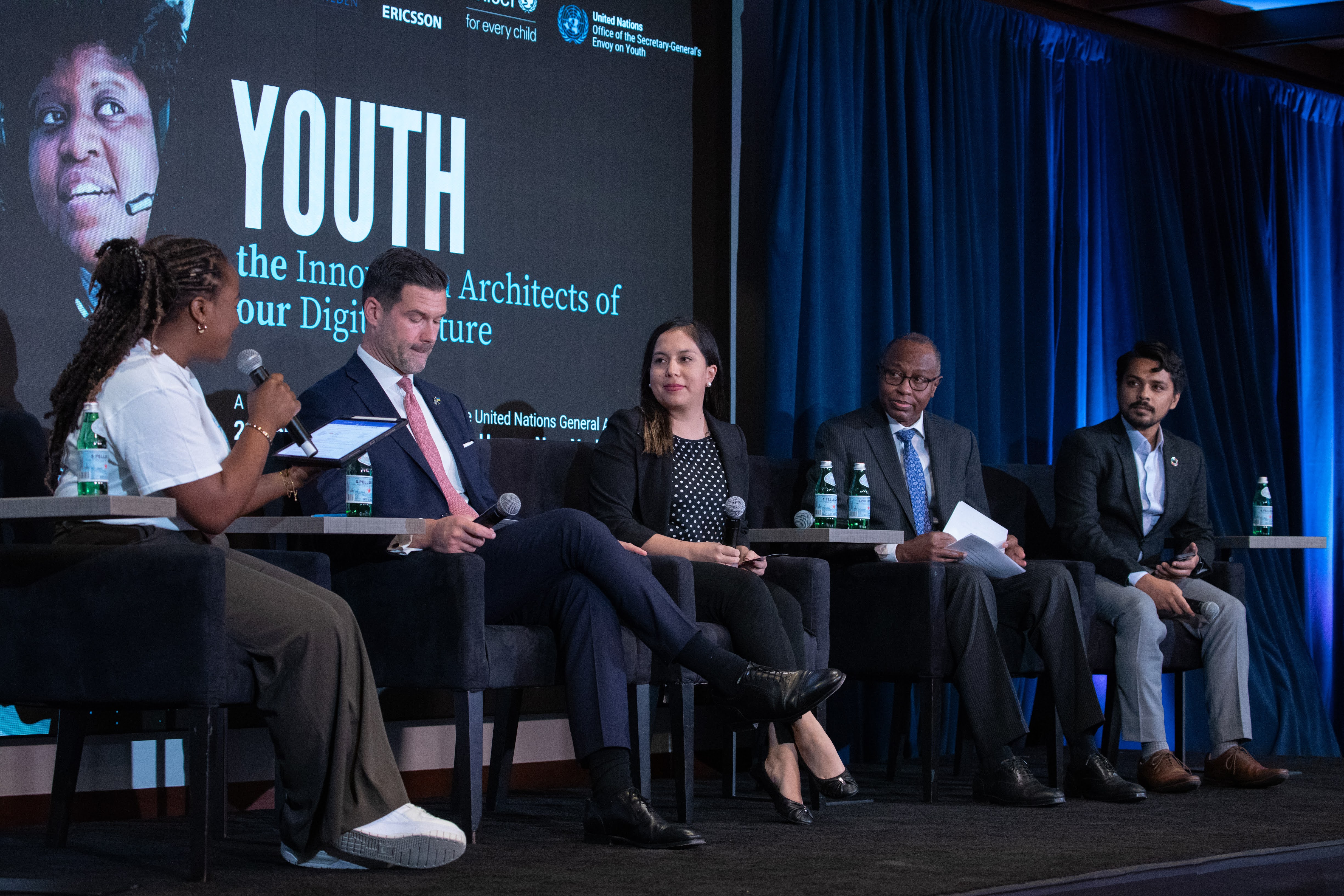
AQAI speaks on Office of Innovation co-sponsored panel featuring youth voices on digital futures at UNGA 2023.
We are looking to collaborate with a diverse range of industry partners, organizations, and individuals to enhance our open-source initiatives and expand our impact.
1. Governments and NGOs: We aim to engage with governments and NGOs to understand their data and infrastructure requirements for monitoring pollution. These collaborations are crucial for tailoring our solutions to meet the specific needs of different regions and communities. Governments and NGOs can provide valuable insights into local challenges and data needs, helping us refine our technology and ensure it delivers actionable insights for effective air quality management.
2. Research and Citizen Science Initiatives: We want to engage a global network of research institutions and citizen science initiatives. Collaborating with researchers allows us to stay at the forefront of scientific advancements and integrate cutting-edge methodologies into our models. Involving citizen science initiatives helps gather localized data, raise public awareness, and foster community engagement in air quality monitoring and improvement efforts.
3. Open-source contributors: We deeply believe in open-source methodologies as a way to address global challenges that require strategic collaboration such as air pollution. Please reach out if our work aligns with your personal/organizational mission.
By partnering with these diverse groups, we can create a robust ecosystem that supports our mission of providing comprehensive, accurate, and actionable air pollution data. These collaborations will enhance our technological capabilities and ensure that our solutions are practical, relevant, and widely adopted, driving meaningful change in air quality management worldwide.
Next set of goals: What are you most excited about for your company next year? What are your main
goals you want to accomplish next year?
Next year, we are super excited about several key initiatives that we look forward to:
● National Scale Deployments: We seek to test one deployment of our infrastructure at the national scale at a South Asia country along with expanding our work in Ulaanbataar, Mongolia. These implementations at scale will allow us to showcase the robustness and scalability of our technology. By partnering with national governments and key stakeholders, we will demonstrate how our AI-driven air pollution models can provide comprehensive and actionable insights, influencing policy and public health initiatives broadly.
● High-Precision Model Testing: We plan to conduct A/B testing of our high-precision local air pollution models against local calibrated measurements. This rigorous comparison will help us refine our models and ensure they are the most accurate and reliable in the industry. By benchmarking our models, we can continuously improve our technology and offer the best possible solutions to our partners and clients.
● Strengthening Global Partnerships: We aim to strengthen and expand our global builders and collaborators network through a community of practice for air quality monitoring. By fostering deeper relationships with governments, NGOs, research institutions, and the private sector, we aim to create a more resilient and interconnected ecosystem. This collaborative approach will enhance the development and deployment of our solutions, supporting the Sustainable Development Goals (SDGs) and driving meaningful change.
● Advancing Open-Source Innovation: We remain committed to open-source development and innovation principles. By contributing to and building upon the open-source community, we can accelerate the advancement of air pollution modeling technologies. We aim to lead by example, demonstrating the value of open-source infrastructure in solving global environmental challenges.
We all breathe. Join us in our initiative, as clean air is fundamental to human health and well-being. By improving air quality, we can protect communities from the harmful effects of pollution, enhance public health, and contribute to a more sustainable future for everyone
How has the UNICEF Venture Fund supported your solution?
Joining the Venture Fund was transformative. The funding kickstarted our product development & launch, and the expert mentors and our efficient and thoughtful portfolio manager fueled our growth as a company and us as founders. Today, we're part of a network of young, like-minded thought leaders striving to make the world a better place. The Venture Fund made it possible. Thank you for the opportunity to be part of the Venture Fund; we appreciate your support along the way.