
OSS Episode 3: Warning the Last Mile with Somleng and OpenEWS
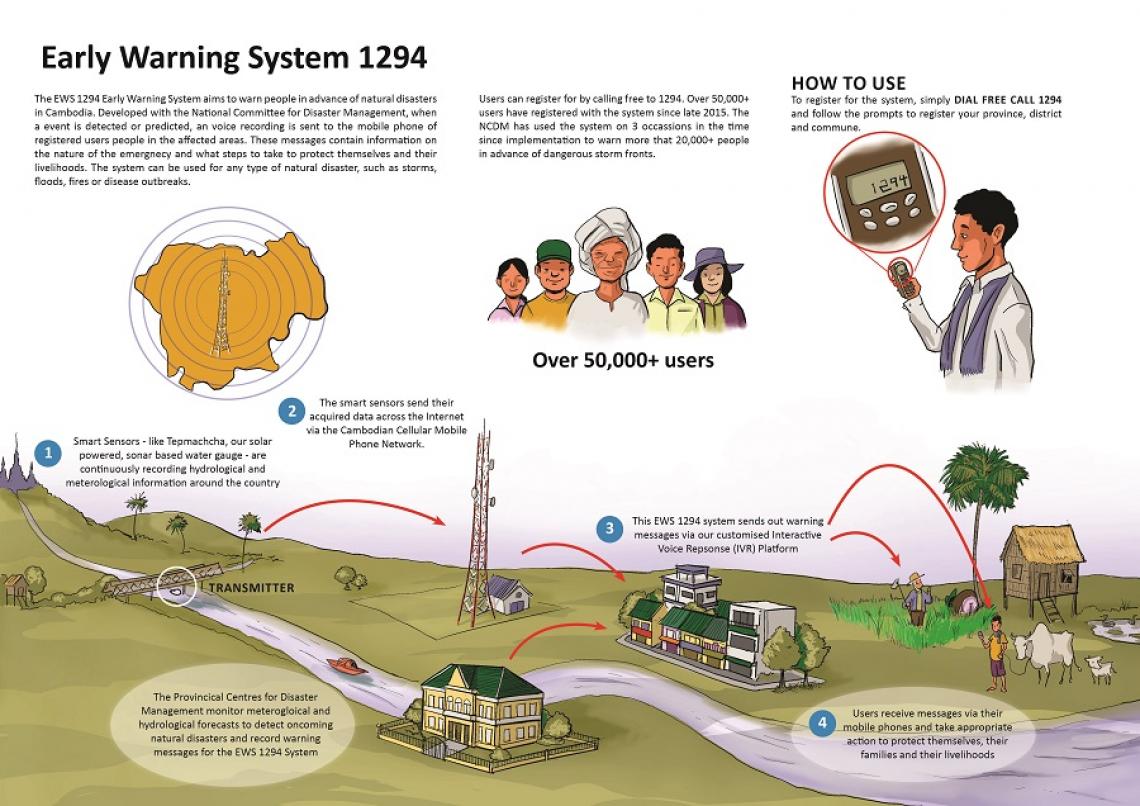
Open EWS: An open-source warning dissemination platform for governments
Open EWS is designed for alerting authorities — the government bodies with legal authority to issue emergency alerts. Currently it is live and in active use in four countries, each with a different national agency operating the dashboard.
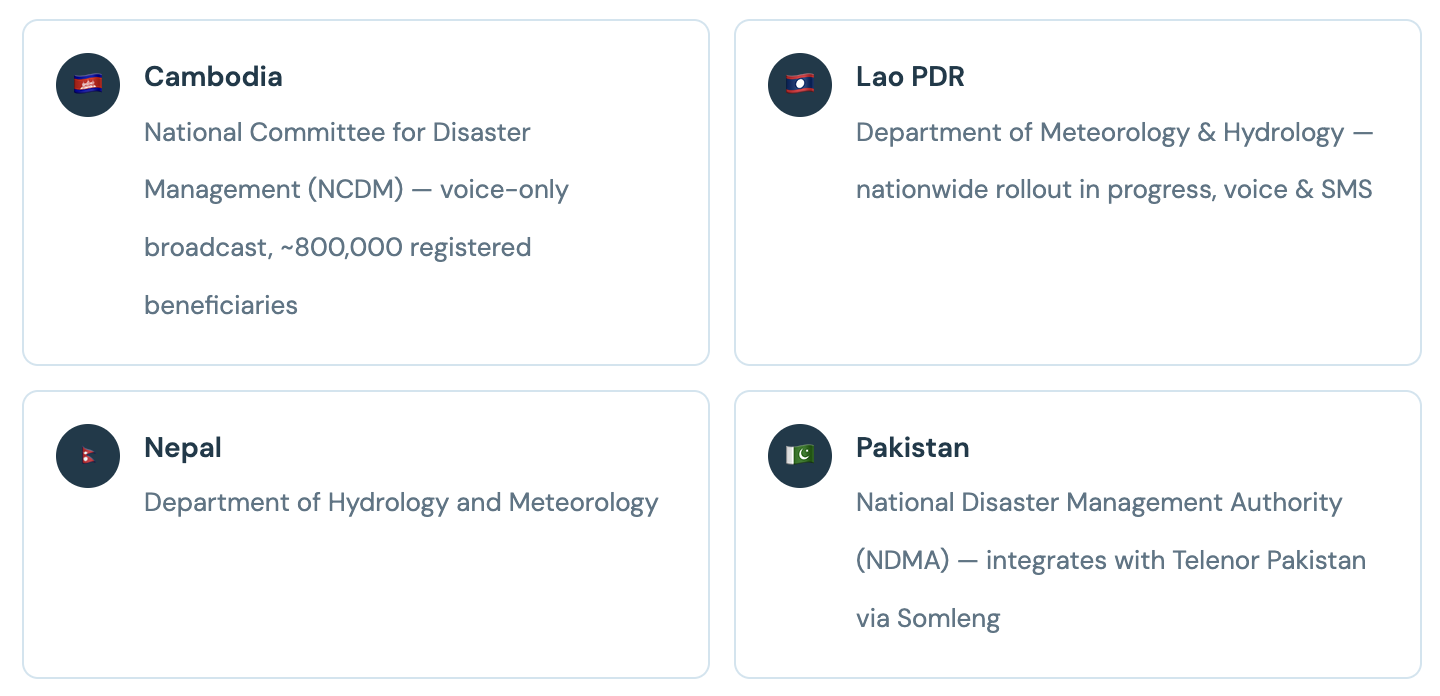
The live demo showed just how fast a broadcast can be assembled. An alerting authority logs in, selects a channel, uploads an audio or text message, chooses the affected administrative area by drilling down from province to district to neighborhood—and presses start. In Cambodia, sending a voice alert to more than 40,000 beneficiaries takes just a handful of clicks. The system supports the local language (Khmer) throughout, and every action in the broadcast lifecycle—who created it, who started it, who stopped it—is logged and auditable.
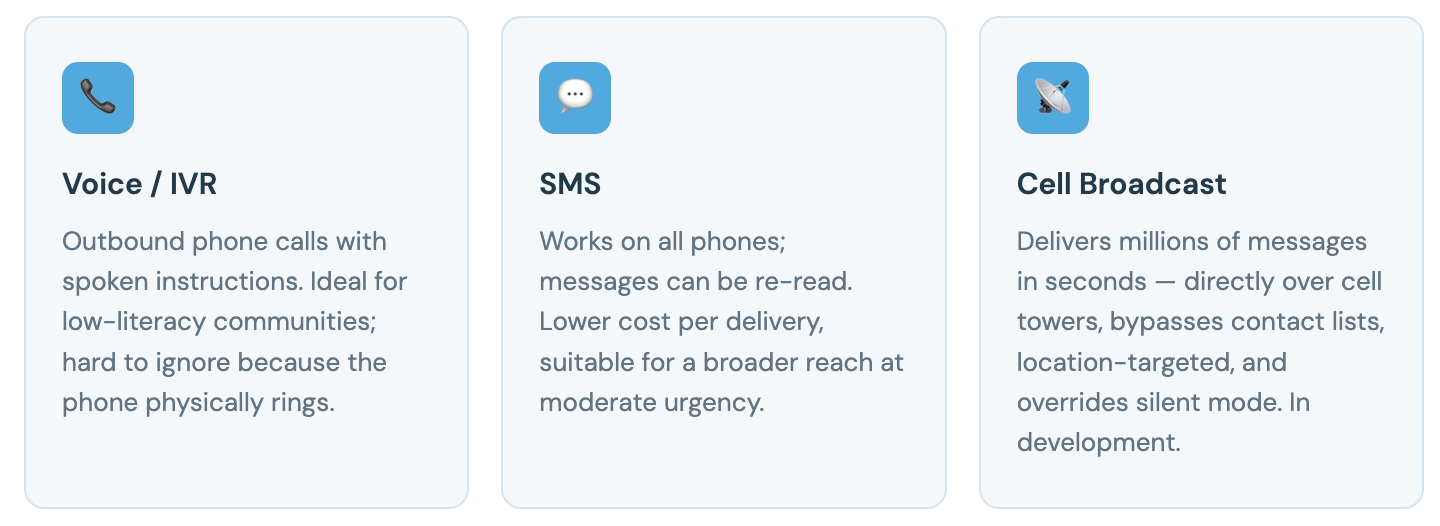
Three channels, matched to severity
Somleng: The open source telecom layer
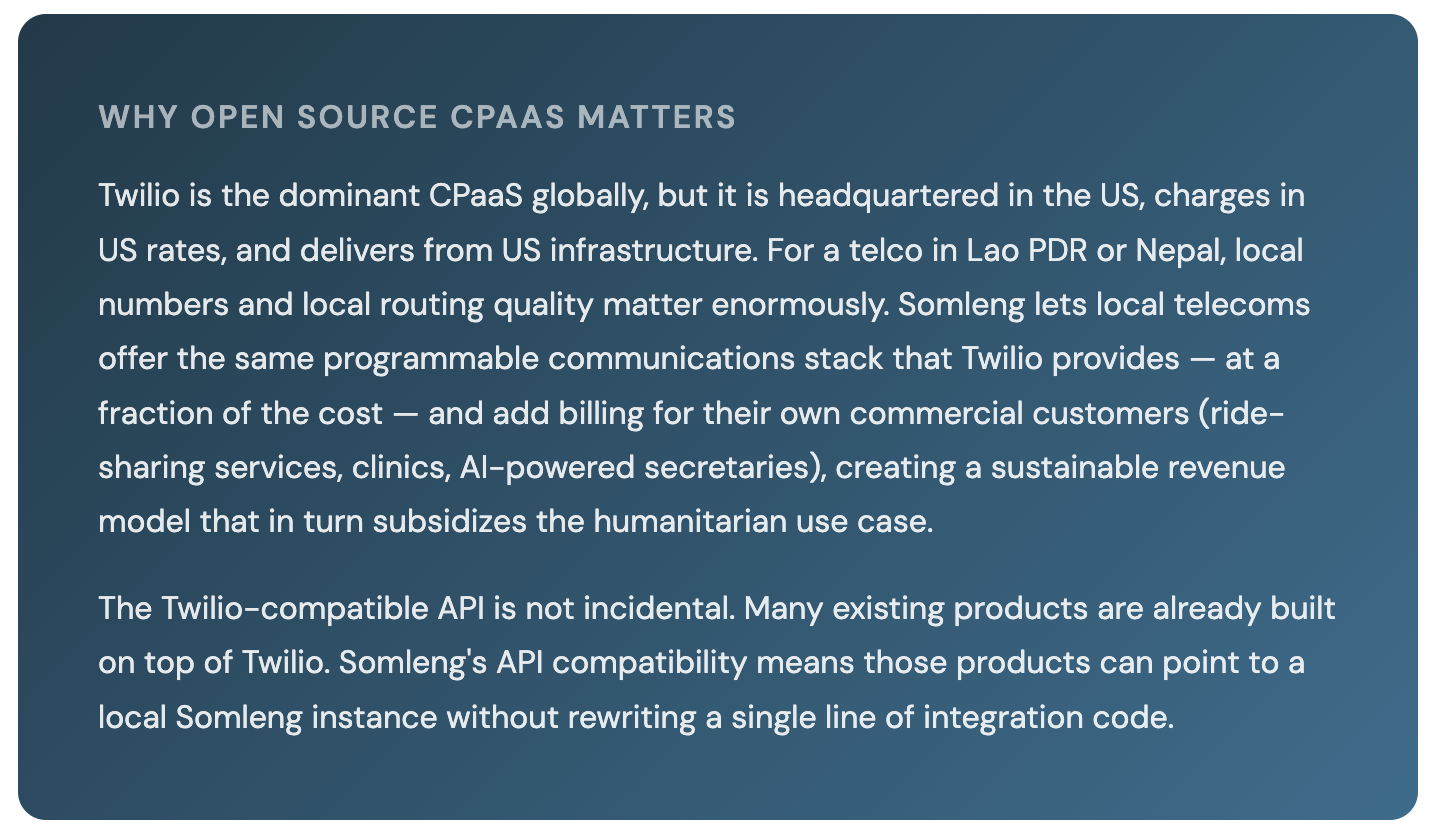
While OpenEWS handles the alerting authority side, Somleng sits on the telco layer — and this is the piece that makes the whole architecture possible. Somleng is described as the world's only open source Communications Platform as a Service (CPaaS) with a Twilio-compatible API. In plain terms: it gives local telecoms the same capability that Twilio gives global enterprises, but at local cost, with local numbers, and with full source code transparency.
The Pakistan deployment illustrates the relationship between the two products clearly. NDMA creates and triggers an alert in OpenEWS. That alert is automatically passed to Telenor Pakistan's Somleng dashboard — branded with Telenor's logo and colors — where a staff member with the correct authority reviews and starts the broadcast. The alerting authority can see in Open EWS that Telenor has acted. Two products, two interfaces, one coordinated outcome.
In Cambodia and Lao, the telco step is fully automated—the broadcast goes straight through without manual intervention at the telecom level.
Q&A
Can recipients provide feedback through the same OpenEWS portal?
In Cambodia, there is a separate hotline that beneficiaries can call to register, deregister, or leave feedback. Registration and deregistration are linked directly to the OpenEWS beneficiary list. Feedback is logged independently—in Cambodia's case, to a cloud-hosted spreadsheet—and can be listened to and reviewed by the alerting authority. The feedback mechanism is intentionally separate from OpenEWS itself, because every country tends to want a different IVR flow for feedback collection.
What happens when cell towers go down during the very disaster being warned about?
This is where cell broadcast has a distinct advantage. Unlike standard SMS or voice calls, cell broadcast goes directly over the cell tower network at the infrastructure level, can target specific towers in a geographic area, and is designed to push through even in congested or degraded conditions. It also overrides silent mode. The multi-channel architecture of OpenEWS is deliberate: voice and SMS are appropriate for advance warnings (e.g., heavy rainfall forecast), while cell broadcast is reserved for life-critical, immediate alerts where maximum reach in minimum time is paramount.
Is impact data available—can we measure whether messages changed behavior?
Two pathways exist. First, the feedback hotline allows beneficiaries to record spoken feedback, which is then accessible to the alerting authority. Second, the OpenEWS API allows filtering beneficiaries by the alerts they received, enabling direct outreach for survey-based impact assessment. David noted honestly that the system currently holds phone numbers and location data, but not demographic data—meaning children cannot be counted separately in the impact figures, even though hundreds of thousands are certainly being reached. This is an intentional privacy design choice: only the minimum necessary data is stored.
Can OpenEWS be integrated with systems like Ushahidi or existing public alert systems?
Yes. OpenEWS is API-first: every action available in the dashboard—creating broadcasts, starting broadcasts, managing beneficiaries—is also available via the REST API. This makes integration with third-party systems straightforward. A voice broadcast, an SMS broadcast, or beneficiary management can all be triggered programmatically from external tools.
How do you see being open source with respect to cyber risk for these systems? It could be very harmful in the wrong hands. Doesn't open source create a security risk for critical infrastructure?
David argued the opposite. Several telco customers chose Somleng specifically because they can inspect the source code—reducing the risk that if Chatterbox Solutions were to cease operations, the telco would lose its entire communications stack. The openness also enables community-based security review: security researchers can find and disclose vulnerabilities, or submit pull requests to fix them. David drew a parallel to OpenSSL, which encrypts the majority of global internet traffic and is itself open source. Vipul Siddharth added that security by obscurity has a poor track record, and that open source with good governance—transparent change history, clear usage visibility—tends to produce more mature, trustworthy systems.
Stories by this author
How UNICEF Yemen Transformed Cash Transfer Programming From Reactive to Real-time Accountability
Read StoryRelated Stories


