OSS Episode 2: VaccineLedger - From Warehouse to Child
Mar 09 , 2026
On this page
UNICEF Venture Fund Open Source Showcase: Statwig
jalli
Recap from Open Source Showcase, Episode 2: Real-time visibility to vaccine supply chains, from central procurement to last-mile delivery
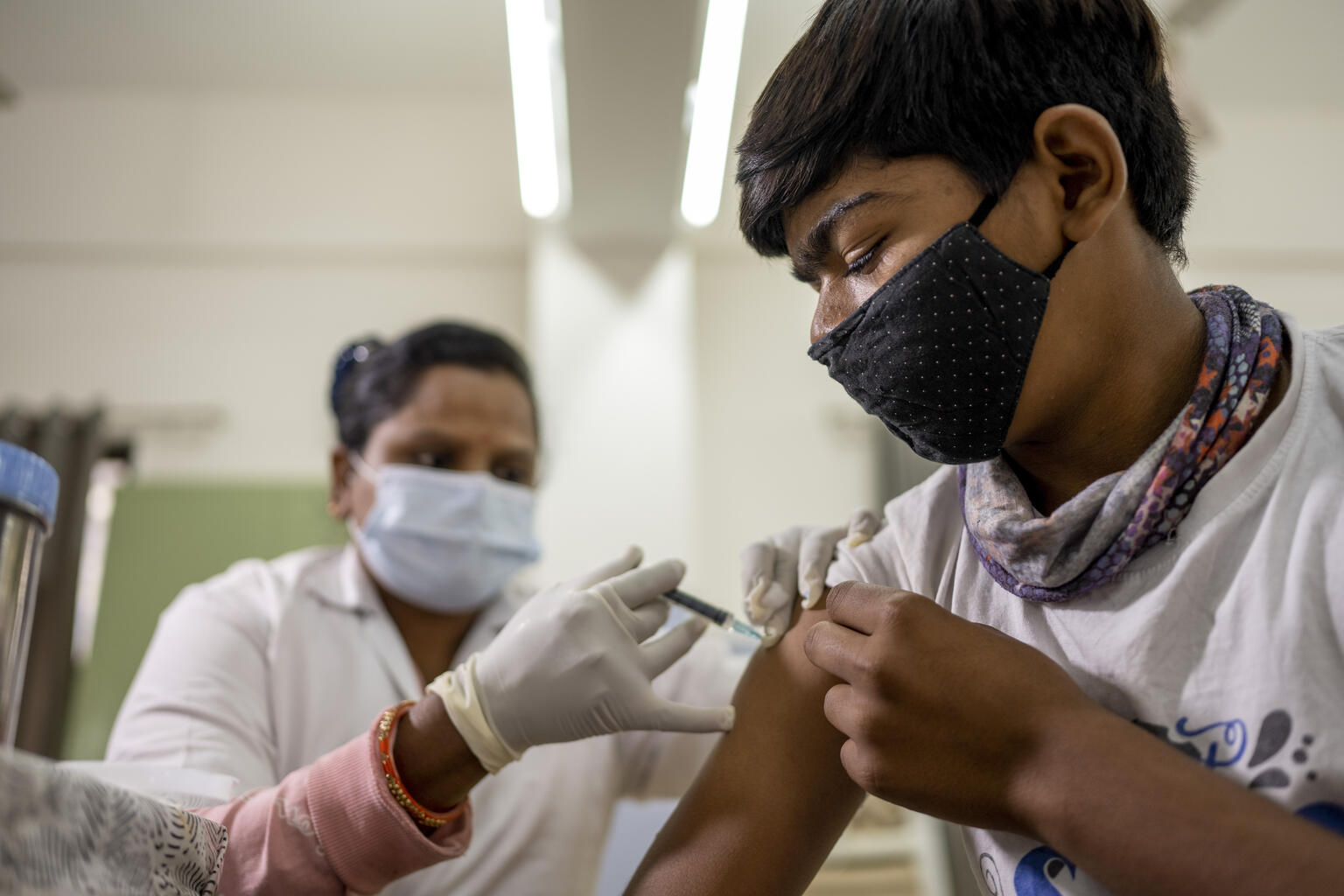
UNICEF procures close to 2 billion vaccine doses every year. Imagine visibility dropping fast once it leaves the warehouse.
That's the kind of gap StaTwig is working to close. In the second episode of our Open Source Showcase series, Sid Chakravarthy (founder and CEO) and Mansi Shah (product lead) walked participants through VaccineLedger, their platform for tracking public health commodities from procurement through to the child who actually receives the vaccine. The session drew attendees from across continents, with questions continuing well past the scheduled time.
The Blind Spot in Global Health
Many public health supply chains still run on fragmented, siloed systems. Immunization on one platform. Nutrition on another. Essential medicines somewhere else entirely. Within a single supply chain, data often lives across legacy systems, spreadsheets, and in some cases handwritten registers.
The consequences are real. Stockouts at the point of care. Expired vaccines sitting in storage. Shipments that can't be tracked between district and sub-district. And almost no visibility into what's happening at the last mile, where vaccines actually meet children.
Climate disruptions, geopolitical tensions, and shifting funding environments have made these supply chains simultaneously more critical and more fragile. The problem is compounding.
A Visibility Layer for the Entire Supply Chain
VaccineLedger's goal is to make supply chain data actionable at every level, from the central warehouse to the community health center. The platform connects all stakeholders on a single system, available on both web and mobile. Rather than replacing what countries already have, it acts as a unifying visibility layer, aggregating data from multiple sources, standardizing it, and surfacing real-time insights that support decision-making.
It's also modular. Countries can adopt the components they need and plug them into existing infrastructure. And critically, it works offline. Health workers in remote locations collect data on the mobile app, which syncs automatically when connectivity is restored. No re-entering data. No disrupted workflows.
A Partnership That Started in 2018
StaTwig's relationship with UNICEF goes back to the beginning. Sid started the company in 2018 around a question UNICEF was also wrestling with: once vaccines move beyond central procurement, what happens to them?
The Venture Fund selected StaTwig as a portfolio company and has supported them through three phases of funding: seed, bridge, and crypto fund. The goal from the start was to build something, prove it in real country contexts, and then scale it.
Today, StaTwig holds two long-term agreements with the UN spanning software development, data analytics, and product scaling. Because the core platform already exists, new deployments don't require building from scratch, just customization, integration with local systems, and ongoing support. Less reinvention, lower cost, and faster time to value. That matters especially in a funding environment where every dollar needs to stretch further.
Bangladesh: The Flagship Deployment
The strongest validation of UNICEF's early investment is the nationwide deployment in Bangladesh, implemented in partnership with UNICEF Bangladesh and the Ministry of Health. This is not a pilot. It's live, at scale, serving roughly 125,000 users with a target of reaching 60 million beneficiaries.
The team customized the existing VaccineLedger platform around Bangladesh's specific workflows: its hierarchy of districts and sub-districts, its stakeholder ecosystem, its reporting requirements. Now they're expanding into nutrition supply chain tracking in the same country. The products are different, the stakeholders shift, but the core challenge is the same: where is the stock, is it reaching the people who need it, and can we prove it?
That ability to extend horizontally (same platform, new use case) is one of the strongest arguments for investing in open source infrastructure rather than bespoke solutions that address a single problem.
The Live Demo: How It Actually Works
Mansi Shah's walkthrough brought the platform to life, moving beyond slides to show how the modules connect in practice.
Inventory that thinks ahead. The system goes well beyond stock counts. It flags products nearing expiry, enforces first-expiry-first-out logic, and supports lateral transfers between facilities. If a nearby health center has surplus stock while another is running low, the platform surfaces that and makes the transfer workflow simple.
Streamlined orders and shipments. Health workers place orders that flow up the hierarchy. When accepted, shipments are created automatically with pre-populated product and batch data. At the receiving end, a QR code scan on the mobile app confirms delivery. Minimal manual input, minimal errors.
Cold chain monitoring that catches problems early. IoT sensors feed real-time temperature data into the platform. If a refrigerator breaches the safe range, alerts trigger immediately, identifying exactly which batches at which facility are affected. The system also tracks equipment maintenance, helping prevent the kind of refrigerator failures that quietly destroy vaccine stock.
Last-mile campaigns that close the loop. Health workers create vaccination campaigns directly in the platform, register beneficiaries, and record vaccine and batch details at the individual level. That granular, individual-level data is what ministries need for planning and donors need for accountability.
AI-powered insights on demand. An AI chatbot layer lets users query the system in natural language. Ask for expired batches, consumption rates over the last quarter, or stock projections. Reports generate on demand, reducing the time health workers spend manually compiling data.
Granular role-based access. With 125,000 users spanning frontline health workers to country-level administrators, the platform provides configurable permissions. Admins define custom roles, set inventory thresholds, and access aggregated data across locations, while ensuring each user sees only what's relevant to their responsibilities.
Interoperability Is the Foundation
VaccineLedger was built with interoperability at its core. It follows an open API-driven architecture and integrates with existing country systems including OpenLMIS, DHIS2, OpenSRP, SAP, IoT cold chain sensors, and national digital health platforms.
This matters because the biggest barrier to adoption often isn't technology. It's the concern that a new system means replacing the old one. What StaTwig offers is additive. Fill the visibility gaps. Connect the systems that already exist. Don't force anyone to start over.
The open source model amplifies this over time. Once the team integrates with a system like DHIS2 in one country, that integration becomes reusable in every other country running DHIS2. Challenges that take months in one deployment take weeks in the next.
StaTwig has done similar work in Latin America, tracking COVID-19 vaccinations in Costa Rica with the Inter-American Development Bank, and in India, tracking nutrition products for pregnant and lactating women and children under five.
Why Blockchain?
The question came up during Q&A, as it usually does. Sid's response was practical. Plenty of encryption methods can secure data. What blockchain adds on top of that is an audit layer: tamper-proof records, traceability to specific individuals involved in every transaction, and accountability between actors who may not inherently trust each other. Ministries, implementing partners, vendors, frontline workers all see the same verified record.
In a supply chain where counterfeits, diversion, and reporting discrepancies are real concerns, that trust infrastructure matters.
Open Source as Strategy
VaccineLedger is recognized as a Digital Public Good. It's fully open source, built on modular microservices, and designed for external contribution. Governments and implementers can adopt, adapt, and extend the platform for their local contexts.
The commitment to open source is strategic as much as it is principled. The platform improves with every deployment, every integration, every contributor. And for governments evaluating the solution, open source means no vendor lock-in, full transparency into how data is handled, and the ability to sustain the system independently. It's the same argument Rumsan made for Rahat in our first showcase, and it holds here too.
How to Get Involved
StaTwig is looking for two things:
Country connections. If you work with a government that needs supply chain visibility for immunization, nutrition, or essential medicines, make an introduction. Reaching Ministries of Health directly remains the hardest part of scaling this work, and partner introductions make the difference.
Open source contributors. Help build the community, improve documentation, extend modules, or bring expertise from new domains.
Get Started
This was the second of five monthly showcases from UNICEF Venture Fund, each featuring a portfolio company building open source solutions already deployed in multiple countries.
UNICEF Venture Fund's Open Source Showcase Series spotlights proven open source solutions from its portfolio, already deployed in multiple countries, actively maintained, and solving real problems in health, education, financial inclusion, and humanitarian response. Monthly sessions feature founders and technical teams sharing what works, what doesn't, and how you can help.
Share this story
Stories by this author
OSS Episode 1: Transparent Aid Distribution on Blockchain