
Indonesian Students in Design Challenge

The Global Design for UNICEF Challenge is an online competition to drive local problem-solving and collaboration around pressing international issues.
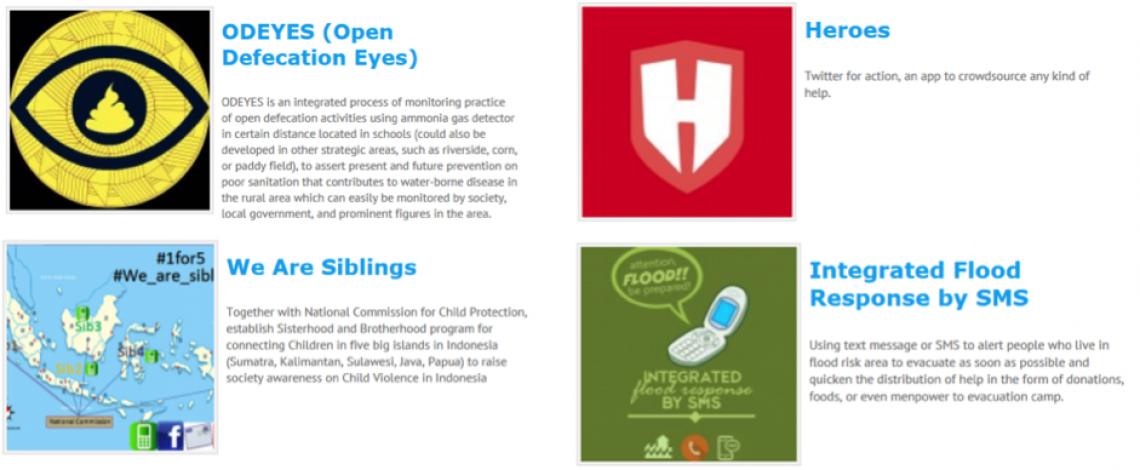
More than 130 Indonesian students from UNICEF’s two partner universities: ITB Bandung and IPB Bogor got together in 33 teams and submitted ideas for the 2014 edition of the Challenge. The ones selected for the final round now represent four of the five finalists.
UNICEF Indonesia’s Innovation Lab began developing partnerships with these two top universities early in 2014 to involve their exceptional students to innovate for Indonesian children. The students focused on developing innovative approaches to some of the country’s main challenges, including the low rate of birth registration, emergency/disaster risk reduction and the problem of open defecation.

The team behind ODEYES (Open Defecation Eyes) developed an ammonia gas detector that monitors open defection. They hope their idea will help communities to deal with this sensitive topic and encourage people to build and use latrines at their houses and in their neighborhoods.
“This project aims to improve the health of the people, and at the same time, the health of society itself,” they said.
The winning teams will get the chance to work with UNICEF and its network of partners to incubate their project for further development.
Past winners of the Global Design Challenge include teams that came up with an electronic birth certificate system in Tanzania, an iron supplement distribution strategy for Uganda and a water purification device that can be used across developing countries.
Related Stories


