
Why the Next Generation Must Think About Digital Ethics and Open Source
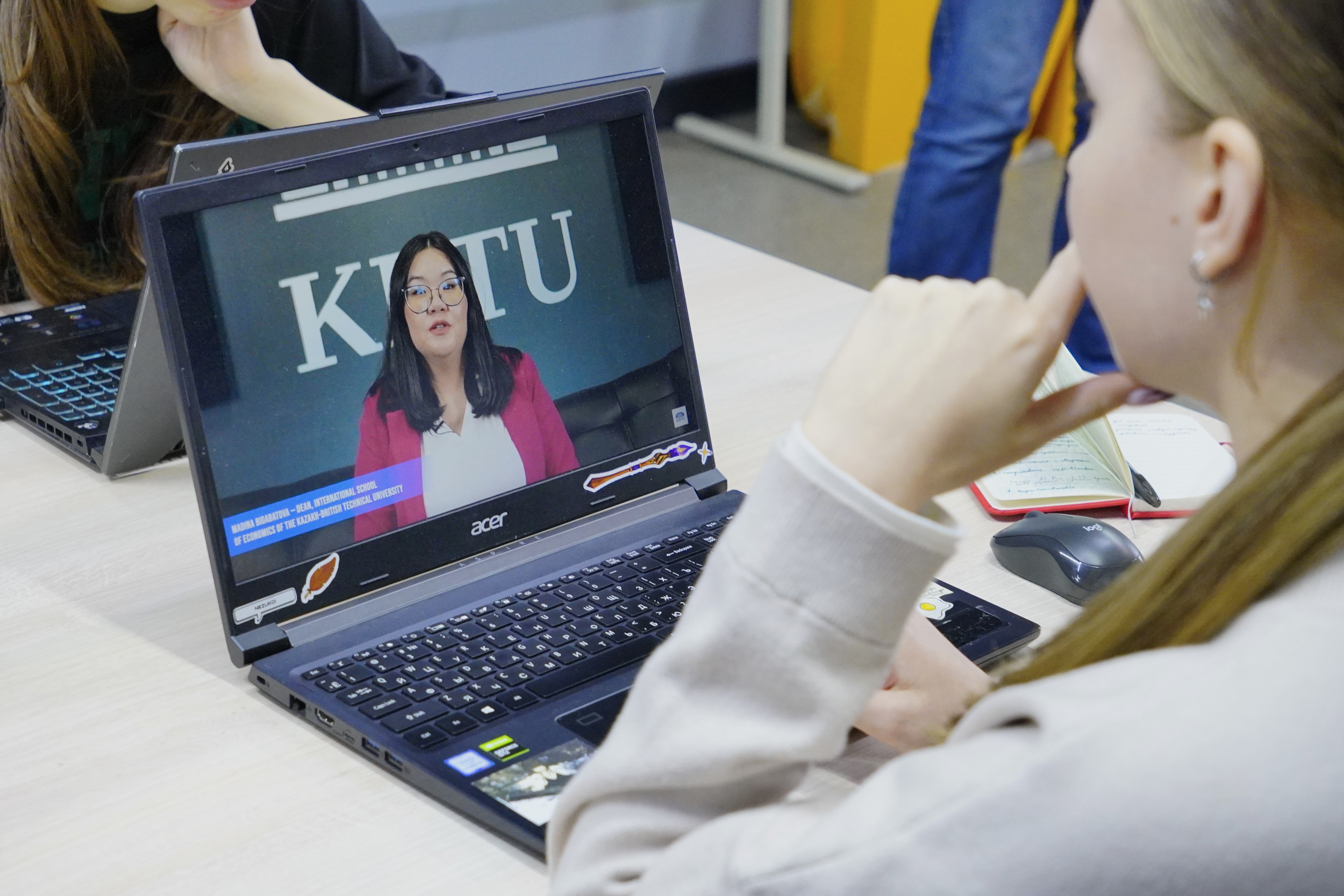
Are we too ambitious?
It’s a question we asked ourselves more than once. But we also knew that if we wanted to move beyond short-term innovation cycles and isolated projects, we had to start building long-term infrastructure. And one of the most sustainable vehicles for that is higher education. After all, trying to embed a still-emerging concept like DPGs into formal academic structures—across institutions, countries, and disciplines—is no small task.
At first, we thought maybe we could design a Master’s program? Maybe something to describe what we’re fighting for — “Equitable Digital Future”?
What if the concept was too niche?
What if the term “DPG” is too abstract or technical to resonate with students or faculty?
What if universities weren’t ready?
What if the curriculum feels imposed rather than owned?
Could focusing on a Master’s degree limit accessibility, excluding those who could benefit most?
But of course, we didn’t have all the answers. We didn’t exactly know where to start. What we did know is that we couldn’t and shouldn’t do this alone. And thankfully, we didn’t have to.
Partnership Highlight no.1: The Role of Open Source in Digital Public Infrastructure

"Over the past year, the collaboration between UNICEF’s Office of Innovation and UNU-MERIT has shown the power of UN-to-UN partnerships to turn open source ideals into educational practice. Together, we’ve developed concrete tools to integrate Digital Public Goods into higher education, supporting instructors, adapting curricula, and producing policy recommendations that bridge innovation and inclusion.
Building on this momentum, our forthcoming Memorandum of Understanding will chart a shared agenda for institutionalising Digital Public Goods knowledge across the Global South. As a first step, this work will be piloted in Kazakhstan at the Kazakh-British Technical University, where we will support the creation of locally grounded, globally connected DPG learning pathways. This initiative reflects our shared belief that open, inclusive digital infrastructure is not only a technical issue but a cornerstone of capacity-building, sovereignty, and sustainable development."
- Tshilidzi Marwala, Rector of United Nations University.
Finding the right partners
When it came to addressing the sustainability gap in capacity building, we needed partners who could bridge two worlds: the innovation-driven, fast-moving space where DPGs are developed and deployed, and the more structured, long-term ecosystem of higher education that can institutionalize and scale knowledge. We first approached UN University (UNU) in late 2023, as the academic arm of the UN. UNU bridges global research and policy with local knowledge and institutional practice. With institutes in 12 countries and an expansive network of global partners, UNU combines cutting-edge scholarship with real-world problem-solving to address challenges ranging from environmental degradation and technological transformation to social protection and human development. Then, UNU referred UNICEF to specifically work with UNU-MERIT (based in Maastricht and jointly operated with Maastricht University)—to align with their mission which takes shape at the intersection of governance, technology, and development.
UNU-MERIT (United Nations University - Maastricht Economic and Social Research Institute on Innovation and Technology) brought an entirely different but deeply complementary strength. As part of the UN system, UNU-MERIT focuses on how innovation and evidence-based policy can be mobilized to solve global challenges. They offered global research expertise, experience in developing interdisciplinary academic programs, and the authority to guide curriculum standards that align with both SDG priorities and international education benchmarks. They also provided an essential validation layer—helping ensure academic rigor and alignment with broader development frameworks.

Partner Highlight no. 2: Global Standards, Local Relevance: Emerging importance of DPGs
“The growing global emphasis on DPGs provides a natural arena for UNU-MERIT to apply its expertise. DPGs—whether software, datasets, AI models, or digital standards—are tools to scale progress on the SDGs. But they also represent a paradigm shift in how we think about technology: not as a proprietary product, but as a common good. Designed to be open, replicable, and adaptable, DPGs transcend borders—but must still respond to local needs.
This initiative directly supports the digital capacity-building pillar of the UN Secretary-General’s Roadmap for Digital Cooperation by translating global digital norms into formal education systems. That requires trust. It requires openness. And above all, it requires talent—people who can think critically, design responsibly, and navigate complex governance ecosystems. As an experienced and reputable international academic institution, UNU-MERIT has both the mandate and the capacity to support this transformation.
The DPG curriculum developed with UNICEF and KBTU is not just a pilot. It is a blueprint—for embedding digital public goods into academic systems, creating local ownership, and scaling impact from the classroom to the policy table. As we look to the future, UNU-MERIT remains committed to ensuring that education, ethics, and inclusion remain at the centre of digital innovation. Because the success of DPGs won’t be measured by downloads—but by the strength of societies they empower.
Why introduce/integrate DPG curriculum in universities? Because scaling digital public goods is not just about expanding software—it’s about cultivating sustainable ecosystems of knowledge, institutions, and governance. Short-term training can create awareness, but higher education is essential for embedding these concepts into the long-term capacities of future policymakers, developers, business leaders, and public administrators.
This is where UNU-MERIT’s added value comes into play. With deep experience designing and delivering educational programmes across regions and disciplines - including executive training, master’s programmes, and doctoral research—Its interdisciplinary approach and strong global partnerships uniquely positions it to bridge theory and practice and create curricula that are academically rigorous, policy-relevant and context-sensitive.”
- Dr. Zina Nimeh & Dr. Tatiana Skripka, UNU-MERIT
KBTU (Kazakh-British Technical University) was the natural fit for the local implementation partner. UNICEF Office of Innovation has worked with Kazakhstan through the DPG pathfinder pilot and had already taken early steps to engage with the DPG ecosystem through a dedicated Digital Public Goods Lab. Their faculty had firsthand experience adapting global open source concepts into locally relevant academic modules. Just as importantly, KBTU understood what would resonate with students, what curriculum reforms were feasible within national education policy, and how to translate complex ideas like DPGs into clear, attractive courses that could scale within a university system.
Partner Highlight no. 3: Why it’s crucial for academic institutions to lead on the DPG Curriculum Development

“Moving the needle in directions we find crucial for our society—this is the motivation for our team to do something. And we see perspectives in Digital Public Goods development as a means to take a step forward to a better world.
For the past three years Gamelab KBTU has made four educational initiatives with UNICEF focusing on adolescent girls in STEM. And, although we see inspiration in working with this audience on global problems and to develop a new generation of leaders with advanced technical literacy and problem solving skills, familiar with modern challenges and able to develop future solutions, we see that our efforts have limits. Limits in our time, reach, and capacity of our educators.
We see global curriculum development on Digital Public Goods as the tool to vastly scale our endeavor. Because this way we can work directly with those who will use this knowledge in their startups, businesses, and other endeavors—with undergraduate students.
Our main challenge right now is to make this program truly sustainable. And through integration in the academic curriculum in our university and scaling it further to other entities of higher education we do exactly this. Another important thing is to start a dialogue with both researchers and practitioners around the globe, to encourage them to think, criticize, and, of course, collaborate on this program. Only this way can we make a shift in policies and the worldview of their makers together.”
- Aleksandr Mezin, Product manager and Senior researcher at KBTU.
“Our introduction to the philosophy of Digital Public Goods began with the DPG Lab project, which we launched in the summer of 2024. It started as a short introductory online course, followed by an offline event for the first cohort of 50 high school students. Our instructors not only developed the online content but also actively supported participants during the project phase—helping them refine their ideas and providing feedback during the final presentations. Immediately after the event, we organized an ideation session with the mentors, who were eager to share their insights and impressions. Their reflections formed the basis of a report for UNICEF, outlining strategic recommendations for integrating the DPG framework into university curricula. The presentations we saw from school students convinced us that this knowledge could serve as a powerful platform for young people to create something truly meaningful and inspiring for society.”
- Alexandra Knysheva, Project Coordinator and Head of GameLab, KBTU.
Together, KBTU and UNU complemented UNICEF’s experience in innovation and implementation. Where UNICEF works on the ground—supporting open source entrepreneurs, investing in early-stage DPGs, and piloting models in real-world environments - KBTU and UNU offer the institutional depth and longevity to take that momentum into the classroom, the lecture hall, and ultimately into national education systems.
This three-way collaboration allowed us to move beyond capacity building as a one-time training, and toward systemic, academic-level integration—something that could prepare the next generation of students, developers, and digital policymakers to think critically and build ethically within the DPG ecosystem.
This was not a top-down proposal from UNICEF, it was a genuine co-design process which happened virtually. The initial curriculum topics were proposed by KBTU, based on their experience of creating a DPG Lab previously (See Insight Box no.4), national education standards, and local relevance. From there, we engaged in detailed discussions and healthy debates with both KBTU and UNU to refine the structure of the syllabus using the Miro board. Together, we asked: What should the objective of a DPG elective track be? What is the current level of learner knowledge? How technical or interdisciplinary should these courses go?
This process was more than just coordination. It was collaborative, iterative, and deeply thoughtful, ensuring the curriculum wasn’t just aligned with global frameworks, but also rooted in real academic contexts, and refined from multinational, multilingual teams from different backgrounds. We all brought different perspectives on existing problems to the table, and it made the process not only productive, but truly enjoyable—reflecting what co-design in the UN system can and should look like.
Aligned with global frameworks, rooted in real academic contexts, and refined from multinational, multilingual teams from different backgrounds and with different points of view on existing problems.
How Do You Teach Digital Public Goods?
The winning idea
A three-course elective track integrated within the academic syllabus, which would be multidisciplinary on a Bachelor’s degree level. Why? DPGs are still a relatively new concept, and for many students who lack a basic understanding of them, being grounded first in the concept’s roots would provide a solid foundation regardless of discipline and for further studies.. By understanding the demand and interest from students, it would help build the justification to expand more specific or technical courses needed.
When we ambitiously proposed a Master’s program, we were probably looking beyond what the current reality and knowledge of DPGs were. That was the central question in our first joint brainstorming sessions. Do we integrate DPGs into existing academic frameworks? Should it be a standalone program at the Master’s level? Could undergraduates benefit too?
We also debated depth: technical vs. non-technical, and practical vs. theoretical. Through a mix of exploratory discussions, collaborative mapping, and academic review, a vision began to emerge.
Partner Highlight no. 4: DPG Simulator: A Playful Legacy of the DPG Lab
Another important legacy of the DPG Lab is the DPG Simulator (DPG Sim) — a video game developed by the GameLab KBTU team. We wanted learners to apply their new knowledge playfully, so we designed a simulation game that allows anyone, on any device or platform, to experience what it means to create digital public goods. However, the true value of the DPG Sim goes beyond gameplay: it is a fully open source project, encouraging anyone to contribute new scenarios, quests, or characters.
The game adheres to all DPG standards and has been integrated into our university course “Introduction to Open Source” as a practical learning tool. Through it, students can make a real impact by contributing to the spread of DPG knowledge via collaborative coding.
Moreover, one of our students who assisted in testing the game is now preparing a thesis based on DPG Sim, focusing on collaborative development practices and presenting a new scenario for the game.

From the drawing board to reality
The curriculum development process was fast-paced, iterative, and grounded in lived academic experience. Drawing from earlier UNICEF work and feedback from KBTU students and faculty, the team initially mapped out four elective courses.
Each idea was rigorously tested: What skills do students already have? What are industry needs? What do we call a course so that students understand its value?
The following three courses were discussed in depth, including the naming of the courses. These changes weren’t just semantic. They were strategic, informed by Kazakhstan’s national academic requirements and KBTU’s on-the-ground understanding of student mindsets.
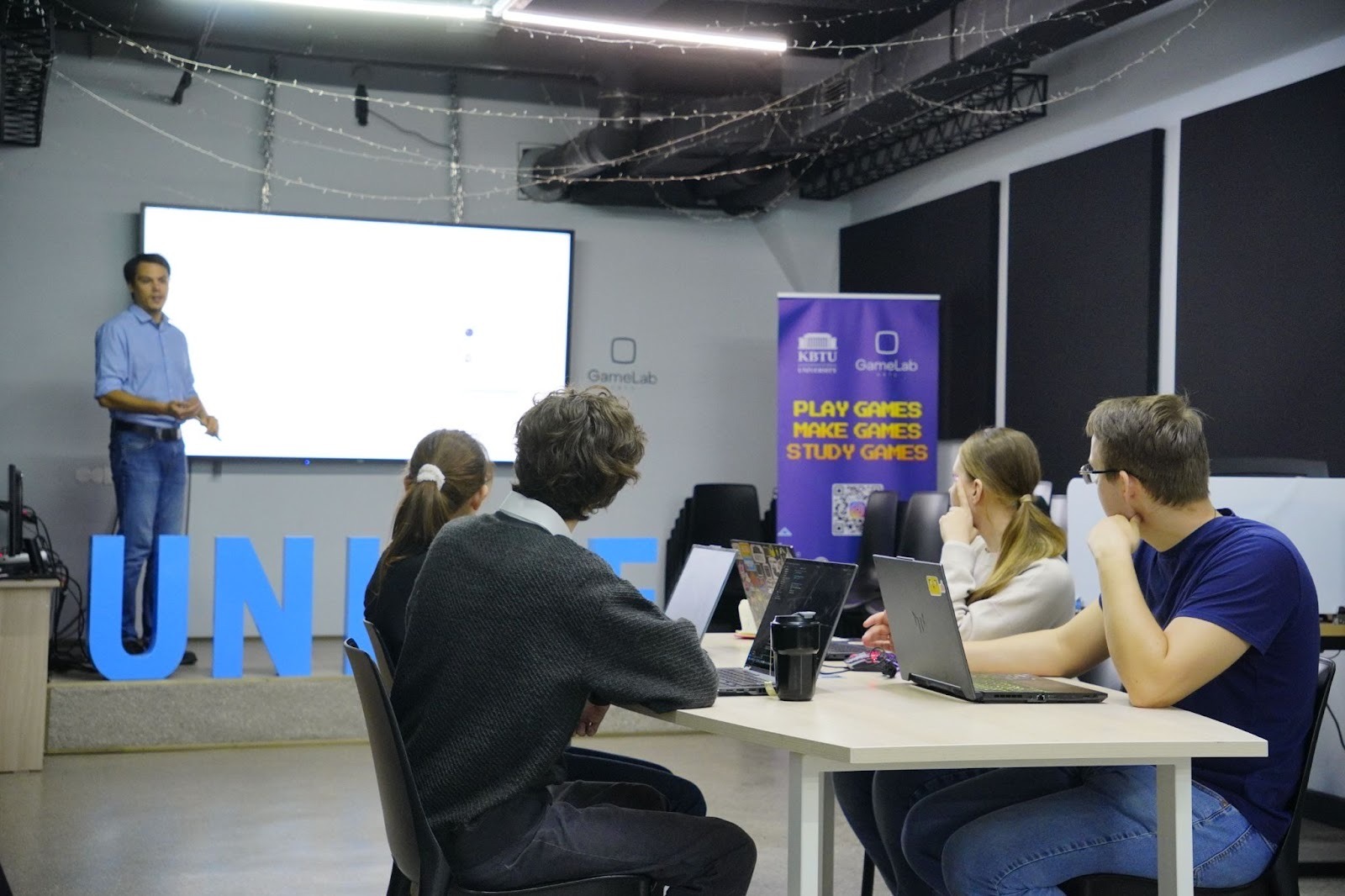
There are three seminar formats:
- - Discussions - students discuss topics related to the lecture this seminar accompanies
- - Practice sessions
- - Group projects
- - Evaluations
1. Introduction to Open Source:
“Digital Public Goods” became “Introduction to Open Source” to ensure student clarity and better marketing. During the co-design process, there was substantial debate around what the introductory course should cover and how it should be positioned to attract students. The term “Digital Public Goods” (DPGs) still remains unfamiliar to most university students and even faculty, which sparked concerns whether including it in the course title would deter enrollment. KBTU proposed simplifying the language to something more familiar and engaging: “Introduction to Open Source.” This wasn’t just a naming decision—it reflected a broader debate about how to balance technical depth with accessibility, and whether the course should act as an on-ramp for deeper DPG engagement.
In terms of content, the course aims to give students a solid grounding in the open source ecosystem—its philosophy, governance structures, and tools. Topics include the lifecycle of an open source product, licensing models and contribution workflows using Github. The course also makes room for discussion on the role of open source in digital public infrastructure, making the link to DPGs more explicit through applied case studies and practical project work.
2. Responsible Digital Entrepreneurship:
“Entrepreneurship for the SDGs” transformed into “Responsible Digital Entrepreneurship” - moving away from the often misunderstood label of "social entrepreneurship." This course initially emerged under the broader banner of “Entrepreneurship for the SDGs.” However, both KBTU and UNICEF voiced concern that this framing was too generic and wouldn’t meaningfully differentiate the course from other entrepreneurship electives. “Social entrepreneurship,” came up as an option, but all stakeholders unanimously agreed that "social" had become overused and, in many cases, misunderstood—often interpreted by students as something charitable or unprofitable, which didn’t reflect the full scope of what we were aiming for. “Responsible,” on the other hand, allowed us to emphasize accountability—particularly in line with the DPG Standard’s principles around “do no harm,” privacy, data protection, and advancing the SDGs.
As the discussions evolved, we realized that without explicitly referencing the digital dimension, the course risked becoming too broad—potentially attracting projects or ideas that didn’t intersect with digital public goods at all. That’s when we added the word "digital" to the title, ensuring the course stayed focused on solutions that are both responsible and rooted in technology. This framing gave us the clarity to design content that is both values-driven and technically relevant, tying back to the open source ecosystem and the broader DPG agenda.
The course focuses on developing practical skills for building purpose-driven startups that align with the ethos of digital public goods. Students explore methods for solution design, ecosystem mapping, and market validation, using real-world cases of digital products that prioritize inclusivity and public value. They’ll learn how to articulate their impact through frameworks like Theory of Change and pitch decks tailored to social impact investors. There was also a conscious choice to include modules on business ethics and user research—bridging the gap between innovation and accountability.
3. Ethical Digital Design:
This course emerged from a rich and, at times, complex debate. Originally, there were two distinct course proposals: one focused on “Data and User Protection” and the other on “Ethical UX/UI Design.” However, as the group mapped out the learning outcomes and content, it became clear that there was significant thematic overlap between the two. Topics such as privacy, ethical data use, accessibility, and user-centered design were surfacing in both tracks. After much discussion, the decision was made to combine them into one comprehensive course: “Ethical Digital Design.”
This course is grounded in the principle of “Do No Harm by Design.” It aims to equip students with the ability to think critically about how digital products impact people - especially vulnerable groups - and to build with ethical foresight. Students will explore frameworks for data protection, best practices for transparency and consent, and inclusive design methods. Topics like adherence to international standards, accessibility, and ethical AI are woven throughout, with practical examples and case studies illustrating the real-world consequences of neglecting these principles. The course also builds in a reflection component, encouraging learners to question who their designs serve and how they might unintentionally cause harm.
Related Stories

